
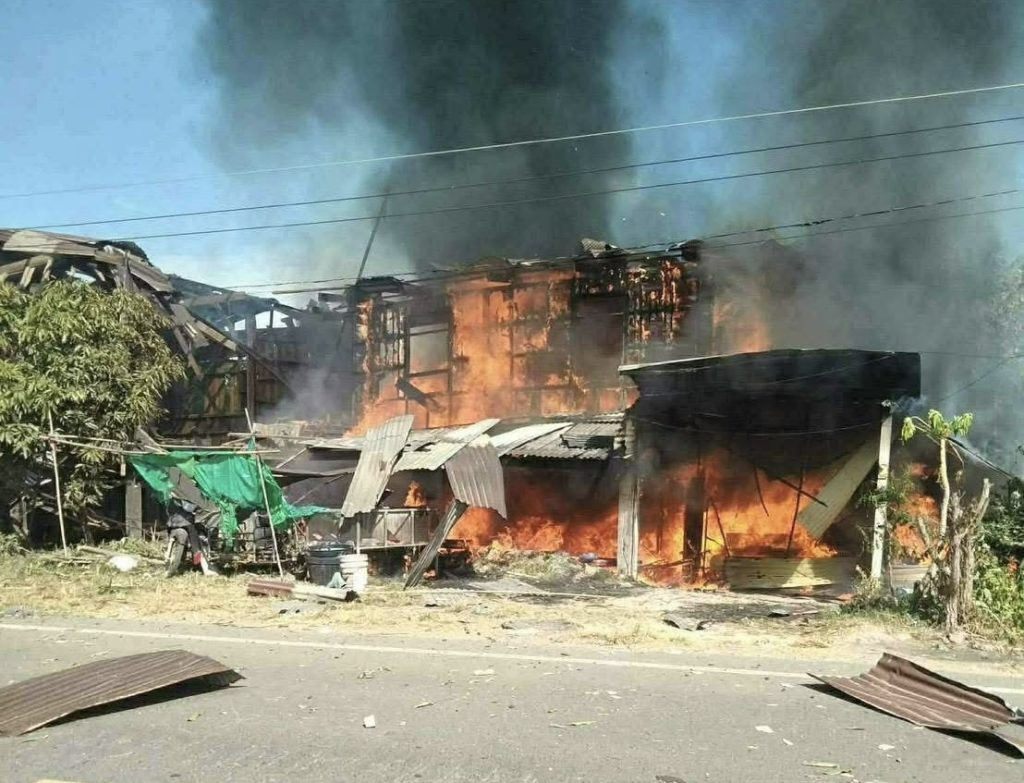
U.S. President Trump said both sides have agreed to the renewed ceasefire, while Thai and Cambodian leaders said otherwise
U.S. President Donald Trump made a phone call to Thai and Cambodian leaders, PM Anutin Charnvirakul and PM Hun Manet, last night in his latest attempt to mediate in the renewed fighting between the two countries, which began on December 7.
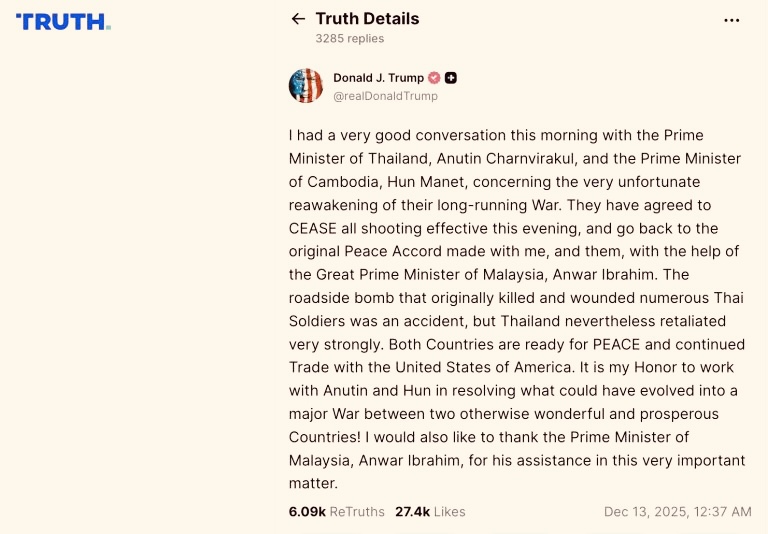
According to President Trump, who posted the news on his Truth Social around midnight, he said he had a very good conversation with Thailand’s PM, Anutin Charnvirakul, and Cambodian PM, Hun Manet, concerning what he viewed as “the very unfortunate reawakening of their long-running War”.
The U.S. President said the two leaders have agreed to cease all shooting effective this evening (December 13) and return to the original Peace Accord made with him, with the help of the Prime Minister of Malaysia, Anwar Ibrahim.
He cited the landmining by Cambodian troops as “the roadside bomb”, while acknowledging that it originally killed and wounded numerous Thai Soldiers. However, he addressed this as “an accident”, while remarking that Thailand nevertheless retaliated very strongly.
The U.S. President then said both countries are ready for peace and continued trade with the U.S.
“It is my Honor to work with Anutin and Hun in resolving what could have evolved into a major War between two otherwise wonderful and prosperous Countries! I would also like to thank the Prime Minister of Malaysia, Anwar Ibrahim, for his assistance in this very important matter,” President Trump wrapped his update.
PM Anutin’s reactions
The U.S. President’s remarks prompted Thai PM Anutin to react swiftly, saying in a latest post on his Facebook account this morning that “it’s definitely not a roadside accident”. PM Anutin further said Thailand will continue to perform military actions until “we feel no more harm and threats to our land and people”.
“I want to make it clear. Our actions this morning already spoke,” said PM Anutin, referring to the fresh military retaliations after being attacked shortly after the phone call talks with the U.S. President.
PM Anutin spoke by phone with U.S. President Donald Trump around 9 pm last night, before holding a press conference to update the Thai public on the outcome of the discussion shortly afterwards.
He said he had informed the U.S. President that Thailand has fully complied with all relevant declarations and agreements, including the Joint Declaration made between the two countries. Cambodia, however, had violated these arrangements first by failing to withdraw forces, planting landmines, and carrying out attacks that caused Thai casualties, injuries, and property damage, the Thai PM pointed out.


l Credit: ThaiGov/ PM Anutin’s FB Page
PM Anutin further informed the U.S. President that Thailand needed to respond to protect national sovereignty and public safety, while stressing that Thailand was acting in self-defence within its legitimate rights.
PM Anutin said President Trump was concerned about the situation and wished to see both sides return to their JC and renew the ceasefire. (Read: Thailand and Cambodia sign peace declaration at 47th ASEAN Summit)
In response to the U.S. President’s requests, he said he instead informed the President to ask Cambodia to stop its firing and rectify its actions. Those include the withdrawal of forces and a halt to all mine planting, PM Anutin pointed out.
PM Hun Manet’s narratives
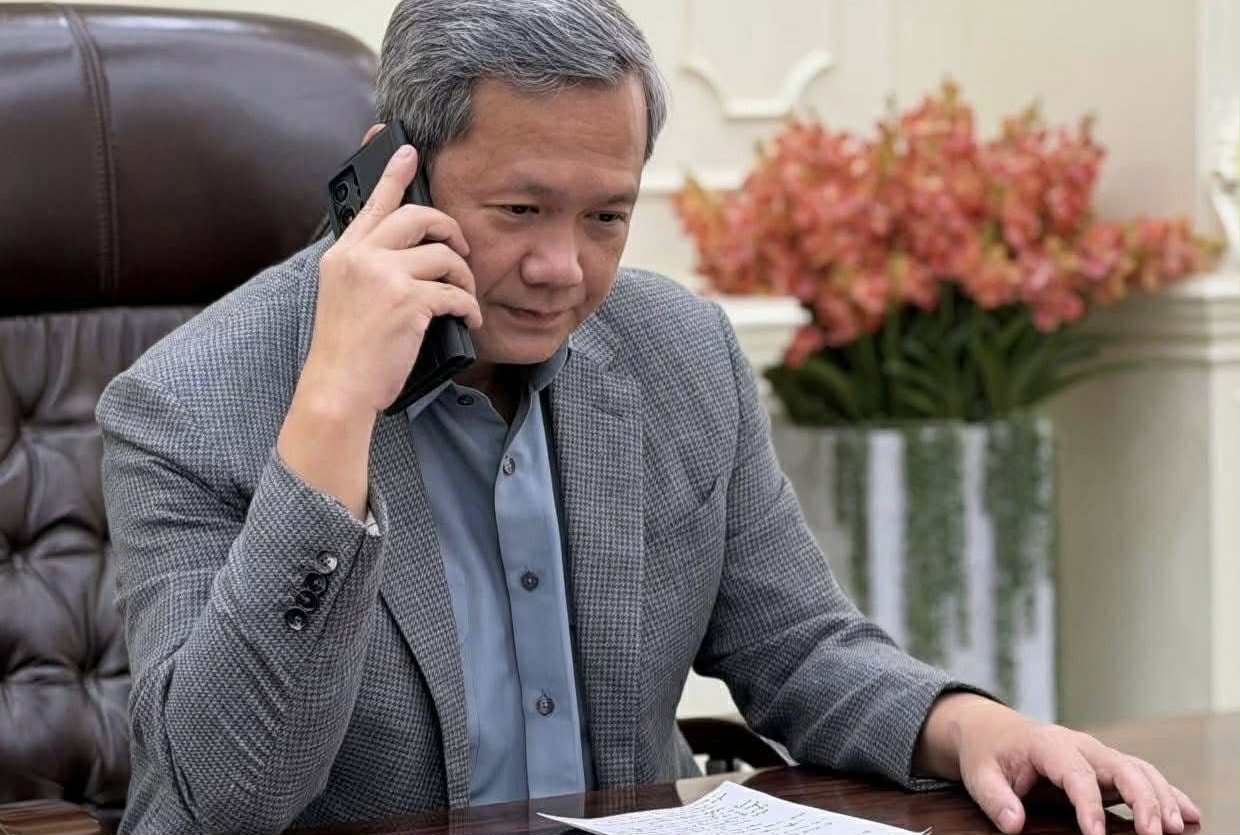
PM Hun Manet, meanwhile, also posted on his Facebook Page to provide an update on his discussion with President Trump.
He said he had phone conversations with both Prime Minister Anwar of Malaysia on December 11 and with President Donald Trump last night to find ways to achieve a ceasefire and resume implementation of the Kuala Lumpur Joint Declaration between Cambodia and Thailand.
“I thank both leaders for their continuous efforts to achieve a long-lasting peace between Cambodia and Thailand. Cambodia has always adhered to peaceful means for dispute resolution, in accordance with the KL Joint Declaration,” said PM Hun Manet on his post.
PM Hun Manet further said he had requested that both leaders investigate the Dec 7 incident using satellite images and incidents from the past 24 hours to verify the facts and determine who started the fighting in this round.
“This may be the easiest and most transparent way to verify the incident. Cambodia is ready to cooperate in any way that is needed,” vowed PM Hun Manet.
As reported by both sides, fighting continued throughout this morning despite the leaders’ phone discussions. Infrastructures, including some bridges in Cambodia, were reportedly destroyed by Thailand’s airstrikes. At the same time, the Cambodian troops fired BM-21 rockets, which landed in front of a shelter bunker in Saothongchai Subdistrict, Sisaket Province’s Kantharalak District, the Thai Army has reported. At least four civilians were injured while running to the bunker for safety, whereas several residents’ houses were destroyed.
The Royal Thai Army issued a statement condemning the actions of Cambodian military forces.
“This incident is clear evidence of the use of weapons against civilian areas unrelated to Cambodia’s military operations, constituting a grave violation of human rights and international humanitarian law, and directly endangering the lives and property of innocent civilians,” said the Thai Army.
Renewed fighting
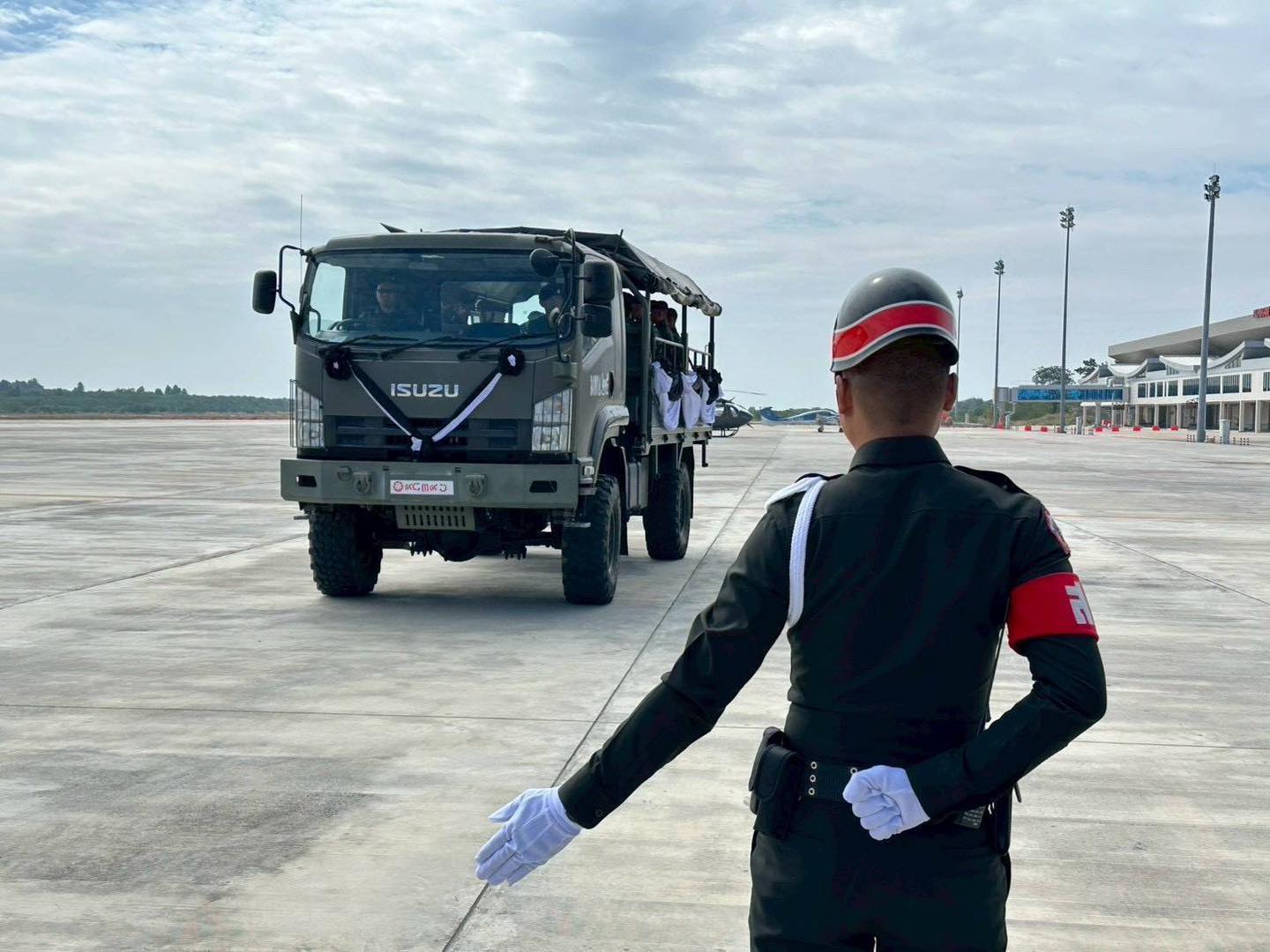
According to official reports filed by both countries with the UN Secretary-General and the United Nations Security Council (UNSC) in the first days of the fighting, Thailand and Cambodia stated that hostilities resumed on December 7. However, their accounts of the incidents that led to the renewed fighting are different.
Both sides blamed each other for initiating the fighting. According to Cambodia’s Permanent Representative to the UN, Keo Chhea, who had made the requests to the UNSC through the Slovenian UNSC President Samuel Žbogar dated December 10, Thai armed forces were accused of opening fire on Cambodian positions with heavy weapons at 2.15 pm of December 7. This continued until 2.32 pm, and later on the same day, from 8:02 pm until 8:50 pm, the Thai armed forces fired numerous mortar rounds aimed at multiple Cambodian locations again, the Cambodian Ambassador to the UN claimed.
The Thai forces then escalated their assault on the next day (Dec 8) from 5.04 am onwards, using various kinds of heavy weapons, ranging from mortars and heavy artillery to war planes against Cambodian positions in multiple areas along the border in Preah Vihear and Oddar Meanchey provinces, the Cambodian Ambassador to the UN further claimed. However, no specific location details were provided by the Ambassador. He even made an accusation that the Thai armed forces used “toxic smoke” in the operations.
The Cambodian Ambassador to the UN also claimed that the Thai armed forces extended their attacks to civilian zones within Banteay Meanchey, Pusat, and Battambang provinces, resulting in “numerous” deaths and injuries, including innocent civilians.
The Cambodian side, therefore, requested the UNSC to “unequivocally condemn Thailand’s attacks, and demanded an immediate cessation of all attacks by the Thai armed forces and all violations of international humanitarian law.
Last but not least, it demanded that the UNSC dispatch “an independent UN fact-finding mission” to ascertain the facts on the ground, investigate Thailand’s violations of international law, and determine its responsibility for civilian casualties and material destruction.
Thailand, on the other hand, explained in contrast to Cambodia’s narratives. Its Permanent Representative to the UN, H.E. Cherdchai Chaivaivid, noted to the UN Secretary-General and the UNSC’s President a day before (Dec 9) that at 2.15 pm on December 7, the Cambodian forces opened fire on Thai troops from Infantry Battalion 13, who were conducting route maintenance on the Thai territory in the Phu Pha Lek-Phlan Hin Paet Kon area in Kantharalak District of Si Saket Province.
The attack immediately injured two Thai soldiers: One was wounded in the chest, while the other sustained a gunshot injury on the right leg. The firing by the Cambodian forces continued until 2.50 pm. the Thai Ambassador to the UN futher noted.
On the next day, December 8, at 5.05 am, the Cambodian forces relaunched an unprovoked attack on a Thai military base in the Chong An Ma area of Ubon Ratchathani Province. This was then immediately followed by widespread and indiscriminate assaults across the Thai territory in the four provinces of Buriram, Surin, Si Saket, and Ubon Ratchathani.
Later the same afternoon, the Cambodian forces again escalated hostilities by firing heavy machine guns at the Thai troops stationed at Ban Nong Ya Kaew, Khok Sung District of Sa Kaeo Province. As of 6 pm, these aggressions impacted 5 Thai provinces, resulting in 1 death and 18 injuries of the Thai military personnel, including 3 in critical condition, and forcing over 400,000 civilians to flee their homes, 2 of whom died from heart attacks during evacuation, the Thai Ambassador to the UN concluded.
Throughout the day, the Cambodian forces carried out repeated, disproportionate, and unlawful attacks on the Thai territory, deliberately targeting Thai civilians and civilian infrastructure, the Thai Ambassador to the UN claimed. These operations, he further noted, employed heavy weaponry, including multiple rocket launchers, mortars, and heavy machine guns, and were further reinforced by the continuous mobilisation of Cambodian heavy weapons and personnel along the border.
“Cambodia’s afore-mentioned “unprovoked and indiscriminate” armed attacks on Thai territory across the five provinces of Buriram, Surin, Si Sa Ket, Ubon Ratchathani, and Sa Kaeo constituted a clear violation of Article 2(4) of the UN Charter, the principles of good neighbourliness and peaceful coexistence between States.
“In response, Thailand is compelled to exercise its inherent right of self-defence pursuant to Article 51 of the UN Charter to defend its sovereignty and territorial integrity, as well as to protect the safety of the Thai people. The self-defence measures are undertaken in strict compliance with international law, in particular, the principles of necessity and proportionality.
“These measures are limited in scope, proportionate to the threat, and are directed solely at neutralising the imminent danger posed by the Cambodian forces, with the utmost effort made to avoid harm to civilians and civilian infrastructure,” stated the Thai Ambassador to the UN in explaining the Thai troops’ acts.
While accusing Cambodia of disseminating false narratives by laying blame on Thailand as an initiator of the fighting, the Thai Ambassador to the UN further noted that Cambodia’s latest aggression was a repetition of hostilities against Thailand.
This pattern, he cited, follows a series of Cambodia’s premeditated and provocative acts, including the repeated unlawful emplacement of newly planted PMN-2 landmines in Thai territory, which has caused permanent disability for seven Thai military personnel, with the most recent incident being on November 10.
And on November 12, Cambodian soldiers intentionally fired against Thai troops within Thailand’s sovereign territory, the Thai Ambassador to the UN claimed, adding the actions constitute a blatant breach of the shared commitment under the Joint Declaration by Thai and Cambodian PMs signed on October 26
While strongly condemning Cambodia, Thailand demanded that Cambodia provide a full explanation, accept full responsibility, and implement measures to prevent any recurrence of such incidents. It also called upon the international community to urge Cambodia to cease all acts of hostilities and provocations that inflict harm upon Thai people, destabilise border security, and constitute repeated acts in violation of Thailand’s sovereignty and territorial integrity.
“Cambodia must fully comply with its obligations under international law and the Charter of the United Nations, and demonstrate good faith and sincerity to restoring peace and stability along the Thailand-Cambodia border,” demanded the Thai Ambassador to the UN, H.E. Cherdchai.
Thailand also requested that the UNSC and the UN circulate Thailand’s statements as a Council document to all Council members for urgent attention and as a document of the 80th session of the UN General Assembly.
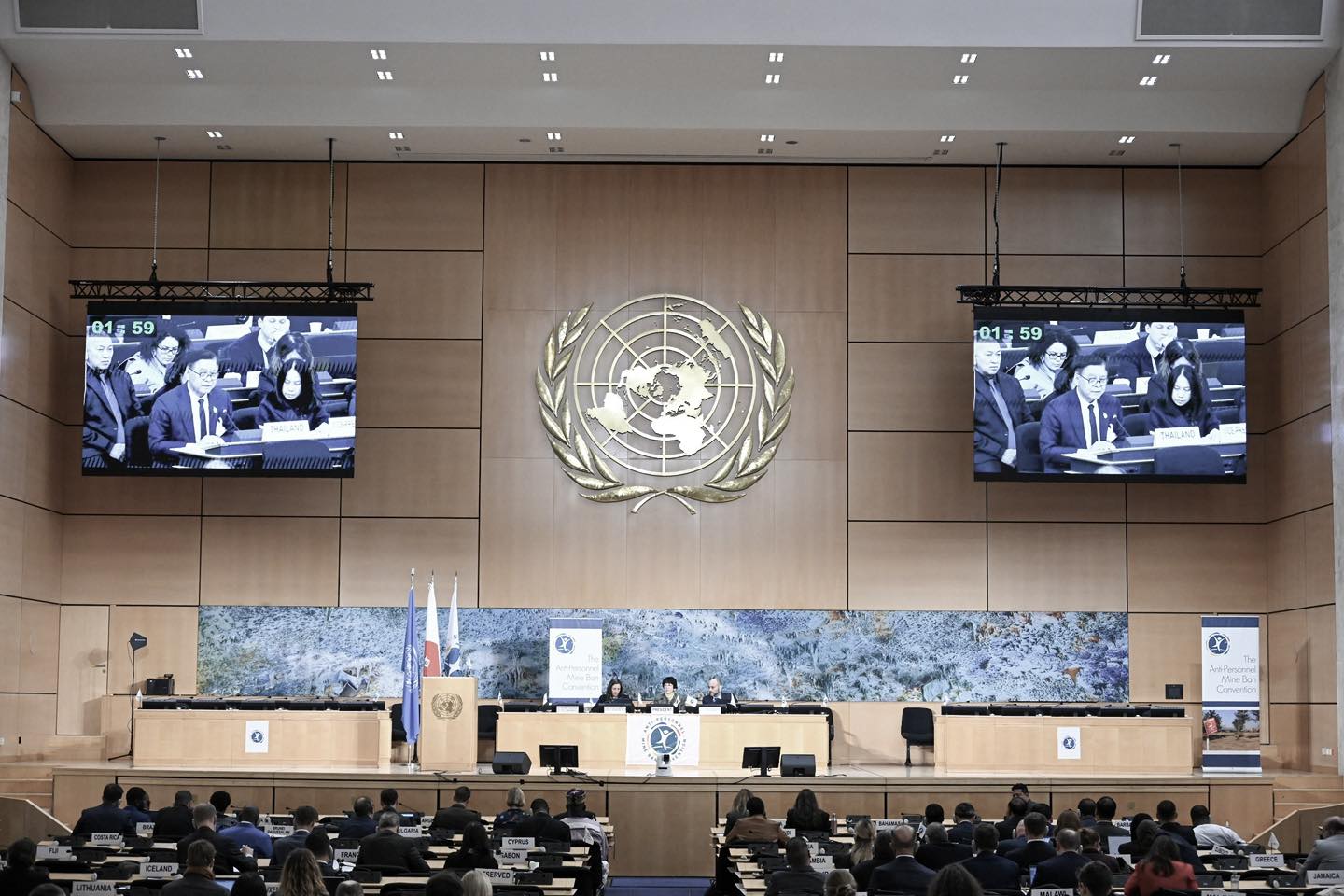
The Ottawa Convention’s 22nd Meeting
On December 5, Thailand’s Minister of Foreign Affairs H.E. Sihasak Phuangketkeow attended the 22nd Meeting of the States Parties of the Ottawa Convention (The Anti-Personnel Mine Ban Convention in Geneva), and delivered a statement regarding the consideration of requests submitted under Article 8 of the Convention.
He cited the facts that Thai soldiers had suffered and become permanently disabled as a result of Cambodia’s use of landmines, seen as a blatant breach of Article 1 of the Convention. This prompted Thailand to reserve its right to invoke Article 8, paragraph 2 of the Convention to request clarification from Cambodia. However, Cambodia’s responses had contradicted verified evidence and were consistently accompanied by disinformation, the Thai FA Minister noted.
So, Thailand had requested the UN Secretary-General’s good offices to facilitate the establishment of “an independent fact-finding mission” in a timely manner. This, he said, was Thailand’s objective: to depoliticise the issue by relying on the Convention’s own mechanisms to protect its integrity and demonstrate that they work when needed most.
Thailand, through its Ambassador and Permanent Representative to the UN in Geneva, H.E. Usana Berananda, also exercised “the Right of Reply” to rebut Cambodia’s baseless accusations that Thailand acted unilaterally and politicised the losses suffered by the 7 Thai soldiers.
In doing so, the Thai delegation presented evidence, including video footage showing Cambodian personnel training to plant PMN-2 landmines, to demonstrate Cambodia’s violations of its obligations under the Convention. According to the Thai delegation, the evidence has also been submitted to the United Nations Secretary-General.
All these are believed to be the final straws that have led to Cambodia’s renewed aggression in this round.

Indie • in-depth online news agency
to “bridge the gap” and “connect the dots” with critical and constructive minds on development and environmental policies in Thailand and the Mekong region; to deliver meaningful messages and create the big picture critical to public understanding and decision-making, thus truly being the public’s critical voice