

The Mekong River continues to serve as a vital source of water and food for people across the basin region. Images of small fishing boats, riverside fish markets, and ways of life closely tied to the river are still visible in everyday life. However, beneath this apparent continuity, there are signs of change that can no longer be ignored, writes Professor Kanokwan Manorom of the Mekong Sub-region Social Research Center (MSSRC) at Ubon Ratchathani University
In recent years, some riverside communities have begun to observe abnormalities in water quality and fishery resources. At the same time, academic studies and environmental quality monitoring in certain areas have pointed to contamination by heavy metals in sediment and freshwater ecosystems.
The key issue, therefore, is not the “discovery of a new problem,” but rather the “understanding of a problem that is becoming increasingly visible.” In other words, the risk has already become visible, but it has still not been adequately acknowledged at the policy level.
The nature of the risk: From acute impacts to cumulative effects
The problem of heavy metal contamination has distinct characteristics that differ from environmental impacts seen in the past, particularly in the case of large-scale development projects that created clearly visible physical effects.
In the case of heavy metals, the impacts tend to occur in a “cumulative” manner rather than suddenly. Contaminants can remain in sediment, move through the food chain, and enter the human body over the long term. This means that the risk does not appear in the form of an immediate crisis, but rather gradually takes shape and expands over time.
From a policy perspective, this type of risk is often overlooked because it does not generate short-term political pressure. However, many environmental studies have shown that cumulative impacts tend to create much higher social and health costs in the long run.
The gap between “data” and “decision-making”
Although evidence and empirical data on contamination in the Mekong River ecosystem are increasing, policy responses remain limited.
This situation reflects a crucial gap between “recognition” and “decision-making”. At the local level, communities and scholars have increasingly begun to recognise the problem and raise questions. But at the policy level, clear acknowledgement has still not taken place.
In some cases, the response has remained at the level of waiting for more data or assessing the situation cautiously.
While this may be understandable from an academic standpoint, in the case of cumulative risk, delaying decisions may lead to higher costs in the future. It could be said that “not making a decision is another form of decision-making”.
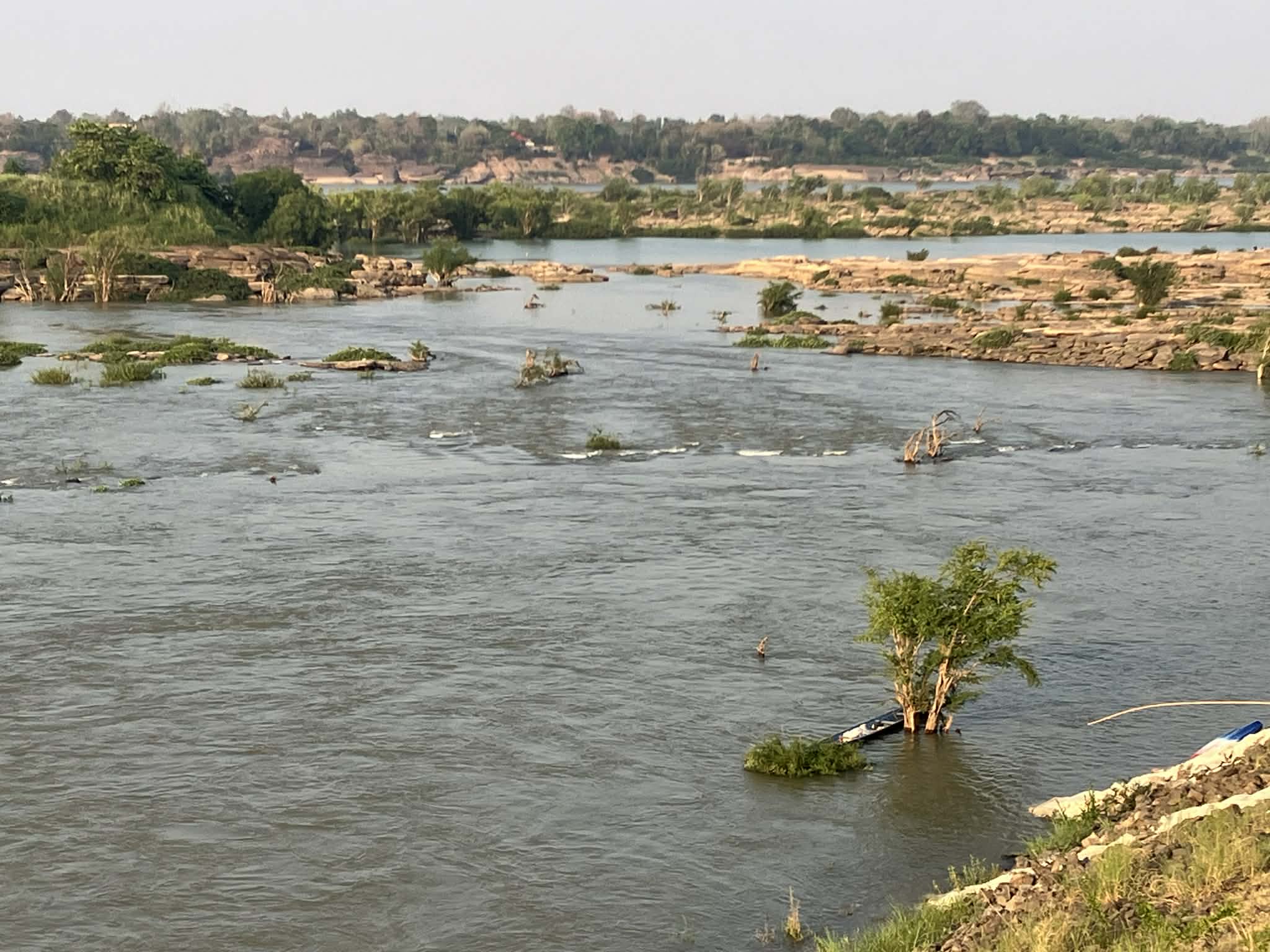
The management of transboundary pollution is constrained by limited governance.
The Mekong is an international river that flows through several countries in the region. Managing contamination is therefore institutionally and politically complex because the sources of pollution and the areas affected are often not located within the same jurisdiction.
This creates what may be called a “responsibility gap,” meaning that those who are affected may not be the ones with the authority to regulate. Meanwhile, current international cooperation mechanisms remain limited in both enforcement power and information sharing, resulting in pollution management that continues to be fragmented.
At the local level, contamination does not affect only the ecosystem; it also directly affects people’s livelihoods, especially in communities that depend on water resources for their survival. Uncertainty about water quality and food safety affects everyday decisions, from consumption to health security.
This type of impact is important because it shows that environmental problems are not merely technical issues, but are closely tied to people’s quality of life and household security.
Structural limitations: Old problems in new forms
Although the nature of the problem has changed, the structural limitations remain much the same. These include centralised decision-making power, limited community participation, and a greater emphasis on economic growth than on sustainability. The current situation may therefore be seen as a new form of an old problem, which, if there is no change at the conceptual and institutional levels, is likely to reappear in other forms.
The Mekong River still flows, but that flow does not mean the ecosystem remains in its original condition. The crucial question is therefore not simply whether the river still exists, but rather how we will deal with the risks that are emerging at a time when the evidence is becoming clearer.
Delaying decisions may carry higher costs than taking action. Acknowledging the problem, therefore, is not the end of the debate, but the starting point for managing toxic substances in the Mekong River, which are no longer confined to Chiang Rai but have also spread into the northeastern region.
Policy recommendations: From recognition to action
As the risk of contamination in the Mekong River becomes increasingly evident, policy responses should not stop at downstream monitoring or waiting for additional data. They must also move toward seriously addressing the sources of pollution. Lessons from many transboundary river basins around the world point in the same direction: river restoration can only succeed when states are able to identify pollution sources, regulate discharges, establish warning systems, and ensure that polluters are held concretely accountable for the damage they cause.
First, management should be upgraded from simply monitoring water conditions in affected areas to compiling an inventory of pollution sources and accident-prone hotspots throughout the river basin, especially activities likely to release heavy metals or toxic substances, such as mines, ore-processing plants, tailings ponds, industrial zones, and major wastewater discharge points. Downstream data alone are not enough.
If we do not know where the pollution comes from, who is responsible, and which activities should be prioritised for control, effective action will remain limited. Lessons from the Danube River Basin clearly show that establishing a database of “risk points” and accident-prevention systems is a crucial condition for reducing transboundary damage.
Second, there should be greater development of real-time transboundary pollution warning and disclosure systems, going beyond technical annual reporting. Although the Mekong River Commission already has Procedures for Water Quality and a water quality monitoring network in place, the nature of toxic and heavy metal contamination requires warnings that are rapid, transparent, and accessible to local agencies, communities, and downstream water users. The Rhine River Basin provides an important example of how cross-border warning systems can significantly reduce damage when acute contamination occurs, and how river management should not depend on delayed recognition.
Third, the polluter pays principle must be turned into an operational measure, not left as a mere statement of principle. In other words, if any activity poses a high risk of releasing pollutants into public waterways, that activity must bear the costs of prevention, monitoring, restoration, and compensation. The burden of health costs, environmental degradation, and food insecurity should not be shifted onto the state or affected communities. The Organisation for Economic Co-operation and Development (OECD) clearly states that the Polluter Pays Principle is intended to ensure that the costs of pollution are borne by the polluter rather than transferred to the public.
Fourth, the role of communities should be strengthened from being merely “watchers” to becoming co-designers of monitoring and response systems. In practice, communities are always the first to notice changes in water quality, sediment quality, fish populations, and food safety. If information systems remain controlled solely by central authorities, problem management will continue to be detached from realities on the ground, and community knowledge will be used only to confirm the existence of a problem, rather than being counted as part of decision-making power.
Ultimately, toxic contamination in the Mekong River is not only a matter of water quality. It is also a matter of responsibility, justice, and the future of people who still depend on this river for their livelihoods. If states continue to wait until the damage becomes even more visible before taking action, the cost may not be limited to ecosystem restoration alone, but may also include health, food security, and lost public trust. The time for recognition has already passed, and the time for serious action can no longer be postponed.

Prof. Kanokwan is Director of the Mekong Sub-region Social Research Center (MSSRC), Faculty of Liberal Arts, Ubon Ratchathani University.