
Following the emerging railway from Boten in the mountainous north all the way south to Vientiane
Standing at the bus station in Luang Namtha, the biggest town in northern Laos, travellers wanting to get south to the capital Vientiane face the prospect of a punishing 18-hour journey – and that’s on a good day.
China is in the process of changing this. Construction of a new high-speed railway began in late 2016 and is set for completion at the end of 2021. By then, a 414-kilometre section of track will snake from Boten, on the China border, all the way down to Vientiane, on the Thai border. The new train will cut the journey to just three hours.
The US$6 billion railway is another part of China’s expansive Belt and Road Initiative, a series of mostly Chinese-financed infrastructure projects around the world receiving direct investment and loans. In keeping with the initiative’s aim of promoting connectivity, the China-Laos railway will also connect south to lines in Thailand, Malaysia and Singapore.
Full steam ahead
The Laotian government hopes the passenger and freight railway will boost tourism and trade and bring prosperity to its seven million citizens. Given the country’s mountainous geography, the railway is a mighty engineering challenge: only 38% of it will run along the ground, with the rest crossing 170 bridges and passing through 72 tunnels.
Like all large-scale infrastructure projects, the railway is expected to have significant environmental impacts, and there are already early signs of problems. At the beginning of November 2018, locals in Vang Vieng, central Laos, noticed a blackish liquid mixed into the usually crystal-clear waters of the Song River. They managed to trace the source to drilling at the railway site.
On the outskirts of Vientiane, the final stop on the China-Laos railway is That Luang Marsh, a 20-square-kilometre biodiverse wetland. It was designated a special economic zone in late 2017. Since then, shopping malls, offices, schools, and homes have been rising, financed in part by Chinese money.
Laos is a developing country, and many of its citizens welcome significant infrastructure improvements. But what longer-term change will the high-speed railway bring to their country and the rest of Southeast Asia? With the project now more than 20% complete, photographer S Chuen has made the journey from Boten to Vientiane, stopping at several of the 32 new train station sites and many rural areas in between.
Money matters
The project’s cost is being met by the Laos-China Railway Company, which is 30% owned by Laos and 70% by China. Laos is committed to paying US$720 million of its share over the next five years, with US$250 million from the national budget and US$470 million borrowed from the Exim Bank of China (at 2.3% interest).
Last year, Laos’ public debt reached 65% of gross domestic product, up from 61% in 2017, partly because of increased borrowing from Chinese banks. The International Monetary Fund is concerned about the figure because Laos’ silver and copper mines are reaching exhaustion, and the country has a very low tax base.
While the railway may be a crucial boost to Laos’s development, it will also be difficult for the country to repay its loans.
At the beginning of the project, Bounchanh Sinthavong, Laos’ Minister of Public Works and Transport, declared: “Once completed, the railway will benefit Laotians of all ethnic groups, facilitate and reduce costs of transportation, and stimulate the development of agricultural and industrial sectors, tourism, investment and trade.”
As their small nation moves from being landlocked to land-linked, the people of Laos wait to see if this is so.


The influx of cash is reviving Boten, where the high-speed railway crosses from China into Laos. Construction has begun on four-star hotels, casinos, shops, a golf course and other entertainment venues to attract wealthy Chinese tourists. [Photo: Surya Chuen]


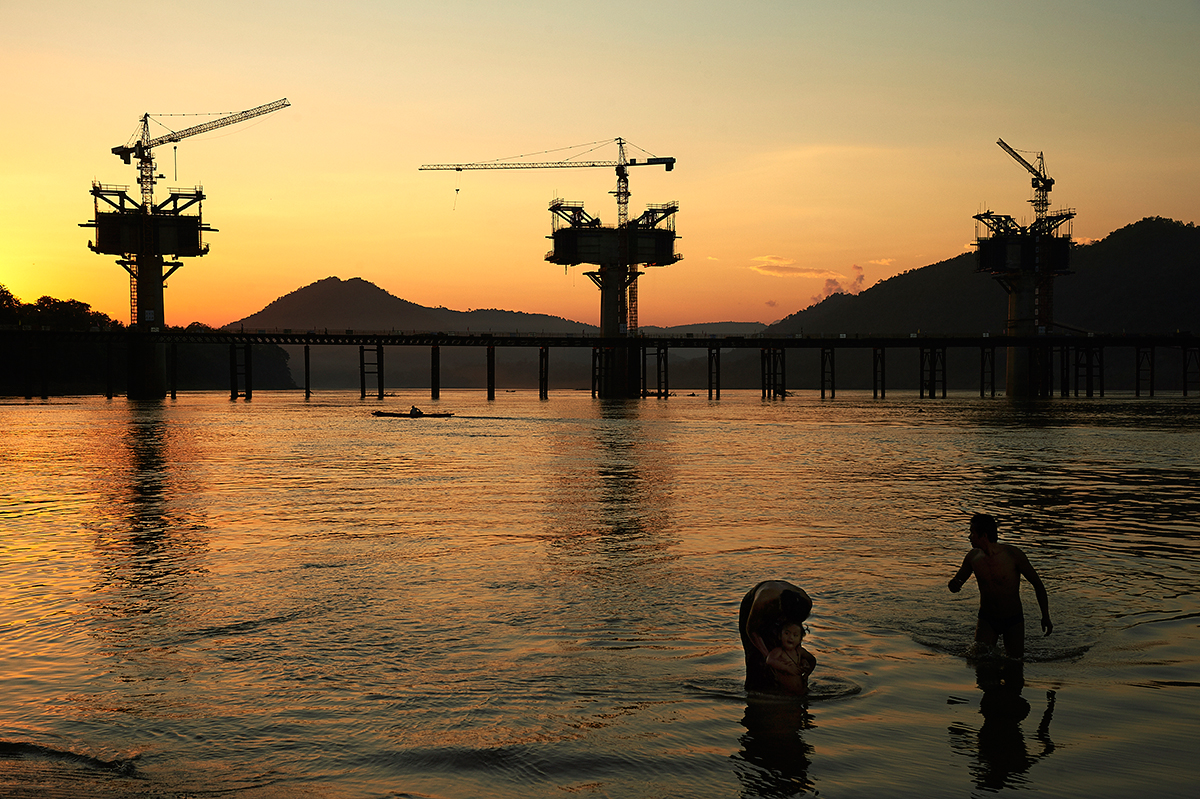
A family bathes in the Mekong, close to Luang Prabang and in front of the railway. Several shops and restaurants in the city are now Chinese-run, after Laotians rented the properties and moved out. [Photo: Surya Chuen]


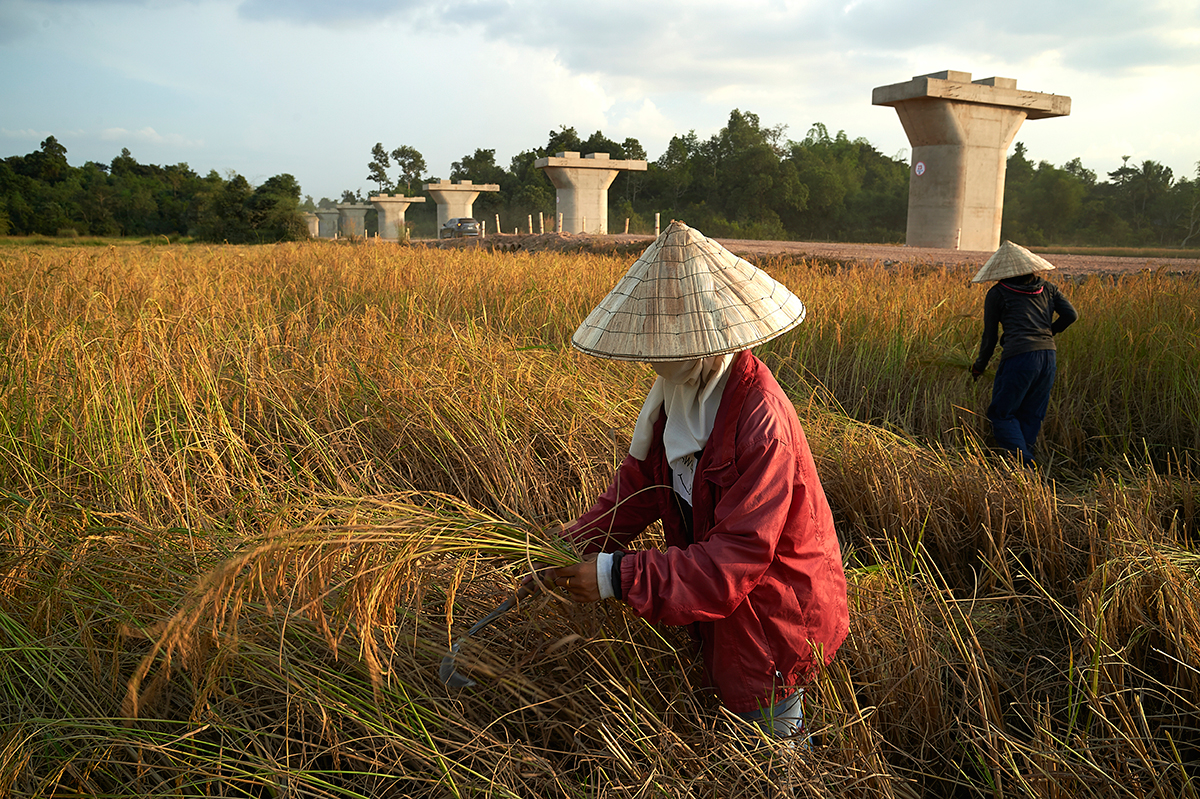
A farmer harvests her rice on the outskirts of the capital, Vientiane. The giant cement pillars looming in the background will support the Nam Khone bridge, which at 7.5 kilometres will be the longest on the China-Laos railway. The farmer has been informed that her field will be requisitioned soon. Though the government is yet to compensate her, she says she’s still excited about the project. [Photo: Surya Chuen]

The article was first published on China Dialogue.
Read: Boten: The Resurrection of the Ghost Town

08.02.2019