
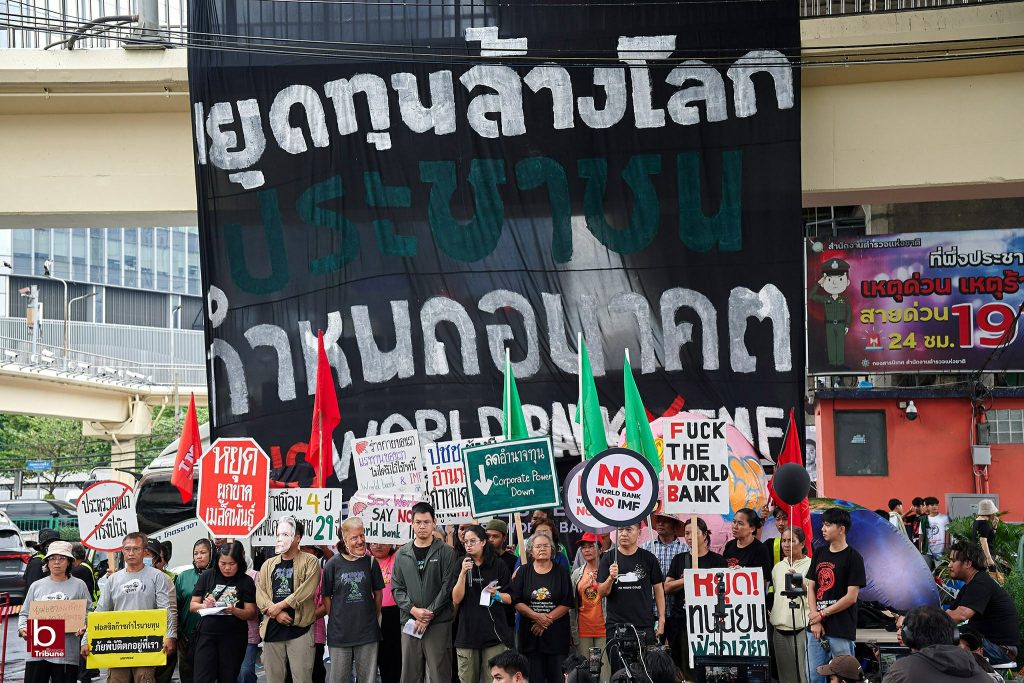
Civil society groups and local residents affected by bank-backed development projects have vowed to determine their own future without interference from major financial institutions, concluding a two-day rally ahead of the close of the IMF-World Bank annual meetings in Bangkok. The protesters called for more inclusive approaches to development amid growing economic challenges posed by artificial intelligence, geopolitical tensions, and ongoing wars
Thailand is hosting the 2026 Annual Meetings of the Boards of Governors of the International Monetary Fund and the World Bank Group (2026 IMF-WBG Annual Meetings) from October 12 to 18 at the Queen Sirikit National Convention Center. This marks the second time Thailand has hosted the meetings, following the country’s first hosting in 1991, 35 years ago.
Beginning on October 12, the meetings brought together financial leaders, policymakers, representatives of the public and private sectors, academics, and media professionals from 191 countries to discuss economic challenges and the way forward at local and global levels. The programme included various meetings and activities, including the annual plenary session held yesterday.
On the fourth day of the event on October 14, however, the meetings faced a mass gathering of civil society groups and local residents affected by development projects backed by major financial institutions in Thailand and elsewhere. Led by the People’s Network against World Bank-IMF, the protesters campaigned on a range of issues, from land rights to industrial pollution. They sought to make their voices heard and called on financial leaders to stop dictating the direction of development and economic growth while pushing communities into debt and destroying their environment.
Other participating groups included the Assembly of the Poor and La Via Campesina, an international movement representing millions of small- and medium-scale farmers and peasants, as well as landless people, rural Indigenous communities, and migrants from around the world.
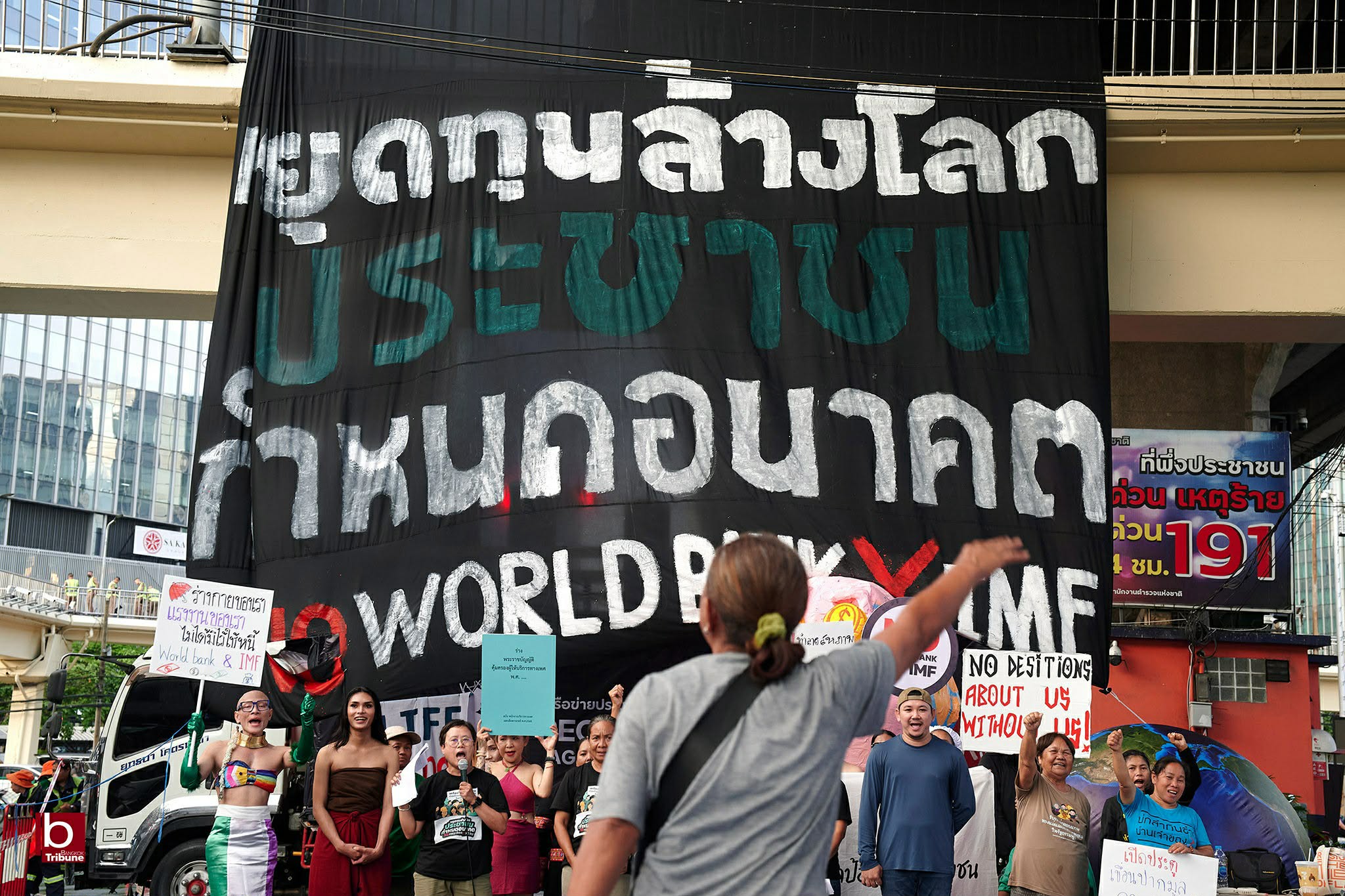
On the first day of the rally, skirmishes broke out between protesters and security personnel when they attempted to enter the convention centre and hang banners condemning the IMF and the World Bank from the Rama IV pedestrian overpass. At least two protesters sustained minor injuries.
Tensions eventually eased, and the protesters, who were prevented from entering the convention centre grounds, established a base nearby. Following the reading of statements by representatives of leading groups, the demonstration concluded, and participants dispersed on October 16.
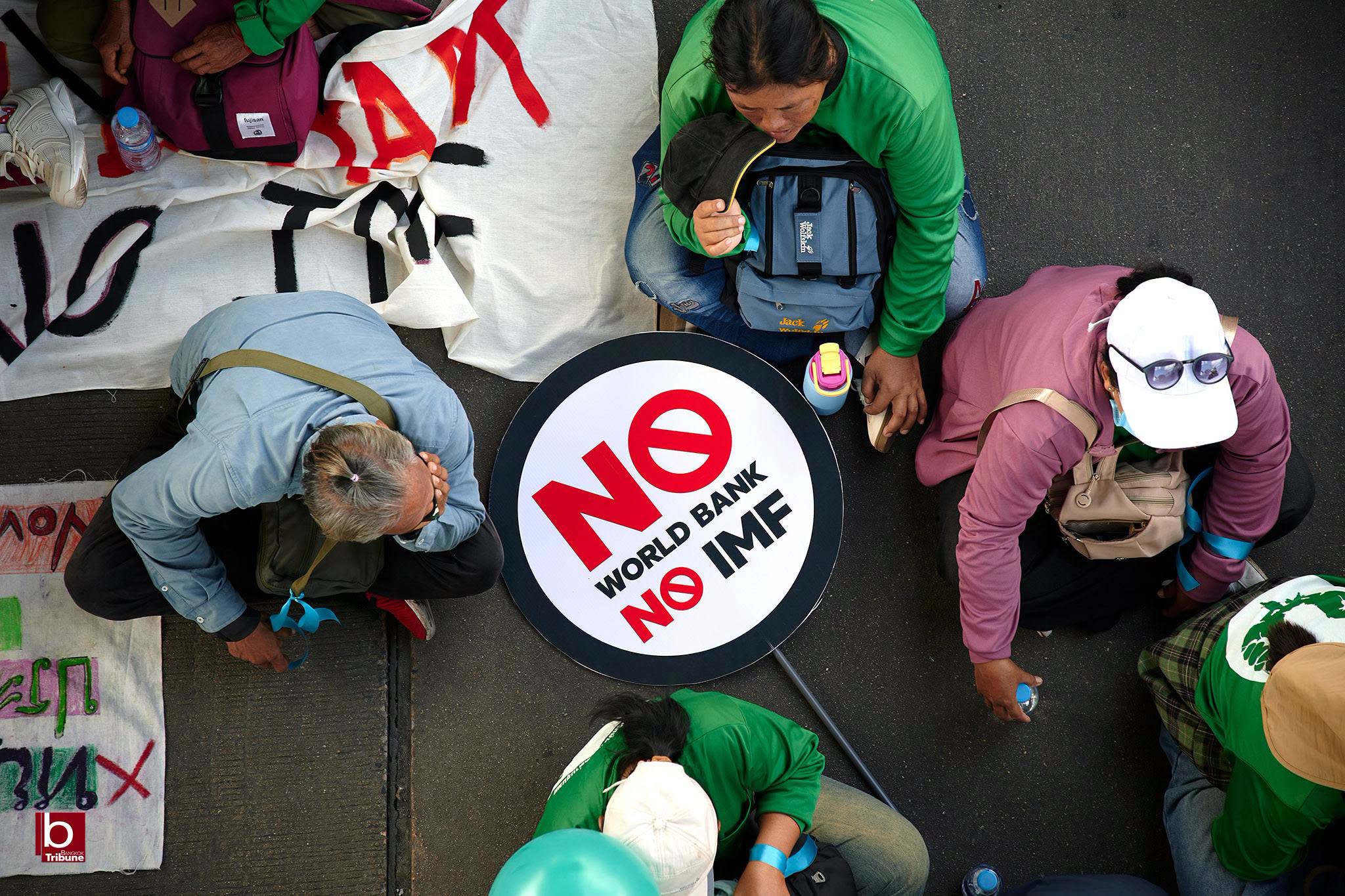
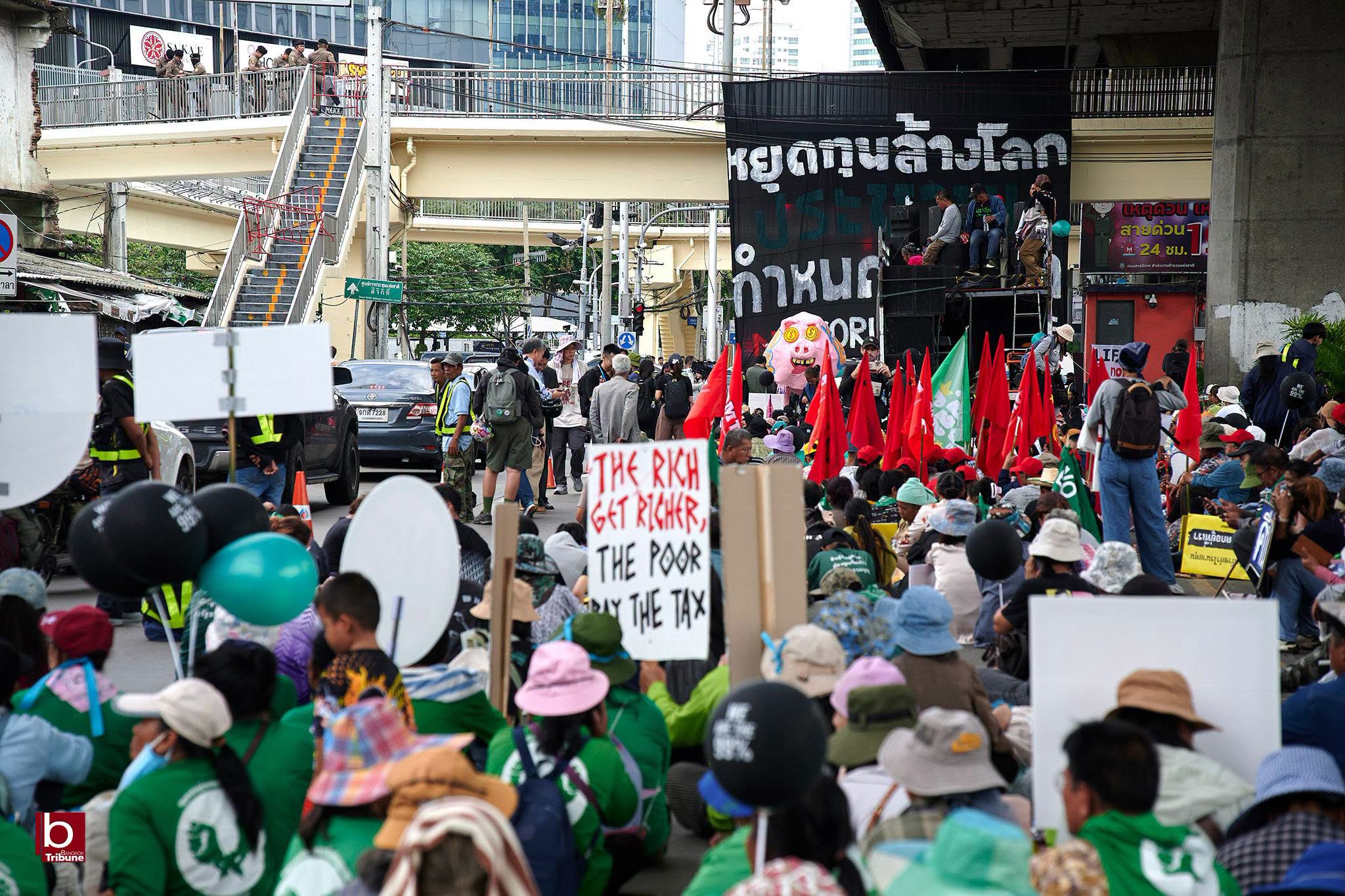
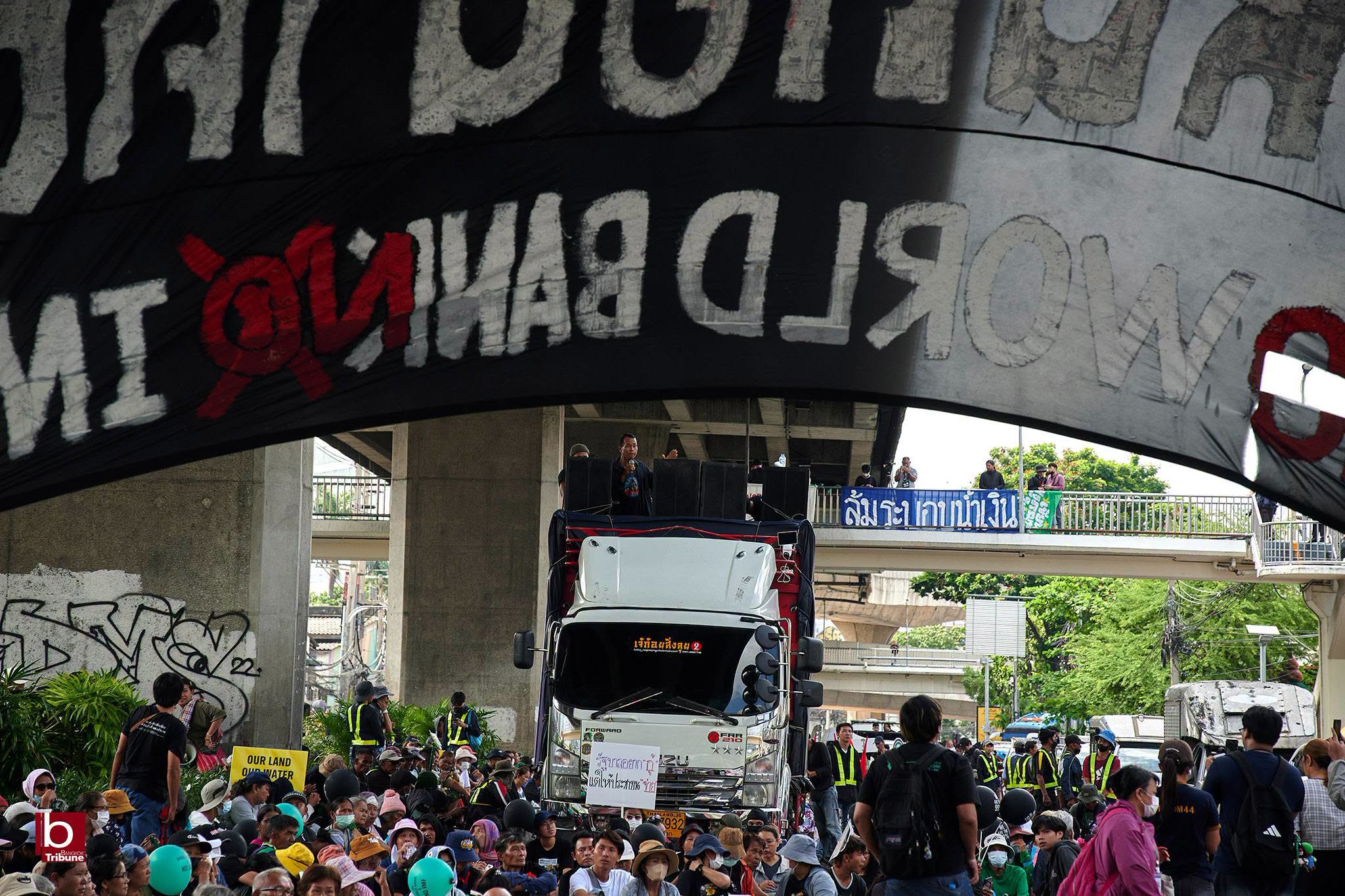
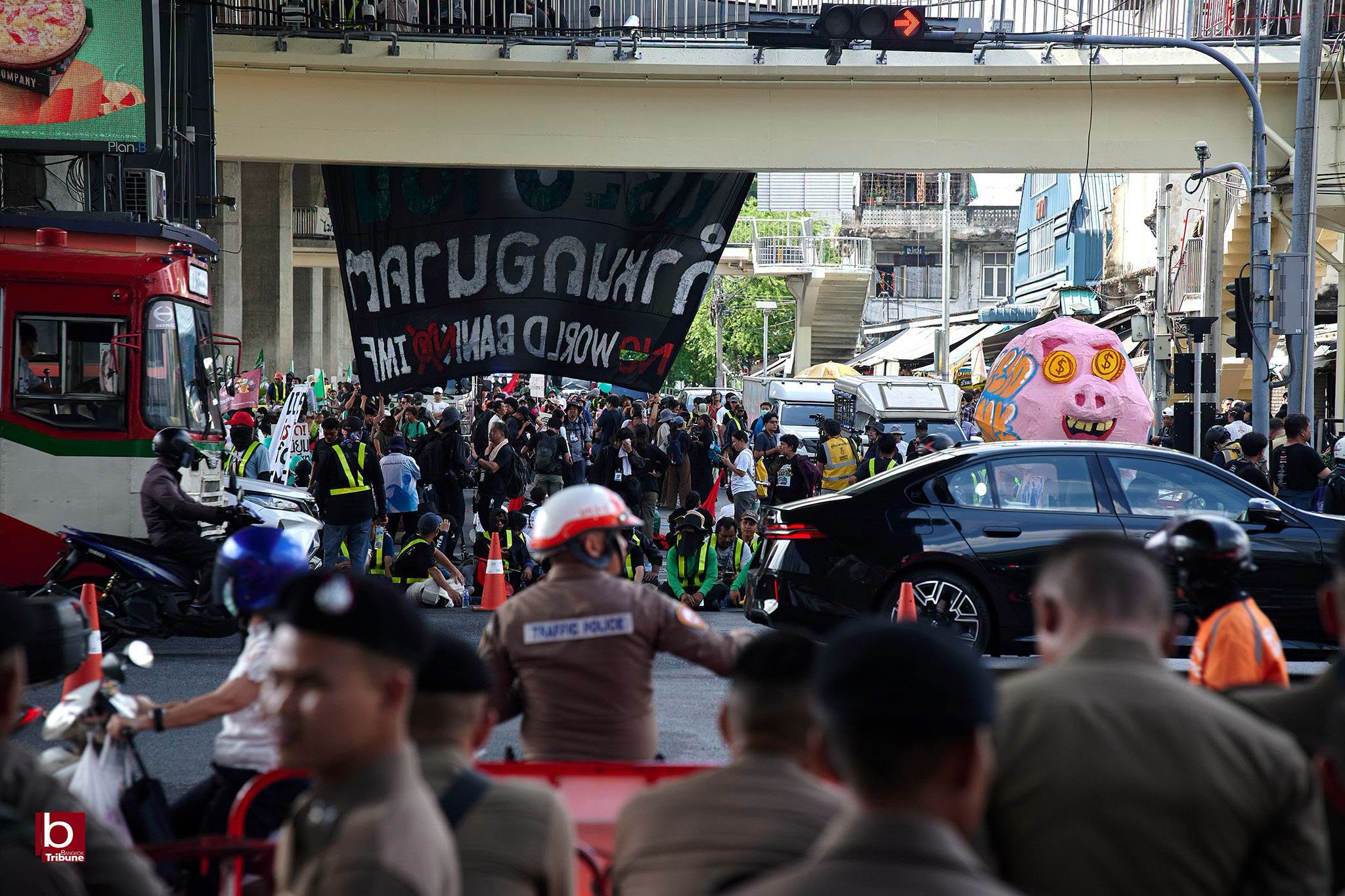
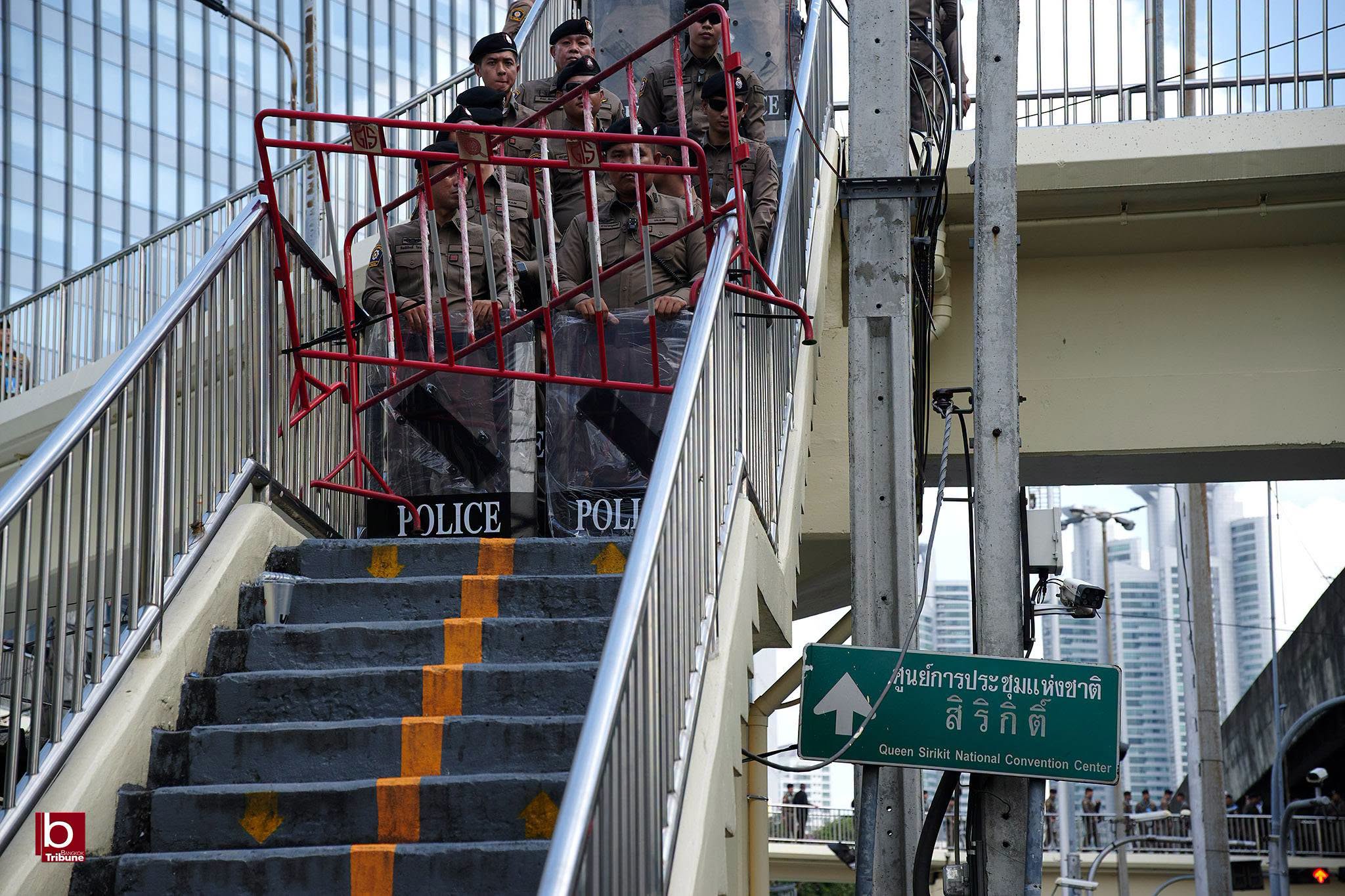
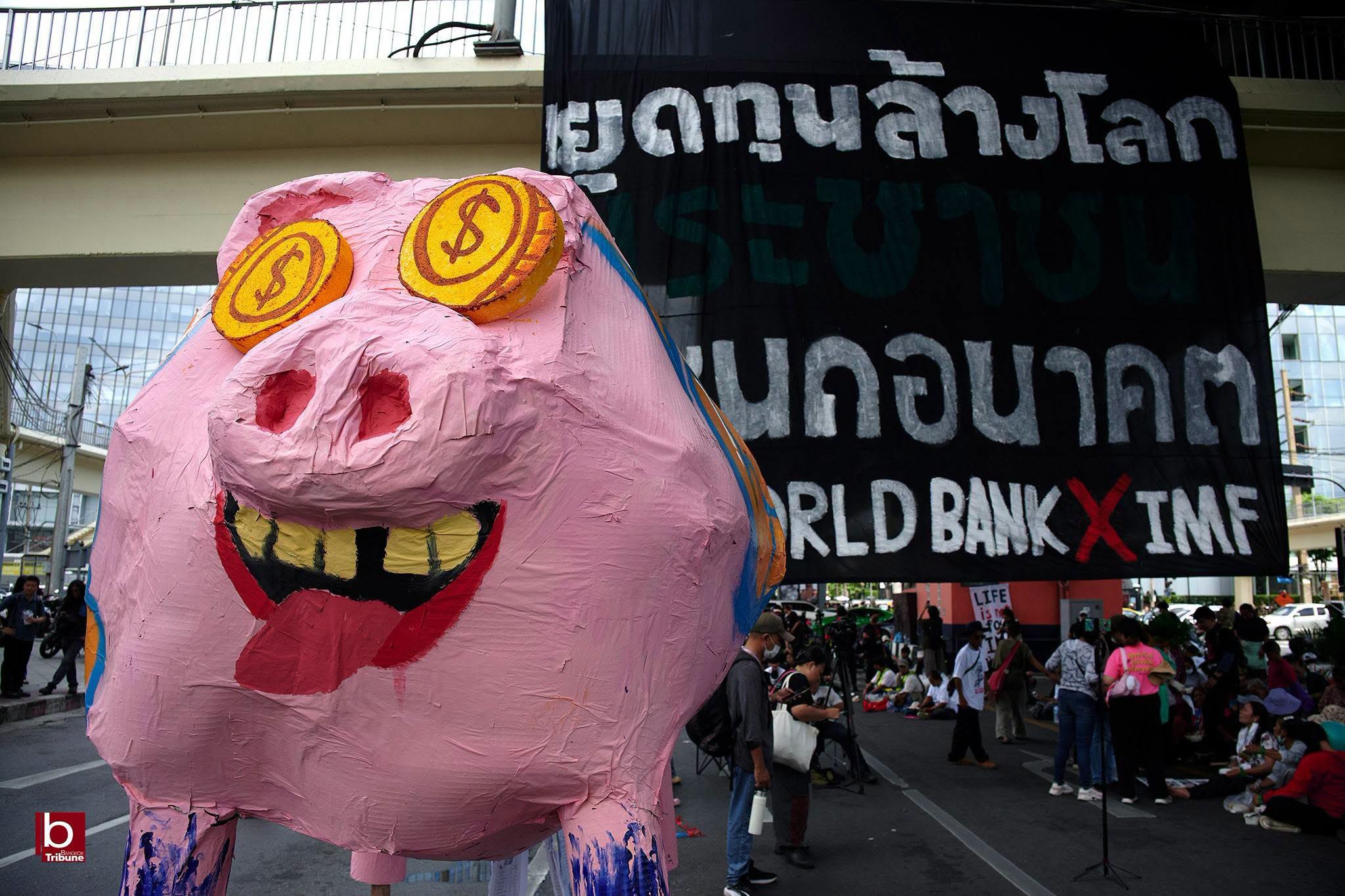
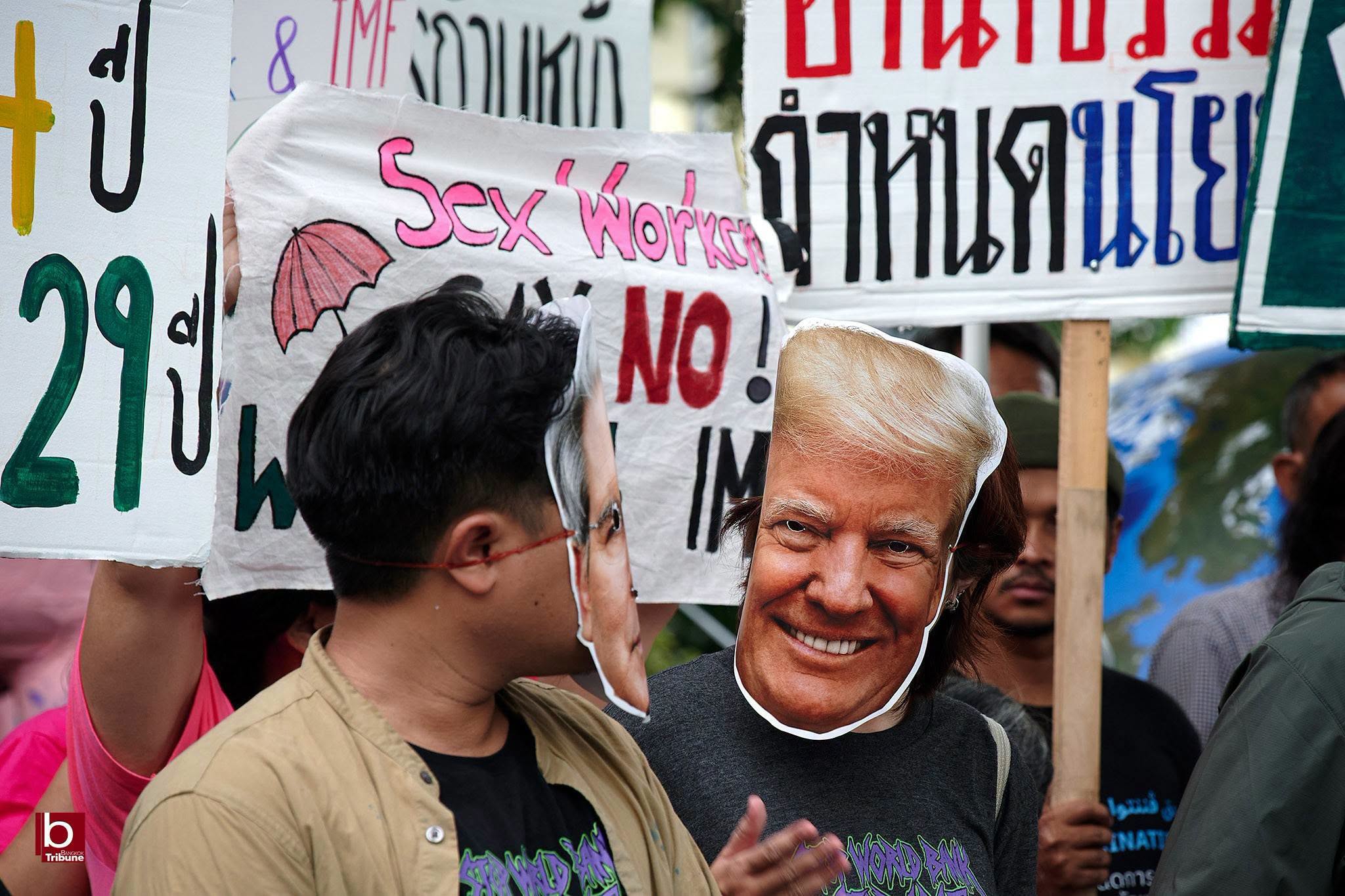
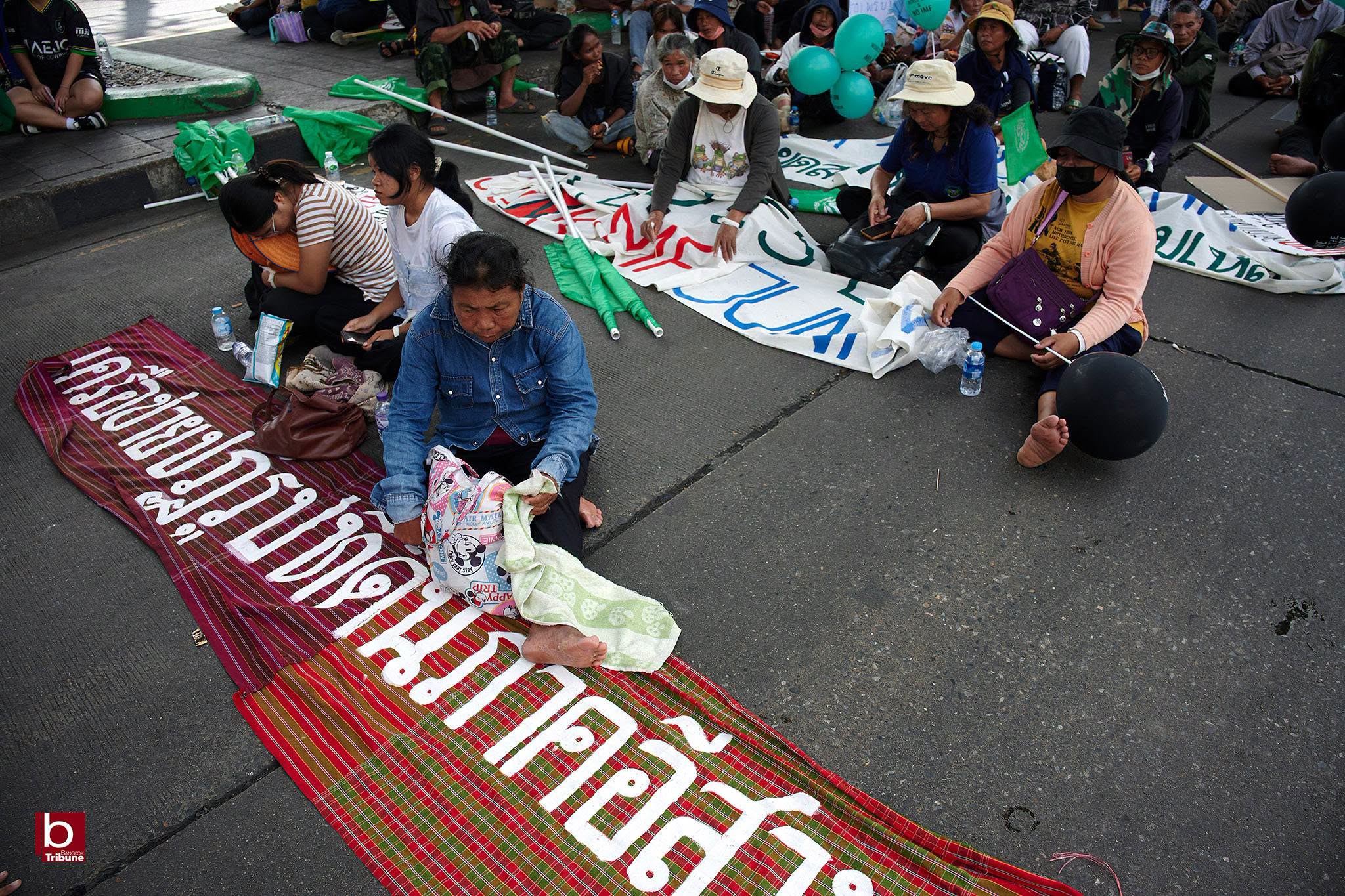
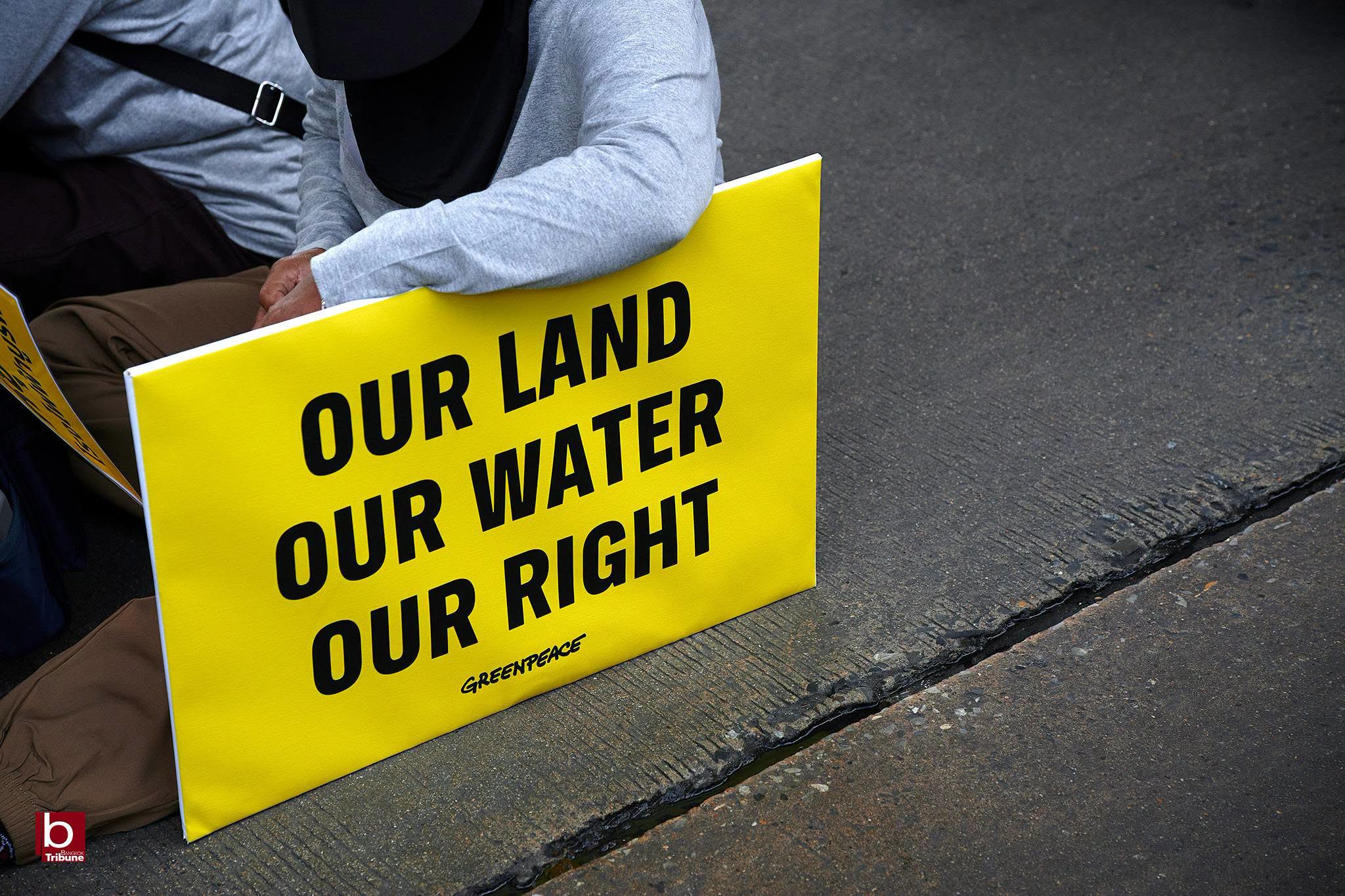
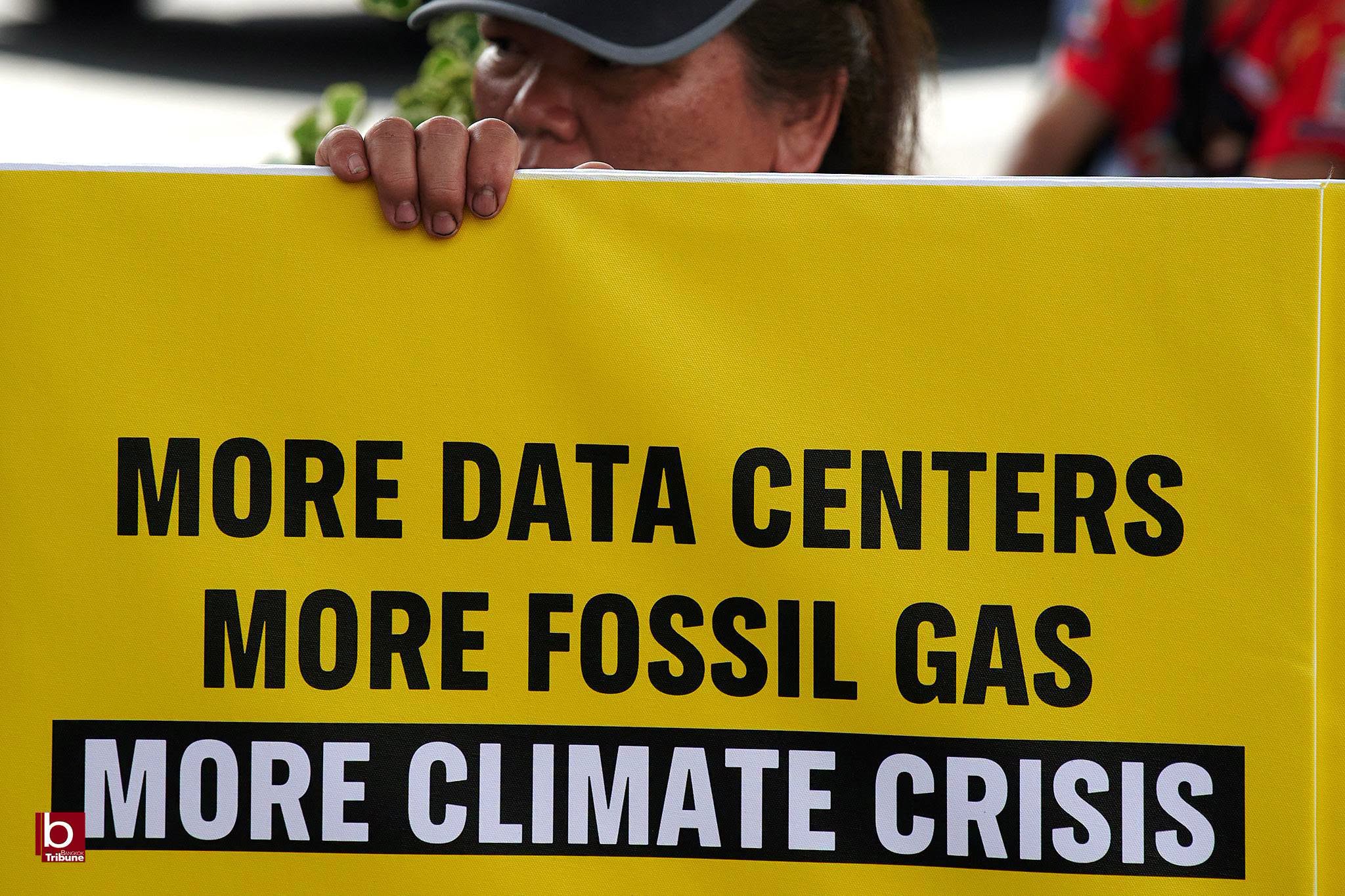
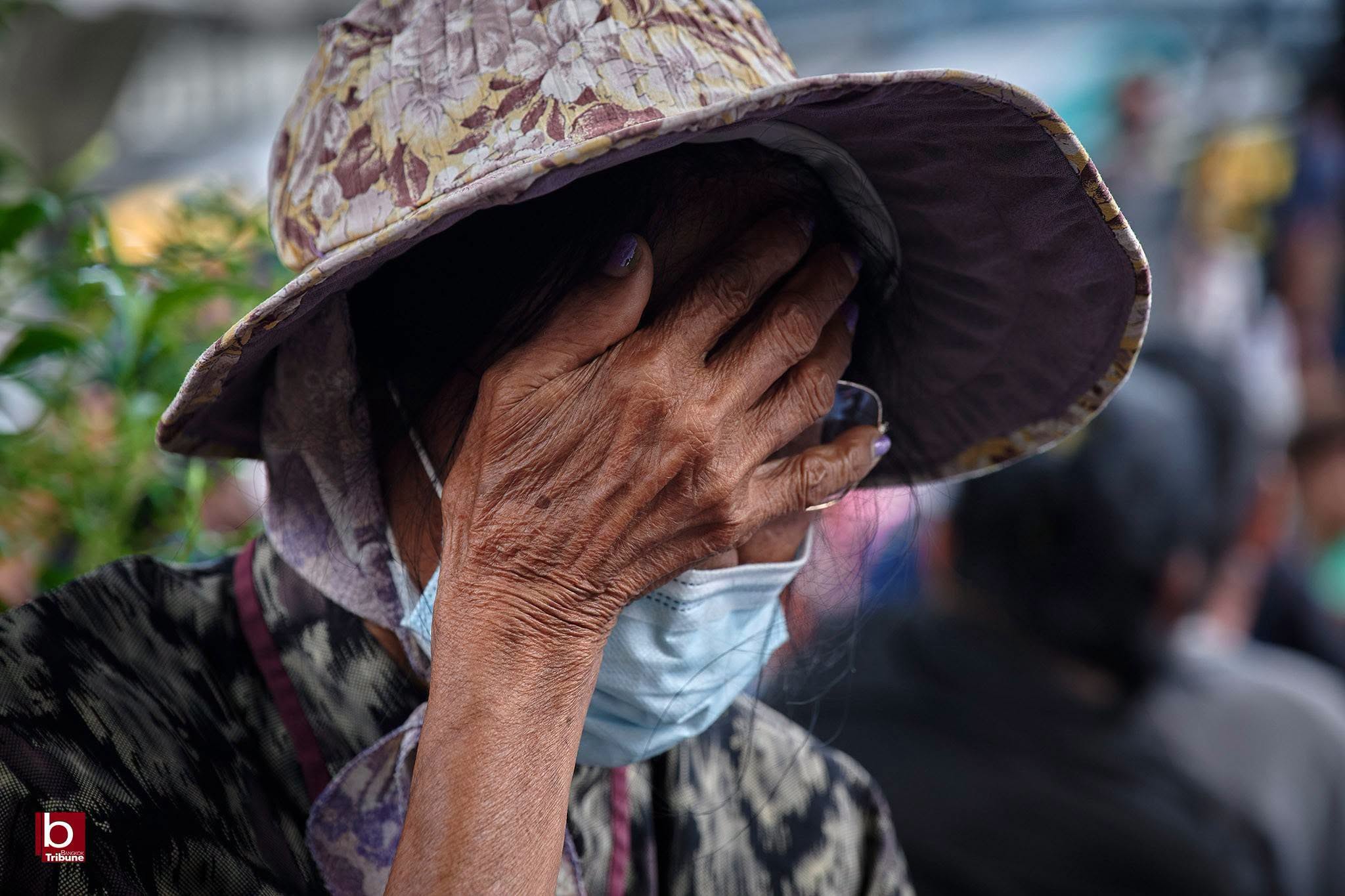
l The rally on the first day. Photos: Bangkok Tribune
Pak Mun’s demands
Protesters from the Pak Mun Dam group under the Assembly of the Poor, led by iconic 76-year-old activist Sompong Viengchan, issued a statement addressed to the president of the World Bank and the World Bank Executive Board. They demanded that the World Bank take responsibility for the decades-long damage to their livelihoods and environment resulting from its support for the Pak Mun Dam in Ubon Ratchathani province.
The villagers said the Mun River had sustained their lives long before the Pak Mun Dam was constructed. For generations, the river had provided food and livelihoods and served as the lifeblood of their community. They said they had never needed much money to feed themselves because they could rely on the river, its fish, its abundant natural resources, and the knowledge passed down by their ancestors about living in harmony with the river.
Before the 136-megawatt hydropower dam was built, the Mun River served as a vital migration route for fish between the Mekong and Mun rivers. Its rapids, spawning grounds, and ecosystems sustained communities along its banks.
The construction of the dam and the blasting of the rapids have drastically altered these ecosystems, affecting fish species and populations and undermining the livelihoods of local fishers. In particular, communities have lost traditional fishing grounds and food sources on which they had relied for generations. Residents of Ban Hua Haew have been particularly affected by the blasting of the rapids.
“For those who view rivers through economic lenses, fish may be merely resources that can be valued in monetary terms. But for us, fish are food for future generations, a source of income and knowledge, a connection between people and nature, and the freedom to live our lives.
“When the fish and rocks disappear, what is lost is not just household income, but also the community’s ability to sustain itself,” the villagers said.
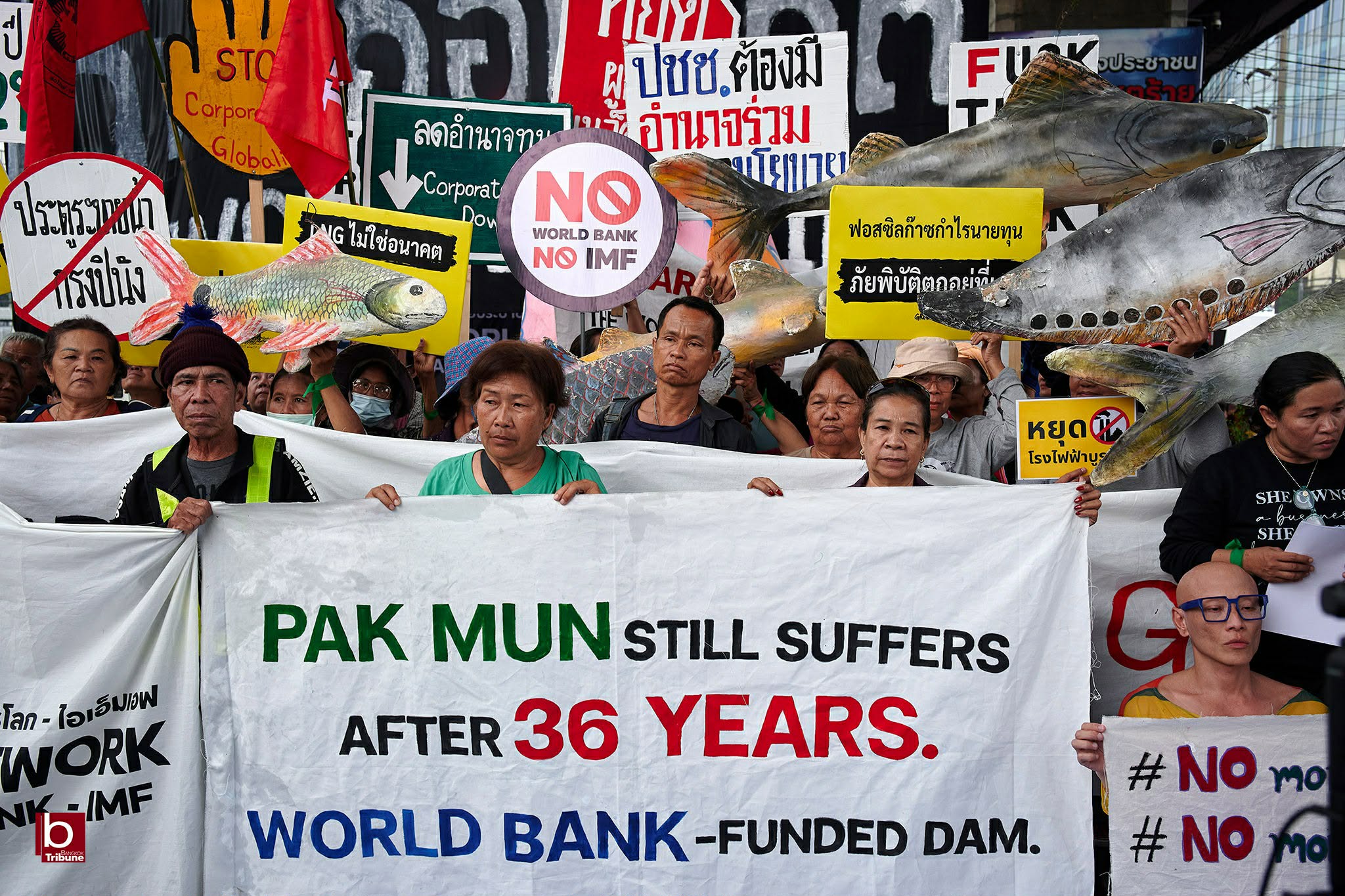
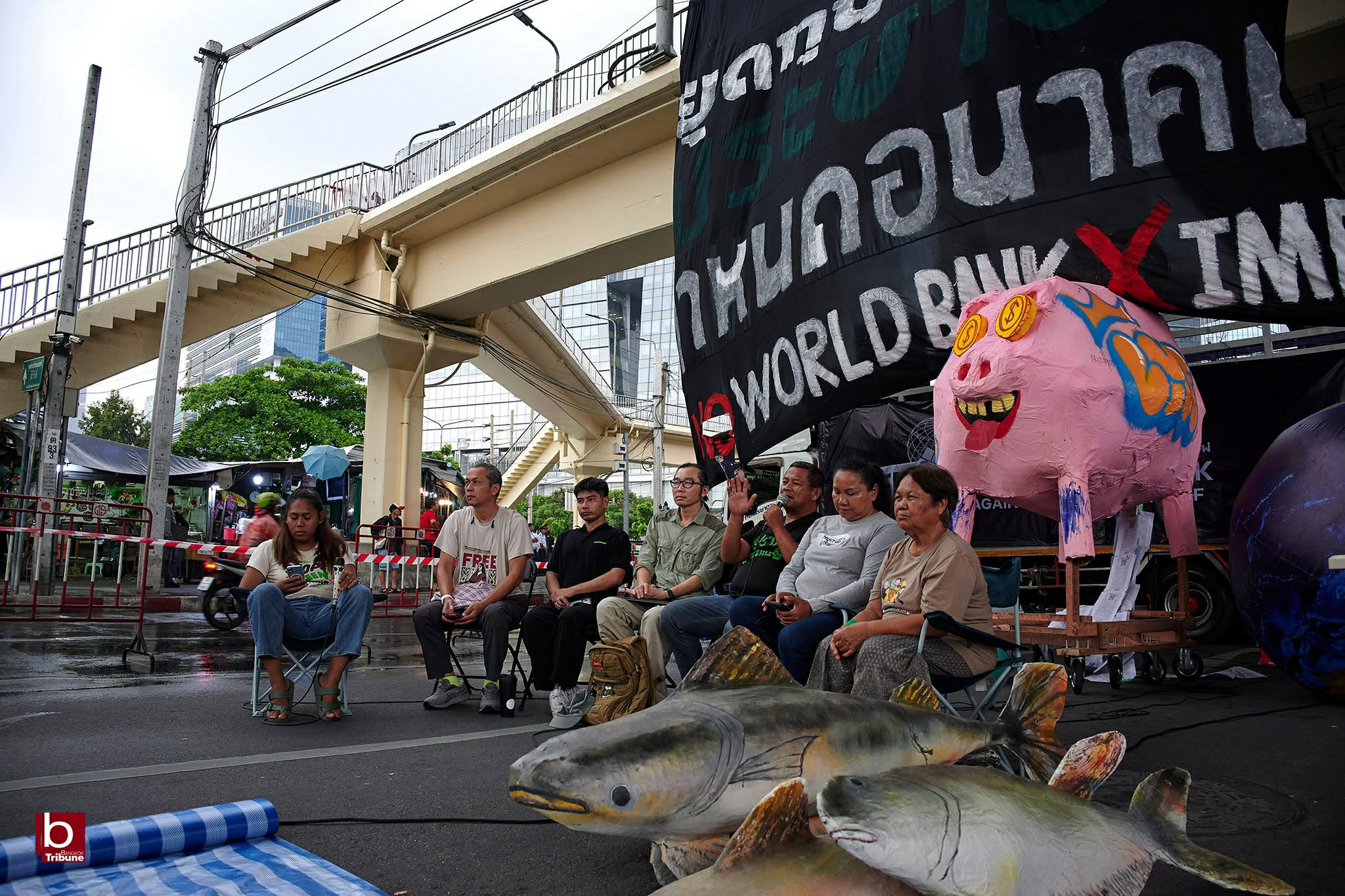
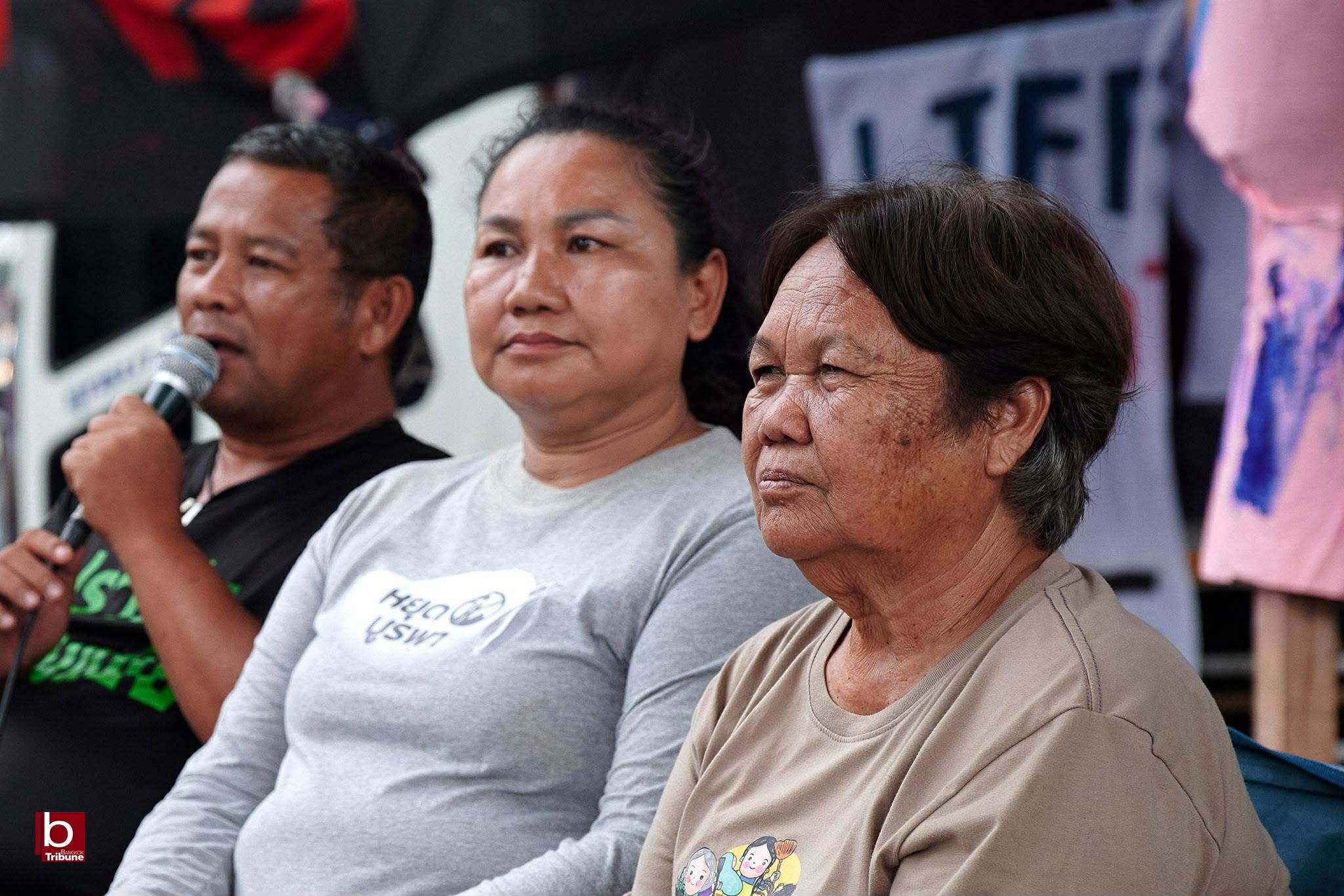
l Pak Mun villagers, including Mae Sompong, joined the rally on the first day. Photos: Bangkok Tribune
The villagers said they had faced increasing poverty, job insecurity, and conflicts over floodgate management throughout this period. These consequences represent the true cost of the project, which cannot be measured solely by the amount of electricity it produces, they noted.
“The Mun River was already valuable and sustained people’s lives long before the word “development” was used to justify building a dam. The Pak Mun Dam provides limited energy benefits but causes immense losses,” the villagers said.
For the past 36 years, the villagers said, they had fought to reclaim what had once been part of their lives and repeatedly highlighted the injustices they had suffered. They had travelled to rallies and submitted petitions, while many of their siblings and children had been forced to leave home to find work elsewhere. Families had been separated, and some elderly villagers had died without receiving justice, they said, reflecting on decades of suffering documented in news reports.
“Those who died no longer had time to wait for justice, but the responsibility for their lives must not die with them. Today, we are speaking out to the World Bank, asking how an institution that once supported the Pak Mun Dam project will take responsibility for the consequences that continue to affect us.
“The World Bank must take responsibility,” the villagers demanded.
Khlong Toei Declaration
The People’s Network against World Bank-IMF also issued a set of demands on behalf of civil society groups and local residents affected by other development projects. It released the so-called “Khlong Toei Declaration,” reaffirming its commitment to fighting injustice and asserting people’s right to determine their own future and development path.
The declaration states that unjust policies and laws, whether imposed by the Thai government or promoted by the World Bank, share the same objective: to commodify public resources and welfare for the benefit of capitalists.
The network argues that although Thailand may not face the same level of debt that it experienced during the 1997 financial crisis, falling under the “ideological colonisation” of global financial institutions can have a destructive impact on natural resources, one that it likens to the damage caused by a bullet.
The declaration emphasises that Thailand cannot escape the middle-income trap without dismantling corruption and entrenched feudalistic power structures. Protests against the World Bank are therefore merely a stepping stone towards the ultimate goal of rewriting the Constitution to ensure that power genuinely rests with the people.
In a separate statement, the group said it had come to protest against a development model that generates wealth for capitalists and elites while leaving behind debt, environmental destruction, and losses that ordinary people are forced to bear with their lives and their future.
Although they campaign on different issues in different areas, the protesters said they face the same power structures: “neoliberalism,” which places capital above people’s lives, and “imperialism,” which allows superpowers to dictate the rules of the global economy.
The World Bank and the IMF, they argued, exercise power through loans, policy conditions, and ideological manipulation to enable capitalists to accumulate wealth, while ordinary people affected by these policies have little or no say in the decisions that shape their lives.
The protesters said they had come not to accept the rules imposed by capital but to reclaim the power to determine their own future and the right to reject development that destroys lives, nature, and the environment.
“The World Bank and IMF meetings in Bangkok from October 12–18, 2026, mark the return of financial institutions that have yet to take responsibility for the damage caused by past policies and development projects. This “financial Olympics” is therefore a platform where states and capital jointly determine the future of the global economy, while the people still have to pay for the damages of the past. This is not progress, but rather the reproduction of capital’s wealth at the expense of the people,” the group said.
The group also criticised the government, accusing it of maintaining control over the country and its economy under what it called the “Blue Regime,” which it said was driven by capitalism and elite interests.
Over the past days of the event, amidst war, the energy crisis, and debt, the World Bank and the IMF have continued to highlight economic growth as a goal, but have failed to answer the question of who benefits from this growth and who enjoys the wealth, the group criticised. This is despite only 32 countries contributing 95% of global economic growth, while the majority of the population still faces poverty and debt, the group noted.
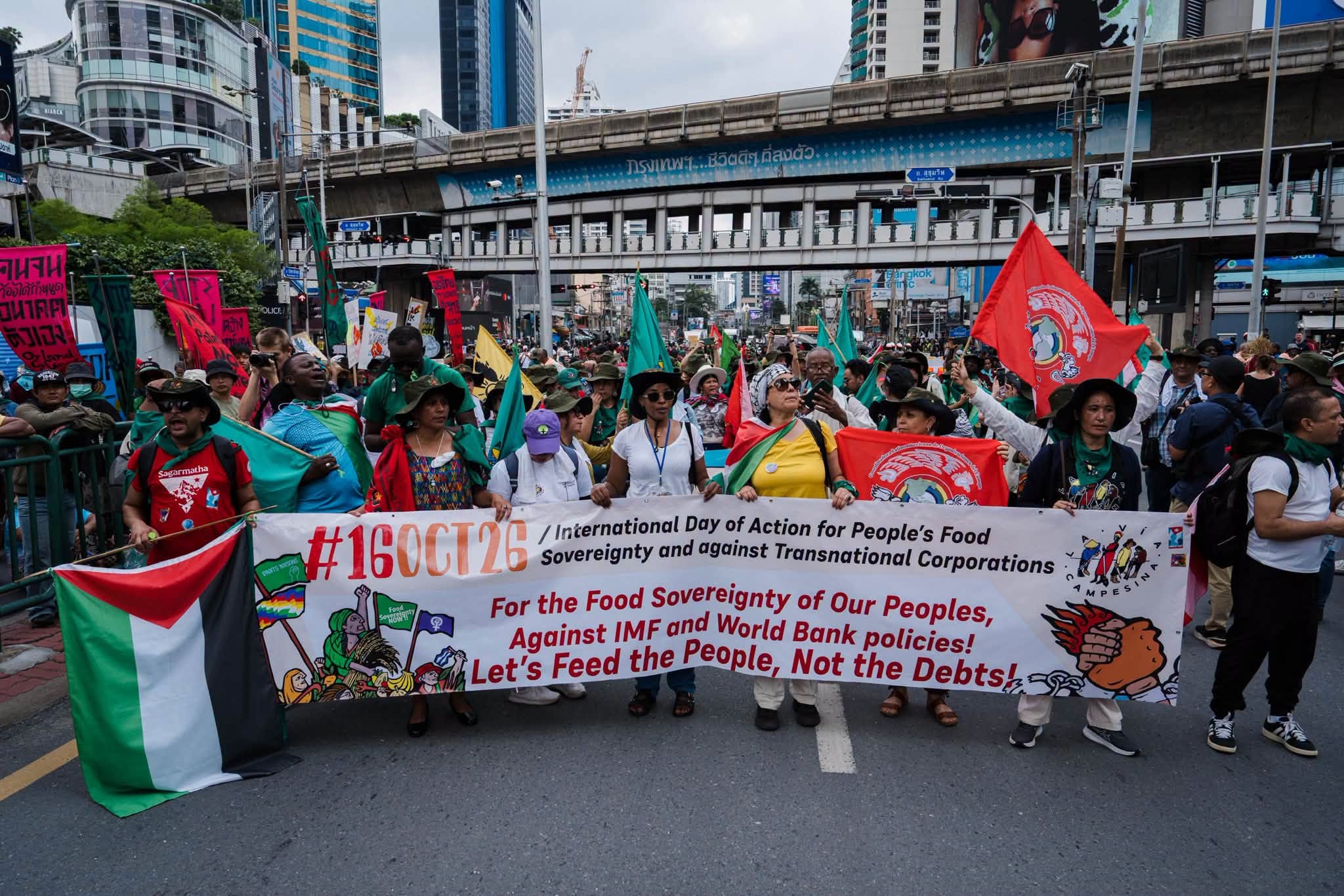
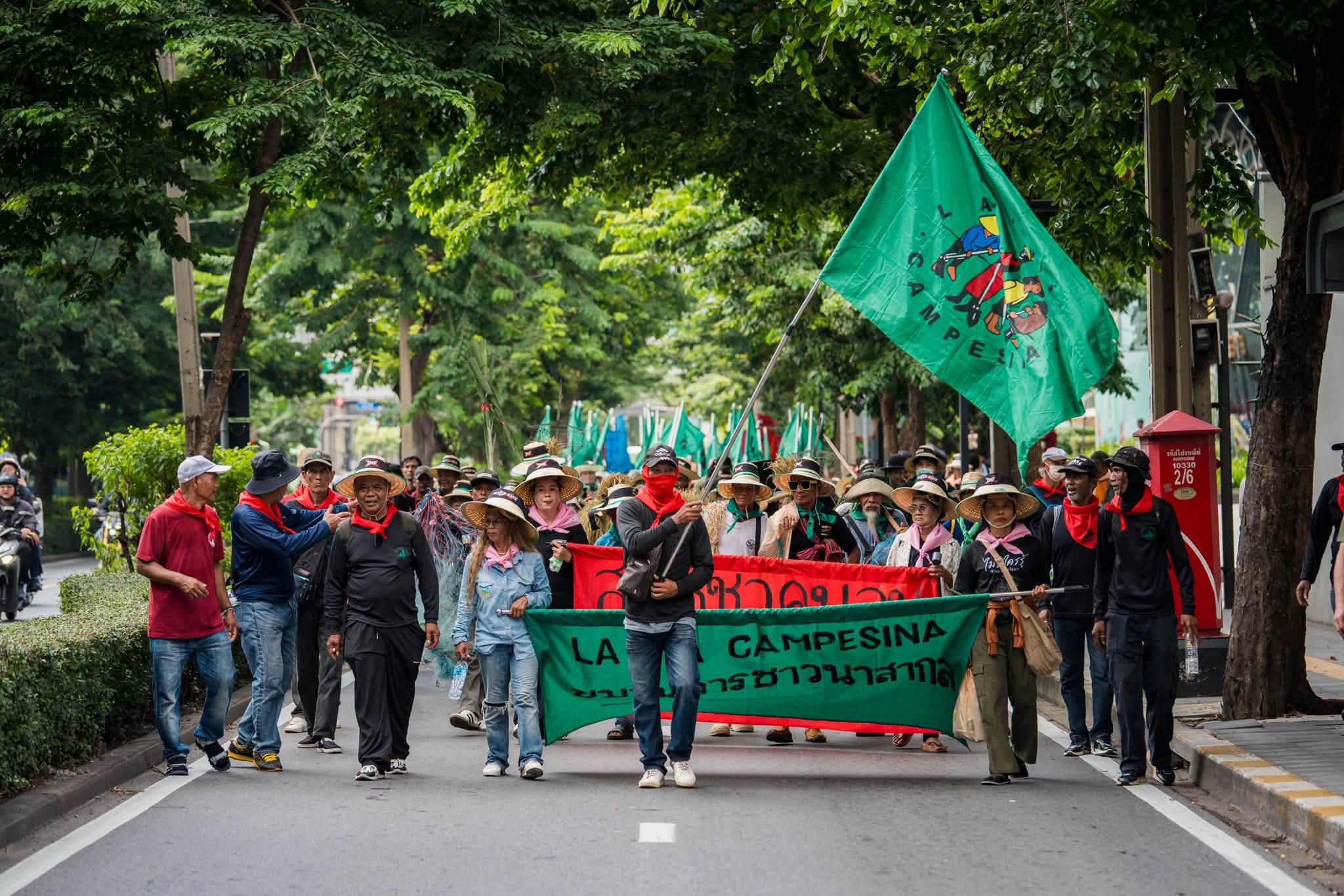
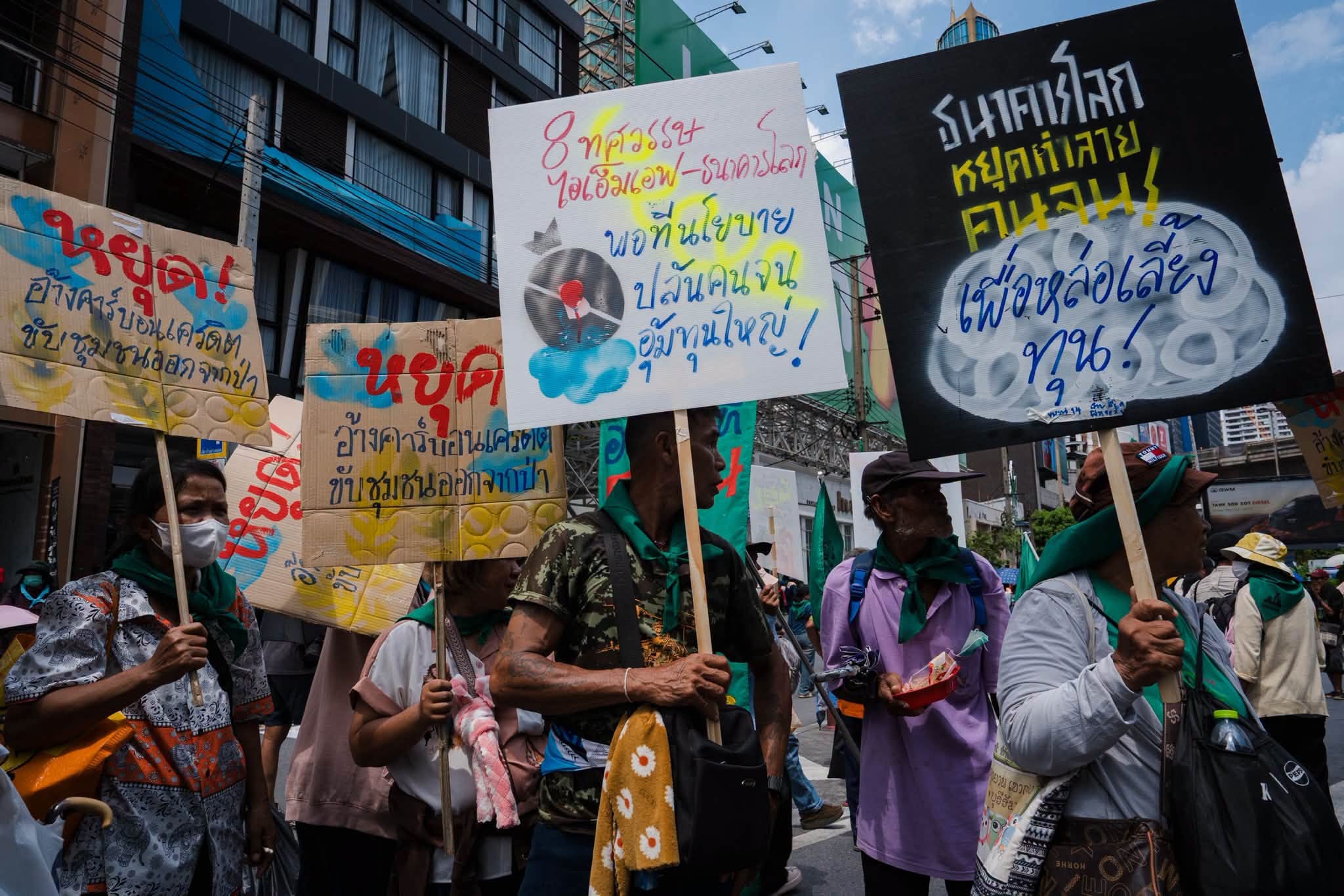
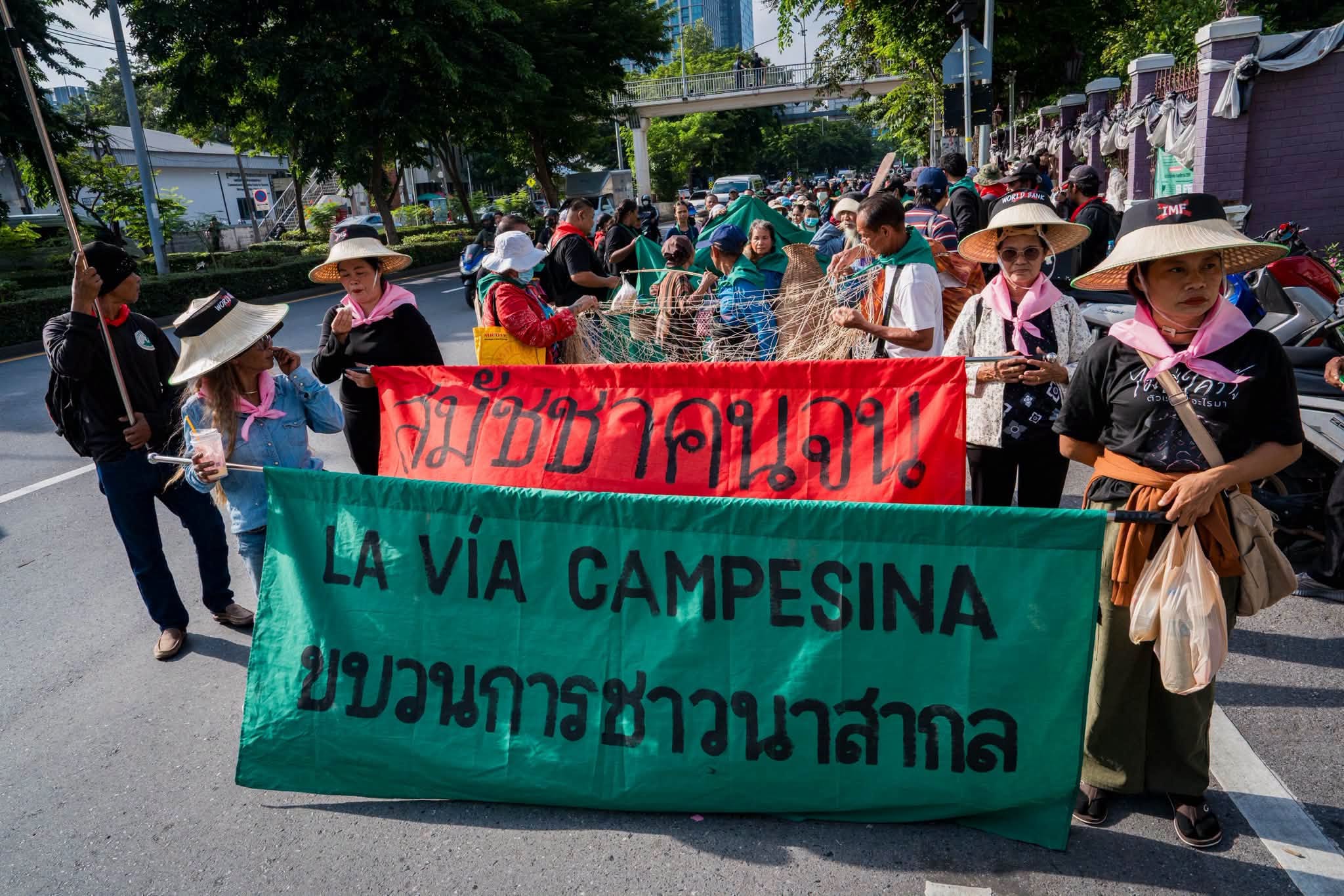

l The rally on the second day. Credit: La Via Campesina/ NGOs-COD
The World Bank continues to promote private capital mobilisation, with reported funding totalling US$112 billion in fiscal year 2026. However, the majority of this funding is concentrated in upper-middle-income countries, while low-income countries receive only approximately US$3 billion.
The group argued that this approach reflects a paradox at the heart of the neoliberal economic order: although markets and the private sector are presented as the main drivers of development, public funds and resources are still used to guarantee investments and mitigate the risks faced by private investors.
It described this model as “public-subsidised neoliberalism,” in which private capital can choose to invest in profitable ventures while the state and citizens bear the risks associated with debt, taxation, and damage to public resources. In other words, profits go to the private sector, while risks and losses are shifted onto the public, the group said.
“The injustice of such development policies is not merely reflected in economic reports or academic criticisms; it leaves deep wounds in the lives of people across the country. The lessons from the Pak Mun Dam, the Bang Lang Dam, and the potash mine are evidence of development that has caused people to lose land, rivers, food sources, livelihoods, and ancestral ways of life.
“Urban poor communities and people living along railway lines face eviction and housing insecurity to make way for urban growth driven by capital’s demands. Meanwhile, people in the eastern region face both flooding and pollution from industrial development that threatens their health, food sources, and livelihoods.
“This is development that creates wealth for a select few at the expense of people’s lives and resources. The water levels may have receded, but the debt, toxic substances, and loss of life have not washed away with the floodwaters. The dams are complete, but the rivers and livelihoods have not recovered. Mines generate profits for capital but leave behind degraded land and water resources for communities. These damages are not the price people should pay for progress, but a debt that the state, the World Bank, and corporations must bear through restoration, remediation, and compensation.
“People have been forced to sacrifice their lives and nature enough. The people do not owe the World Bank anything; rather, the World Bank owes a debt of justice to the people,” the group said.


l PM Anutin delivered a speech at the Annual Meeting Plenary yesterday while other ministers, including his deputy PM Ekniti Nitithanprapas, attended key events. Credit: ThaiGov/ AM2026Thailand
The group outlined seven demands directed at the World Bank and the IMF. First, the institutions must return the power to determine the future to the people rather than allowing the state and capital to monopolise it. Second, energy must belong to the people rather than serve as a source of profit for capital. Third, public debt must not be incurred to generate wealth for private interests.
Fourth, the institutions must recognise that welfare is a right and that caregiving is essential to building and sustaining life. Fifth, those responsible for causing damage must provide compensation rather than leaving the public to bear the consequences.
The group also demanded an end to the harassment of people who seek justice and called for the dismantling of economic structures that serve capital, as well as the breakup of the monopolistic power of what it calls the “Blue Regime.”
Before concluding the rally, the People’s Network against World Bank-IMF pledged to unite and coordinate people’s movements to realise their shared vision for the future and transform Thai society for the better through what it described as “the two hands and feet of the people.” Other groups, including the Assembly of the Poor, also issued similar demands.
The crowd then dispersed peacefully, bringing the two-day rally to a close ahead of the conclusion of the IMF-World Bank annual meetings on October 18.
Read the outcomes of the meetings at am2026thailand.go.th

Indie • in-depth online news agency
to “bridge the gap” and “connect the dots” with critical and constructive minds on development and environmental policies in Thailand and the Mekong region; to deliver meaningful messages and create the big picture critical to public understanding and decision-making, thus truly being the public’s critical voice