
The Mun River flows from its source in Nakhon Ratchasima province for almost 750 km before joining the Mekong in Ubon Ratchathani province, at the border with Laos. The Mun is the largest river in Northeast Thailand by volume and the largest of Thailand’s tributaries to the Mekong, with its basin sustaining the livelihoods of an estimated 10 million people and having historically supported more than 230 fish species
The Pak Mun hydropower dam, whose construction began in 1991 and completed in 1994, was built across this important waterway in Khong Chiam district, Ubon Ratchathani, a few kilometers from the confluence with the Mekong. It was commissioned by the Electricity Generating Authority of Thailand (EGAT), which argued it was needed to meet the growing demand for electricity in the rapidly developing Northeast region known locally as Isan.
The Thai Cabinet approved the project with a total budget of 3.88 billion baht (approximately US$150 million at the time), a figure that increased almost two-fold the following year. After the new budget approval, the World Bank agreed to also support the project. According to the World Bank 1991 Staff Appraisal Report, EGAT was then additionally loaned US$54 million for the “Third Power System Development Project” which included the Pak Mun dam and the expansion of the Mae Moh lignite mine in Lampang province. According to World Bank documents more than 85% of which went towards the Pak Mun Dam construction.
Despite the price tag, the dam never lived up to its predicted output. A 2000 study by the World Commission on Dams found that its contracted capacity of 136 megawatts was never realised and instead consistently produced below 36 megawatts of power — less than 30% of its rated capacity, or less than 1% of Thailand’s total national generating capacity, which was 50,000 MW at the time. This reduced capacity was due to water-volume constraints, compounded by the dam’s gates being periodically opened as a direct result of sustained community pressure, to allow fish migration and manage downstream flow.
Opposition to the dam by local fishing communities and wider networks of NGOs, academics, students and activists was fierce, and it has become the most well-known anti-dam movement in Thai history. The movement argued that by blocking the natural flow of the river, thus preventing the migration of fish, it would destroy the delicate ecosystem that had supported thousands of families for centuries.
And indeed that is what happened. Income from fishing plummeted, fish species vanished, people living along the river’s banks were forced to relocate and find new sources of income.
The environmental damage was further worsened by the dynamiting of the Kaeng Tana rapids next to the dam site, which the authorities claimed was needed to increase the flow of the water through the turbines. This unique underwater terrain of rock had served as a refuge and nursery for fish species which were native to the area and also those that migrated from other regions along the Mekong.
But the dam didn’t only cause environmental impact; it broke down the very social fabric of the communities living within its vicinity. As with any prolonged protest, disagreements and conflicts arose, friendships were broken, family relationships were tested, and cultural traditions and activities slowly became obsolete.
For 36 years, those opposing the dam have held one main demand: if the Pak Mun Dam cannot be decommissioned, then its eight gates should be permanently opened, so the river’s ecosystem and fish species can recover, and future generations can return to making a livelihood from it.
The Common People’s Memory Project
Thailand developed rapidly during the 1990s, with major investment in dams, power stations and other large infrastructure projects. The benefits of this growth were not shared equally. Rural communities living close to these projects were often the most affected by the construction and the environmental changes that followed, yet saw few of the gains.
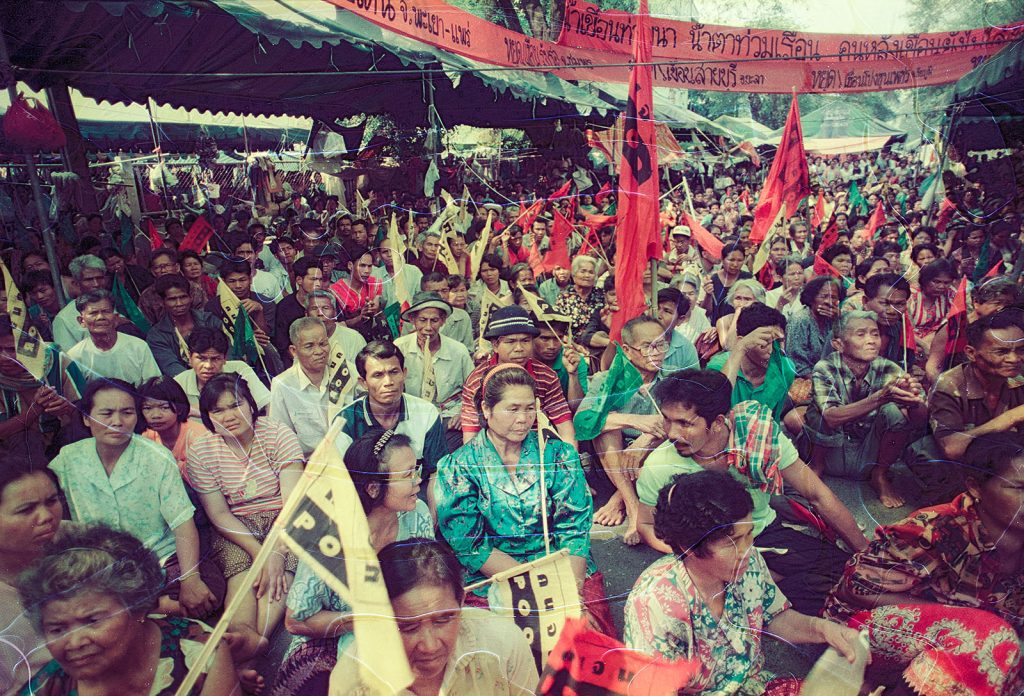
The result was a wave of rural organising unlike anything Thailand had seen before: villagers who had never dealt directly with Bangkok began petitioning ministries, blockading roads, and camping outside of Government house. Several groups emerged from this discontent, the largest and most influential being the Assembly of the Poor.
The Assembly of the Poor was founded to assist those affected by development projects and industries, pressing the government directly for a role in decisions that affected them and a share in the benefits, rather than just absorbing the consequences.
It became the political voice for villagers and marginalised parts of society. As an organisation, it allied with other NGOs in Thailand and abroad, and during its peak in the late 1990s managed to assemble some of the largest protests the country had ever seen.
But it was the construction of the Pak Mun Dam in Ubon Ratchathani province that the Assembly of the Poor became synonymous with, and together with impacted villagers, it rose up to oppose the dam’s construction. Partly supported by the World Bank, the dam caused irreversible damage to the surrounding environment and led to the breakdown of traditional ways of life, causing social conflicts between communities who had lived in harmony for centuries.
Citizens who had been continuously monitoring and scrutinising the dam’s construction since 1989 eventually came together to form the Assembly of the Poor in 1995. They continued to campaign for the restoration of the Mun River, advocating for the dam’s gates to be opened to allow the river to flow freely once again.
Around the same period, another organisation was founded called Friends of the People. Their work complemented the other organisations by acting as a secretariat for the movement, focusing on the collection of information, data, and media coverage of the struggles. From the early 1990s, with their one film camera and later a Sony Handycam video camera, members of Friends of the People documented various community struggles across Thailand, of which the Pak Mun Dam became a focus issue.
Friends of the People disbanded in the early 2000s due to lack of funds, and the founders went their separate ways, leaving behind a huge cache of photographs and video footage. One of the founders, Nitirat Sapsomboon, believing in the collection’s historical importance, argued to keep it, storing it in a run-down building belonging to a grassroots organisation in northern Bangkok.
In 2021, Nitirat Sapsomboon and long-term Bangkok-based photojournalist Luke Duggleby began discussing the collection. Fearing it would be lost for good, the pair retrieved as much as they could — some of it already damaged beyond repair — and took it to their respective homes for safekeeping. Funding was offered by the International Institute of Social History in the Netherlands to digitalise the collection. Two experts from that period, Vattana Narkpradit and Namphueng Hastheetham, joined the team, and the Common People’s Memory Project was born.
The total collection consisted of approximately 5,000 colour transparencies, 50,000 colour negatives, and over 300 hours of video footage. Ultimately, 8,000 photographs were scanned, and most of the 300 hours of video footage was digitalised.
Visual documentation from this period is extremely rare, with much of the footage having been destroyed by the elements or discarded. This collection has become one of the most important pre-digital photography and videography archives ever created, and offers a unique insight into the protest movements of this period, calling for equality, democracy and justice.
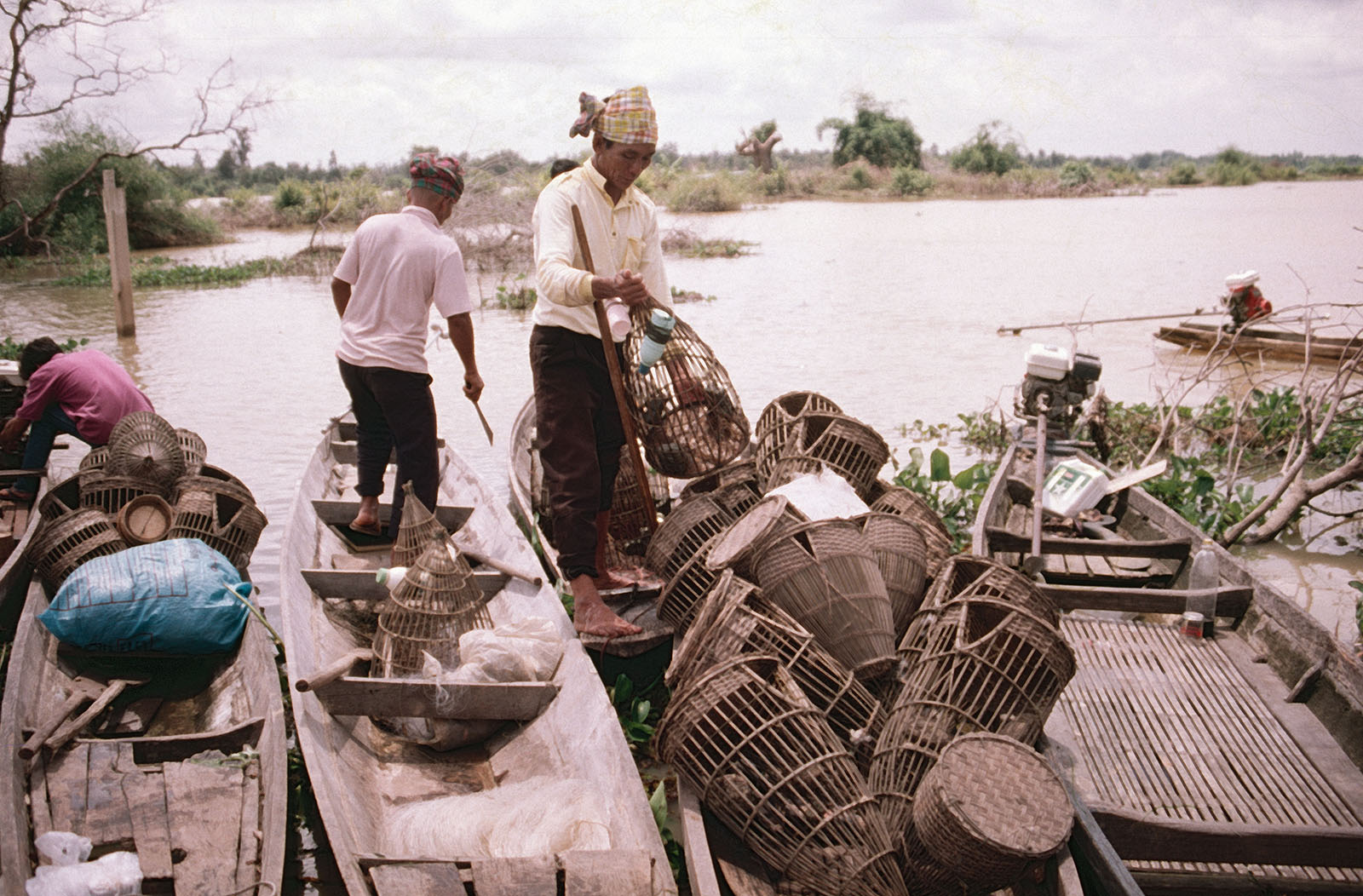
Traditional fishing practices on the Mun River, in which tools were chosen to suit the type of fish being caught. Pictured here is a small fishing tool called a laan and used to catch small fish. It was commonly used during the dry season, in shallow water around 1–2 metres deep, then set underwater with rice as bait to lure the fish. Photo: Common People’s Memory Project
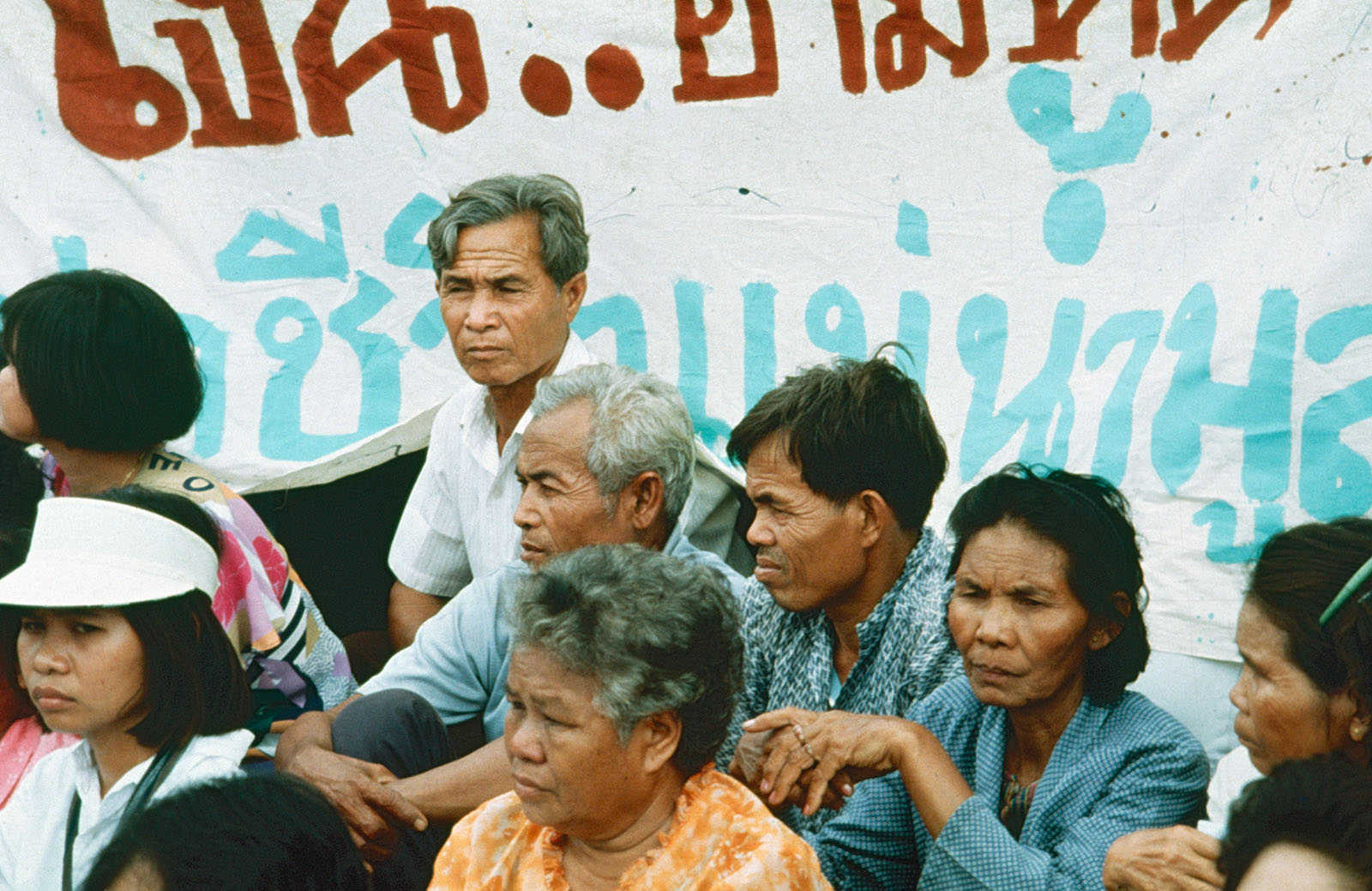
Villager representatives submitted a letter opposing the construction of the Pak Mun Dam after gathering signatures from 12,000 residents and submitted them together with a letter of opposition to the World Bank’s representative office in Bangkok. Photo: Common People’s Memory Project
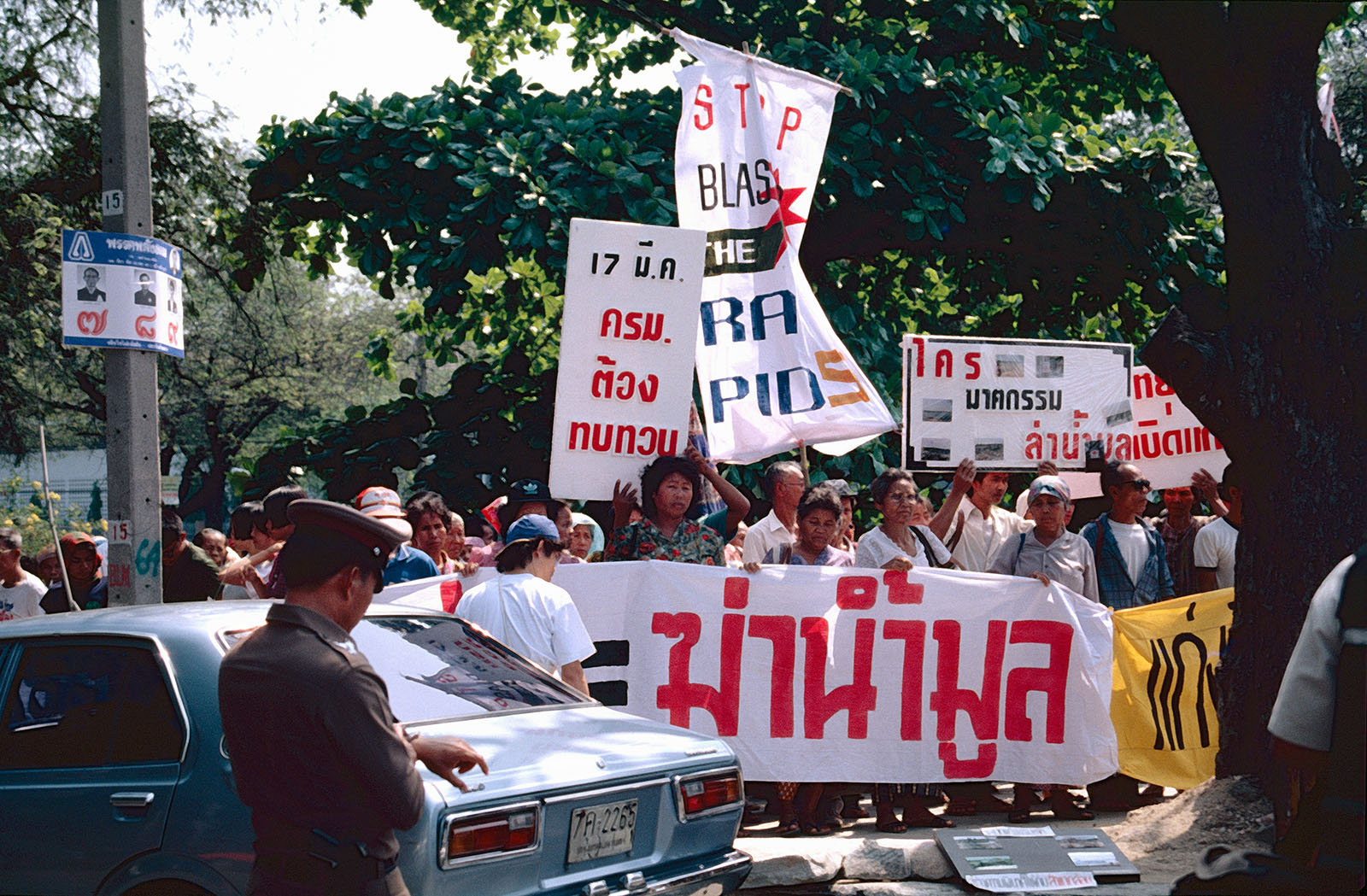
For 3 days hundreds of villagers protested outside the World Bank’s Thailand office with representatives submitting a letter to Lewis T. Preston, then President of the World Bank, calling for the loan to be suspended, on the grounds that EGAT had not seriously studied the project’s environmental impact. Photo: Common People’s Memory Project
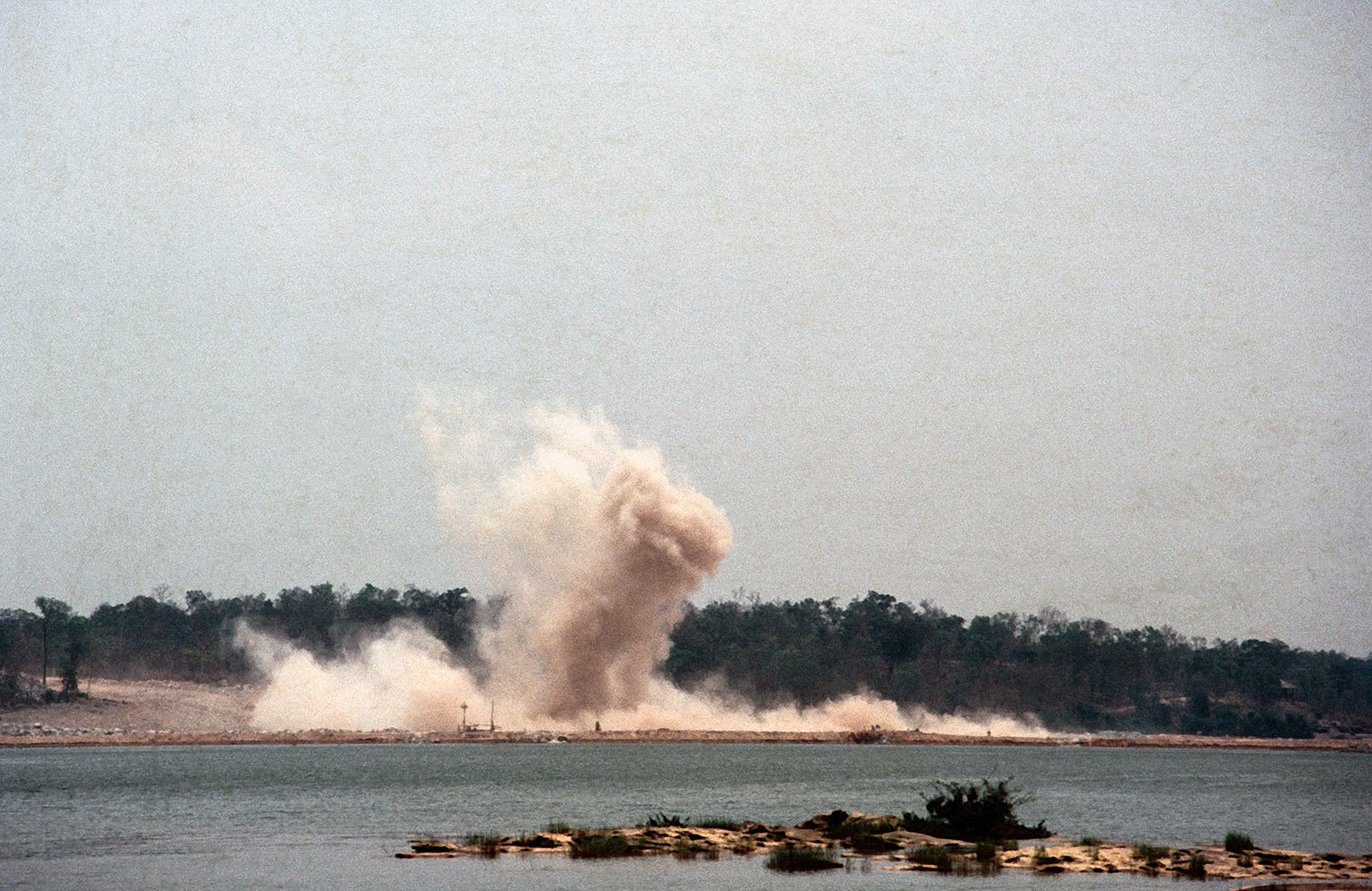
1993 — Khong Chiam District, Ubon Ratchathani
Constructing the dam involved blasting Kaeng Khan Heo, one of 16 rocky rapids in the Mun River basin located within Kaeng Tana National Park. Park officials said they were unaware that the dynamiting would happen. Opponents of the dam said this violated EGAT’s earlier assurance that construction of the Pak Mun Dam would cause no environmental impact. Photo: Common People’s Memory Project
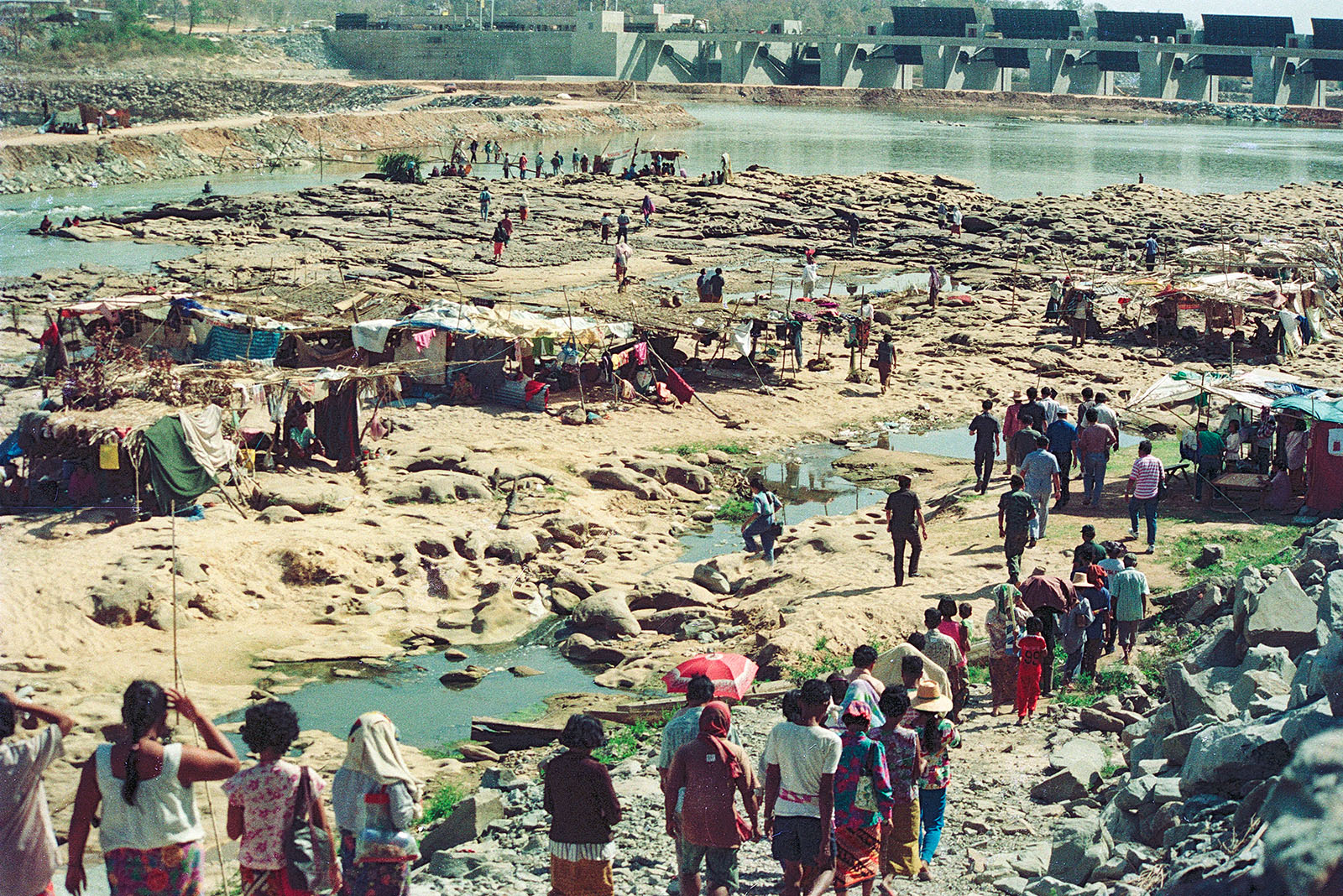
2 March 1993 — Khong Chiam, Ubon Ratchathani
Around 500 villagers opposing the dam descended to the river, below the Pak Mun Dam construction site, and staged a sit-in. They demanded a written agreement guaranteeing compensation for the project’s impacts, while student groups in Bangkok called in parallel for a public inquiry. Photo: Common People’s Memory Project
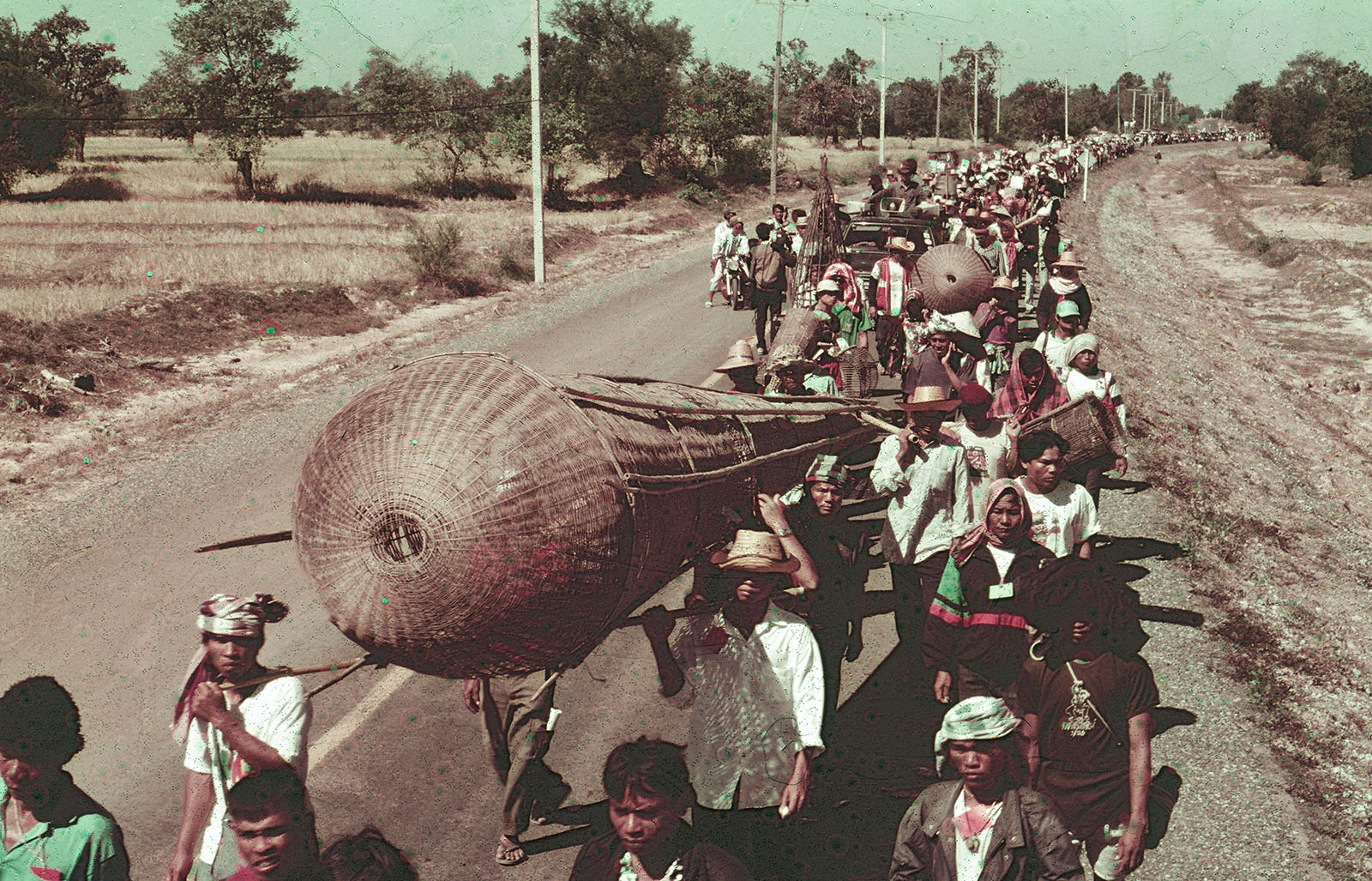
Following a month-long protest (14 October – 13 November 1994) at Ubon Ratchathani’s provincial hall calling for a resolution and compensation for the dams impacts, no progress was made. Approximately 2,000 villagers then decided to march to the dam site itself, a distance of approximately 90 km taking almost one week. Photo: Common People’s Memory Project
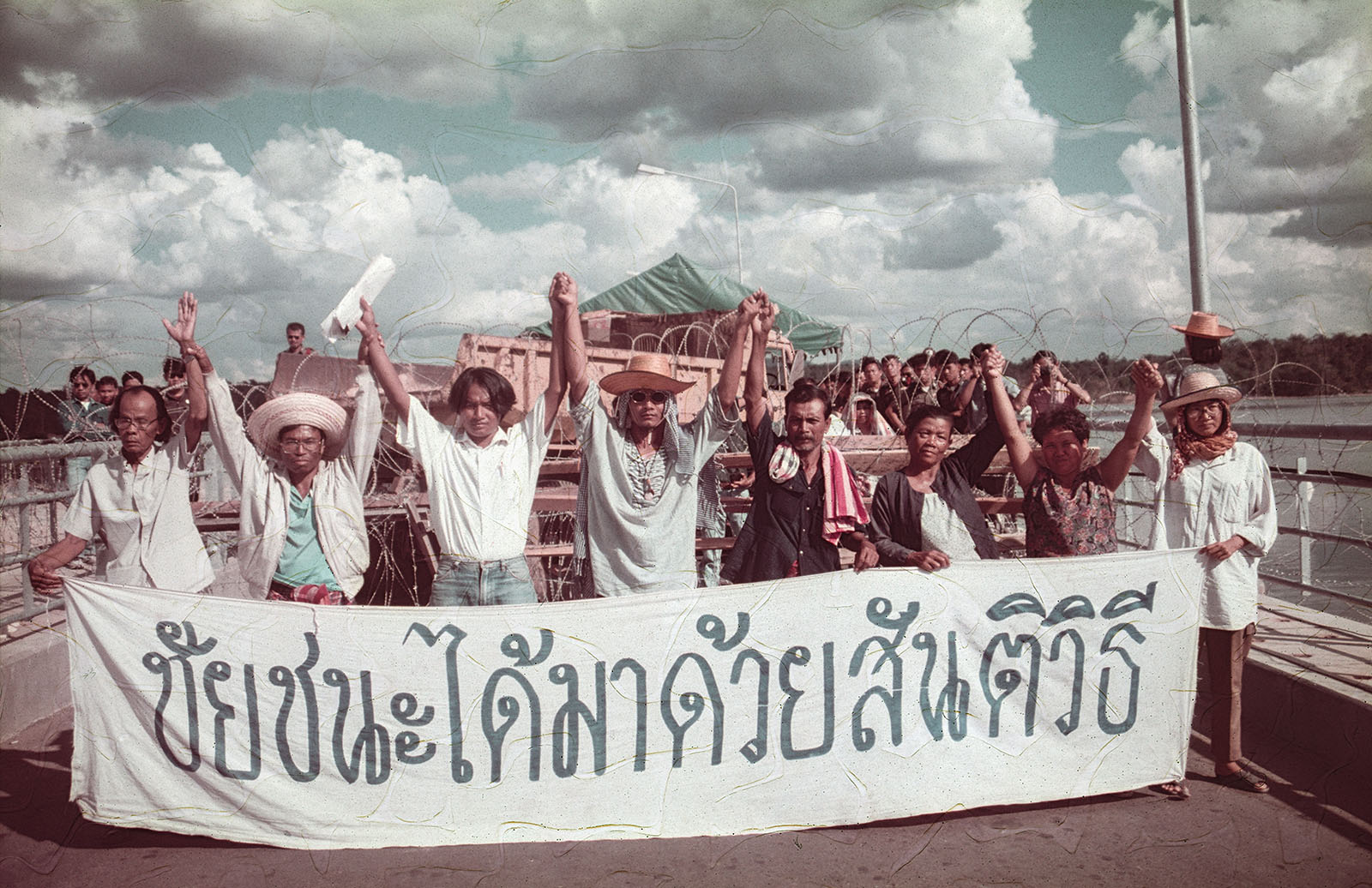
Community leaders, student activists and NGO representatives celebrate their arrival on the Pak Mun Dam itself achieved through peaceful means. They then staged a sit-in on the dam calling for Government officials to visit and resolve the issues. Photo: Common People’s Memory Project
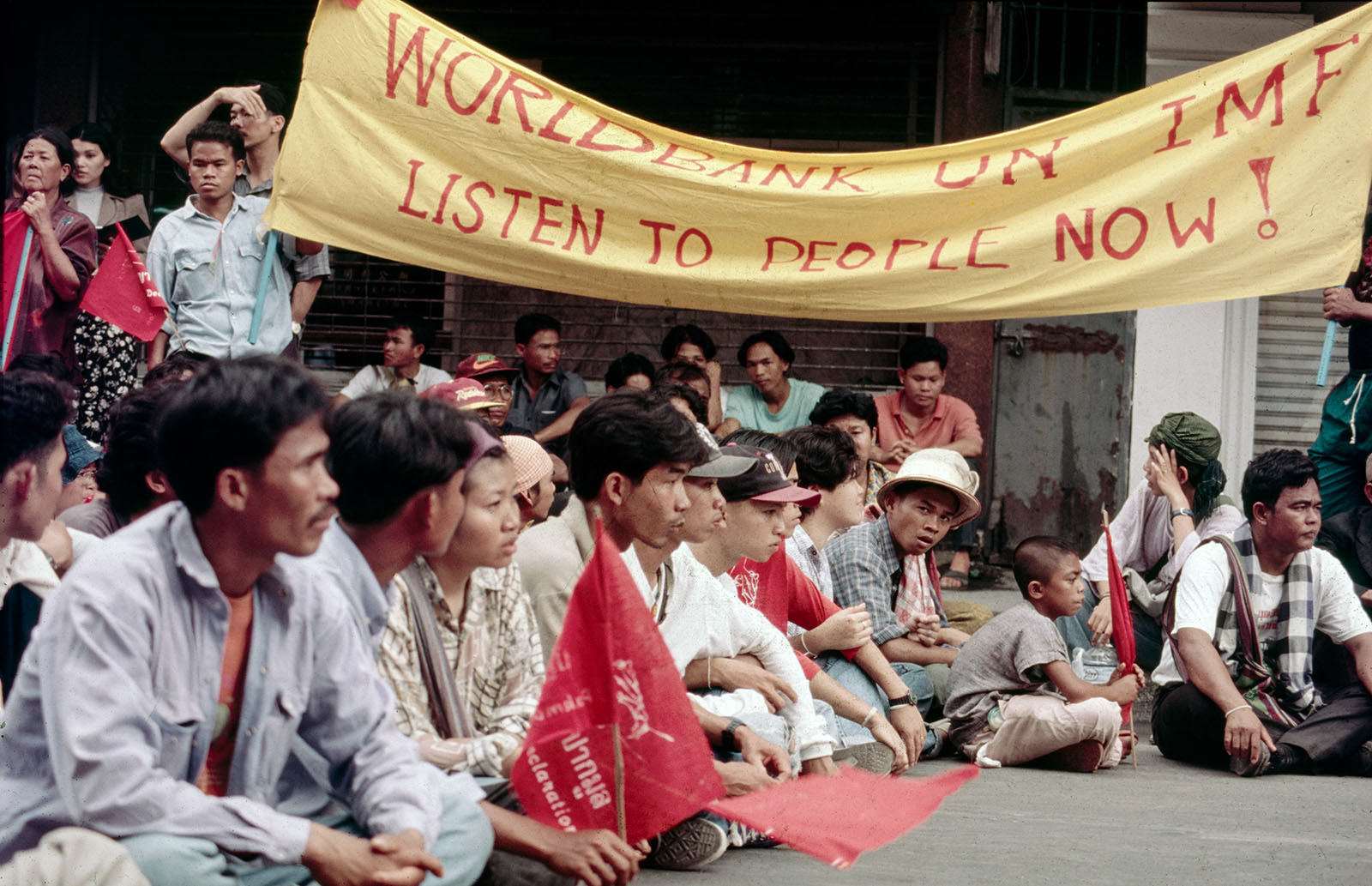
During the Asia-Europe Meeting (ASEM), the Assembly of the Poor protesters, including representatives of the Pak Mun Dam issue, called on the World Bank and International Monetary Fund (IMF) to listen to their demands. Photo: Common People’s Memory Project
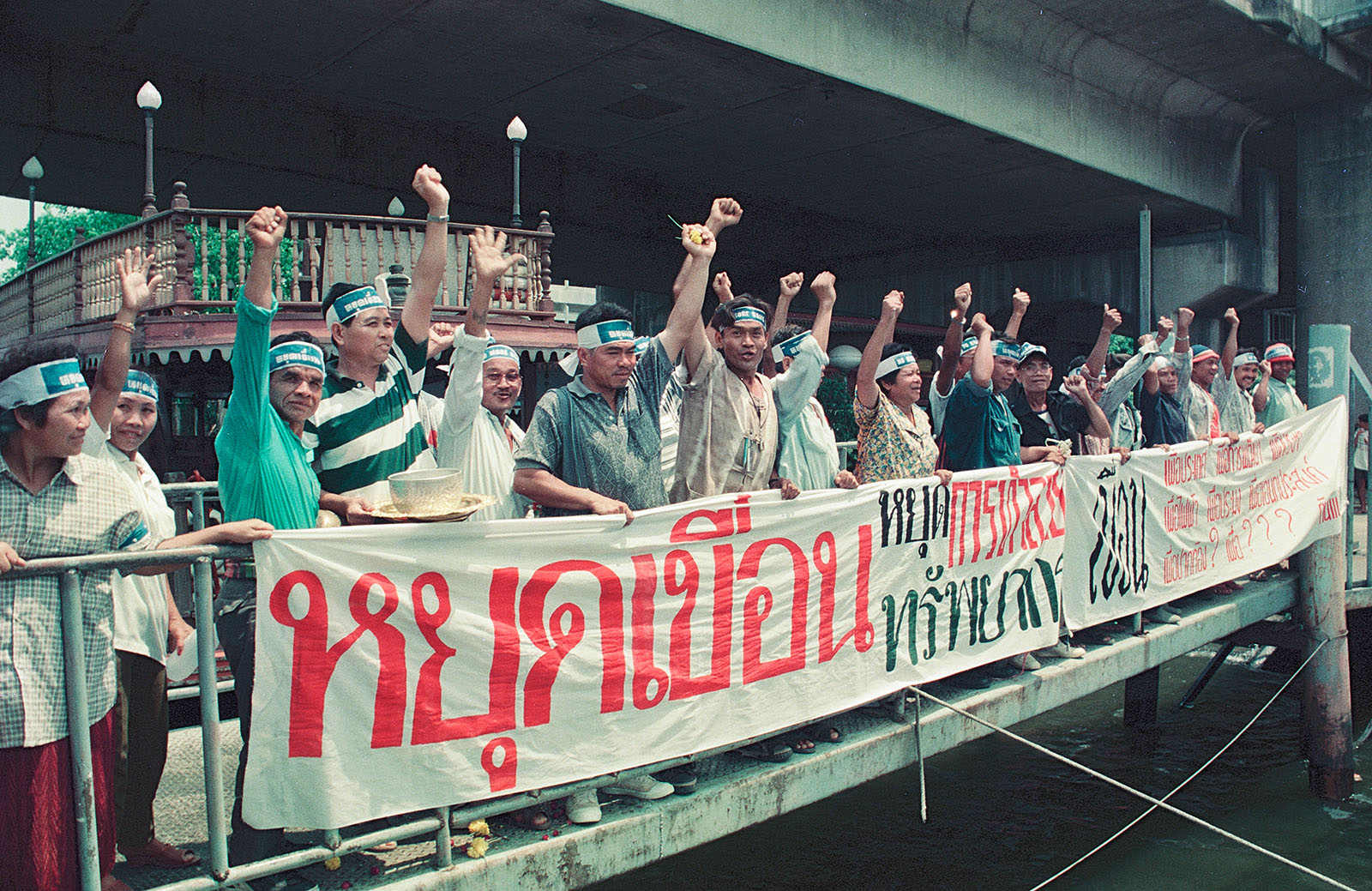
Villagers from the Pak Mun Dam, together with the Thai Student Working Group on Dams, organise a campaign event for the International Day of Action Against Dams on Phra Pinklao Bridge. Photo: Common People’s Memory Project