
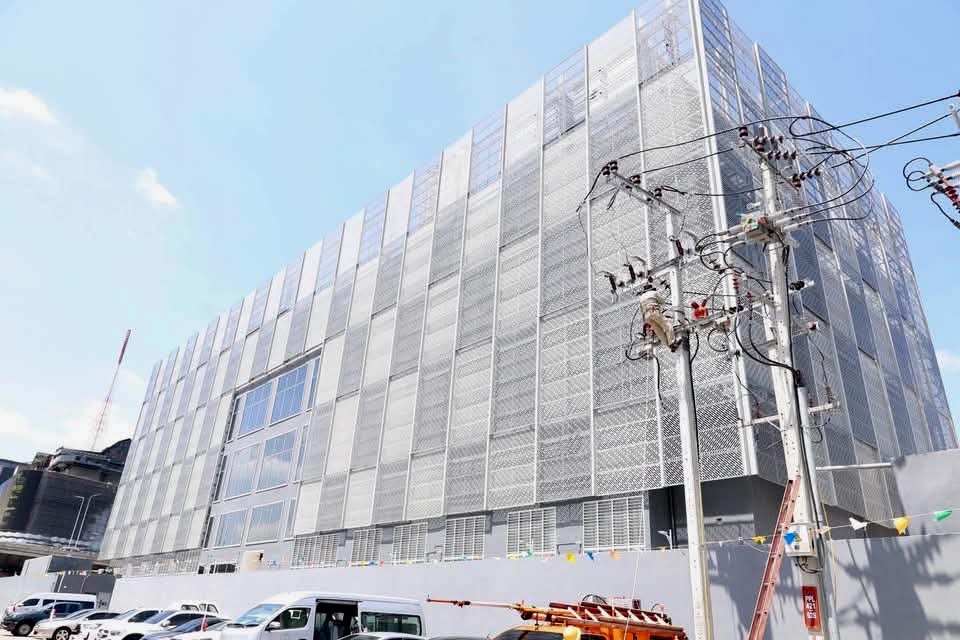
Complaints about their impacts and competition for resources are growing among residents living nearby, particularly in Bangkok, where there are reportedly no direct laws or regulations in place to regulate data centres
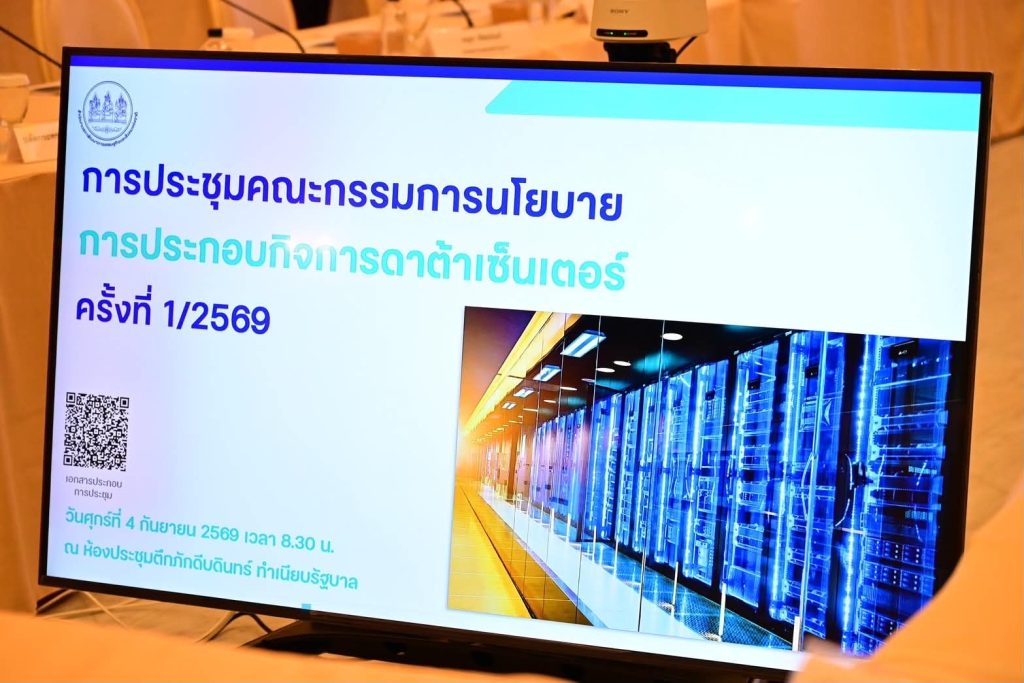
Prime Minister Anutin Charnvirakul on Friday chaired the first meeting of the newly appointed National Data Centre Policy Committee, urging its members to strike a balance between the country’s development and the impacts of the rapidly growing industry.
PM Anutin gave his policy directive to the committee before the meeting, saying data centres serve as vital infrastructure for the digital economy and form the backbone of data processing for future industries.
While Thailand is currently attracting significant interest from global investors, the country’s objective extends beyond merely hosting data centre facilities, he said. Investments in this sector, he added, must generate added value for the nation through technology transfer, workforce development, and the strengthening of the digital ecosystem, particularly in AI and cloud technology, to enhance Thailand’s long-term competitiveness.
At the same time, impacts concerning power consumption, water resources, land use, and cybersecurity must be strictly managed in accordance with international standards, PM Anutin said.



l The first meeting of the newly appointed National Data Centre Policy Committee on Friday. Credit: ThaiGov
PM Anutin added that the policy push followed the enactment of the Prime Minister’s Office Regulation on the Data Centre Business Policy Committee B.E. 2569 (2026). The regulation, he added, serves as a key mechanism for unifying government agencies and experts to establish a coherent regulatory framework, adapt to technological shifts, and close regulatory gaps that have previously hindered development.
PM Anutin said the government had listened to and acknowledged public concerns, particularly in urban centres such as Bangkok, where data centres have been established without laws keeping pace with the industry’s development. This has created loopholes, including the unauthorised use of buildings, miscategorised licences, and speculative behaviour such as hoarding permit allocations for commercial resale.
A prime example is the power requests submitted to the Provincial Electricity Authority, totalling nearly 20,000 megawatts — an amount approaching the nation’s total electricity consumption, he added.
The meeting did not signal a retreat from promoting data centres. Instead, it underscored the need to “reorganise” the industry and establish clear, transparent rules to close legal loopholes and prioritise public safety, thereby addressing societal concerns and fostering a better understanding of the industry, PM Anutin stressed.
PM Anutin also urged the committee to find ways to meet standards for “green data centres” by promoting clean and renewable energy sources such as solar and wind power rather than relying on fossil fuels. He said this aligns with international initiatives, such as the OECD framework, and supports Thailand’s commitment to achieving its Net Zero targets. He also urged the committee to study and vet all relevant issues comprehensively.
“The government stands ready to translate the recommendations and findings into concrete action, whether through official announcements, regulatory amendments, or elevating measures into formal Acts of Parliament to ensure the country’s digital infrastructure develops in a balanced, secure, and sustainable manner,” said PM Anutin.
According to PM Anutin, previously approved projects may proceed as normal, as most of them face no issues and have already secured adequate supplies of energy, water, and other natural resources. However, the government will withhold approval for any new projects, citing emerging concerns, including the hoarding of permit allocations.
The groundwork
Deputy Prime Minister and Finance Minister Eakniti Nitithanprapas, the committee’s chair, said at a press conference after the meeting that the core principle emphasised by the Prime Minister was that Thailand was not blocking data centre investments. Instead, the approach is shifting from individual, agency-by-agency approvals towards establishing a national strategy and evaluation framework. This will ensure that investments align with the country’s development direction and that their impacts can be managed efficiently.
The Deputy Prime Minister elaborated on four challenging areas raised at the meeting. First and foremost is data consolidation. He said that currently, applying for permission to establish a data centre involves multiple agencies. It is therefore necessary to collect and organise all relevant data into a clear, unified database.
Secondly, minimum requirements need to be established. Rules and regulations will be introduced to set minimum standards for each area to prevent negative impacts on the public, economy, society, and environment, the Deputy Prime Minister said. Once the data is gathered, these baseline safety standards will apply universally to all data centre operators to protect citizens.
Thirdly is strategic elevation. Operations will be linked to key national strategies, such as clean energy, environmental protection, achieving Net Zero, and AI development, Mr. Eakniti noted. This also includes ensuring that Thai citizens and business operators, especially small businesses, can better access and utilise these technologies. Therefore, investors using Thailand as a data centre hub must align with these strategies and create tangible value for the country, he stressed.
Last but not least are mechanisms to maximise national benefits, Mr. Eakniti stated. All operators must meet minimum standards while also adhering to national strategic goals. Evaluation will consider benefits such as income generation, the creation of opportunities for local communities, and support for the digital economy, while helping drive the country towards its Net Zero targets.
“Moving forward, the committee will design suitable review models and competitive selection guidelines to ensure data centre investments deliver maximum benefits to the nation,” said Mr. Eakniti.
According to the committee’s document, four key areas were identified as the groundwork: data integration; establishment of governance standards and oversight; formulation of desirable data specifications; and formulation of evaluation criteria.
Under data integration, relevant agencies will integrate data centre information into a single, unified dataset as quickly as possible. Agencies involved in approving and licensing data centre operations must submit information on data centres, categorised into four statuses: currently operating; construction completed; under construction; and under consideration or review. The Ministry of Digital Economy and Society (MDES) will serve as the central agency responsible for collecting this information, with a submission deadline of September 11, according to the committee.
Additionally, the Department of Business Development has been assigned to assess the appropriateness of establishing a dedicated Thailand Standard Industrial Classification (TSIC) code for data centres in accordance with relevant laws and regulations.
Under the establishment of governance standards and oversight, the formulation of regulations and joint rules for data centre oversight will be expedited. The committee approved the scope by defining “data centres” as encompassing all types of data centres, including those intended for internal use within a company or its affiliates, as well as those serving third parties outside the corporate group.
Oversight and governance rules will apply across the board, with criteria and conditions tailored to each specific category of data centre. Given the current lack of comprehensive data, the secretariat has been asked to draft these regulations based on data centre status information submitted by the relevant agencies.
Under the formulation of desirable data specifications, the committee approved a draft policy covering key principles ranging from universal enforcement and clear categorisation of data centres with power capacities exceeding 2 megawatts as industrial enterprises, to resource cost reflection and sustainability, screening mechanisms, and the creation of a supportive ecosystem for the country’s digital economy.
Last but not least, the committee approved the establishment of four specialised subcommittees to formulate technical standards and operational frameworks across economic, infrastructure, spatial and structural, and environmental dimensions.
The subcommittees responsible for the latter three dimensions were tasked with establishing baseline technical standards or minimum requirements, including infrastructure supply readiness, location suitability, environmental standards, and tailored governance approaches for each category of data centre, including grace periods for policy compliance.
The meeting directed the Secretariat to define clear terms of reference for each subcommittee and coordinate among them to present an interconnected policy mechanism to the committee within this month, according to the committee.
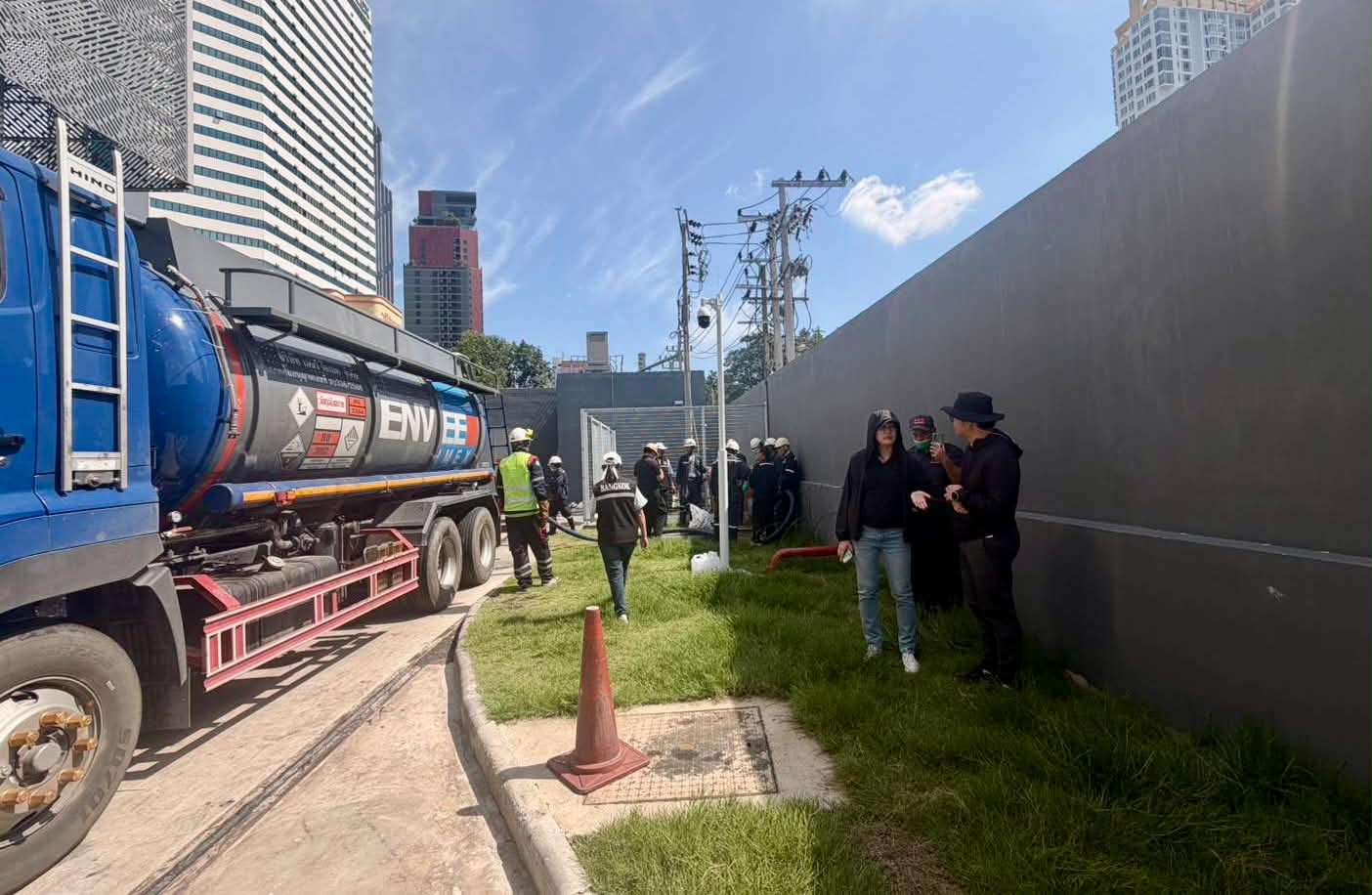
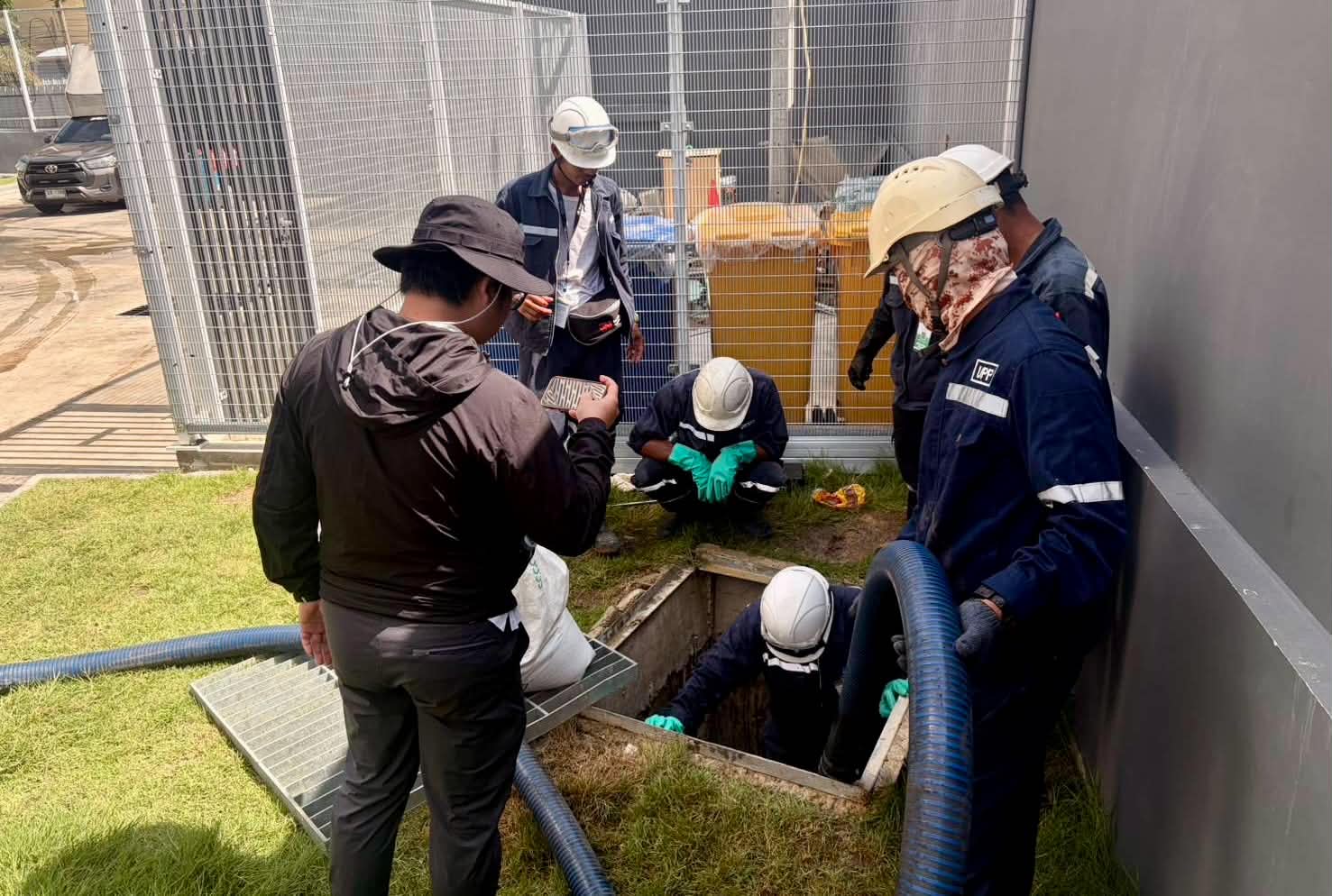
l PCD officials inspect the clean-up operation of sewage systems at a data centre linked to wastewater discharges and contamination of public sewage systems and canals in the city. Credit: PCD
Emerging impacts
The Cabinet on August 5 agreed in principle to the draft regulation to establish a new committee tasked with formulating policy directions and an operational framework for relevant authorities to regulate data centres in the country, as there are currently no direct laws or regulations governing them, despite data centres being part of the government’s flagship policy to help drive the country’s future industries and digital economy.
Under the new regulation issued by the Prime Minister’s Office, which took effect on August 14, the structure of the new committee was established along with a broad definition of data centres. However, the committee still needs to further classify the types of data centres and formulate rules and regulations to govern them.
On Wednesday, the issue came to a head as Bangkok authorities took action in response to complaints from residents living near data centres in the city. In addition to more than 40 in-house data centres, the city now has at least six standalone data centres, three of which already have permits and are operational.
Following an inspection on Wednesday led by Bangkok Governor, Dr. Chadchart Sittipunt, authorities found that there were no direct rules or regulations governing the facilities. These centres had been registered as “warehouses”, meaning their impacts on surrounding neighbourhoods and the environment were not directly regulated, as they were not required to conduct an Environmental Impact Assessment (EIA).
Some of these centres have reportedly already affected nearby residents, with high levels of volatile organic compounds (VOCs) up to 6 ppm allegedly released from unregulated fuel stockpiling, as well as oil slicks and wastewater discharges, which have contaminated public sewage systems and canals.
The situation prompted the governor to suspend permit approvals, pending policy directions and regulations from the committee, while the three operational centres are awaiting further impact assessments. According to Dr. Chadchart, the BMA will push for clear definitions, types, and sizes of data centres. It will review city planning regulations, building control laws, and energy requirements, as well as considering establishing appropriate zoning for standalone data centres. Additionally, it will discuss the possibility of adding those facilities to the list of projects required to conduct an EIA report in accordance with the relevant processes.
The Energy Ministry, meanwhile, has banned fuel stockpiling in the city for power generation for these data centres. Its officials have already filed a complaint over excessive fuel stockpiling by some of the centres. On July 15, the National Energy Policy Council (NEPC) also resolved to create a distinct user category for data centres to accurately reflect power generation costs and prevent competition for energy resources with other users in the country.
According to the Board of Investment’s (BOI) statistics released early last month, 42 investment-promoted data centre projects were approved between 2024 and 2026, representing a total processing capacity (IT load) of 3,400 megawatts and combined investment of 750 billion baht.
The latest figures presented by the Office of the National Economic and Social Development Council (NESDC) show that at least 35 data centres are operational in Thailand, mostly in regulated industrial estates. Eleven of these were approved by the BOI, while the others were permitted by various agencies. A further 49 projects are under construction, while 117 projects are awaiting evaluation or have expressed interest.
In late July, when PM Anutin visited China, he invited Chinese investors, through the country’s senior leaders, to invest in Thailand and use the country as a production base for AI-related industries, despite the absence of concrete policies or regulations governing the sector.
Some opposition MPs, including a Bangkok MP from the People’s Party, Suphanat Minchaiynunt, have spoken out, saying they warned the government and the Prime Minister around two years ago to urgently introduce direct policies and regulations to deal with the growing industry, but that the government failed to heed their recommendations.
Read the impacts worldwide at Environmental Cost of AI’s Energy Use: Carbon, Water and Land Footprints

Indie • in-depth online news agency
to “bridge the gap” and “connect the dots” with critical and constructive minds on development and environmental policies in Thailand and the Mekong region; to deliver meaningful messages and create the big picture critical to public understanding and decision-making, thus truly being the public’s critical voice