
Chinese mining investors and operators are still accused of taking advantage of mining workers, including women, while environmental impacts continue to be widely observed in Southeast Asia’s most concentrated rare earth mining area, Myanmar’s Kachin State
The 5th International Conference on Burma/Myanmar Studies (ICBMS), which took place from August 14 to 16, featured two consecutive sessions on rare earth (RE) mining activities in Myanmar’s hotspots, reflecting the strong interest in the issue among participants.
The first session, “Rare Earth: Extractive Industry, Global Supply Chain and Transboundary Water Pollution”, was organised by Rivers and Rights as Plenary Session 3. The second session, “Rare Earth Mining in Myanmar: Environmental Degradation, Gender-Based Exploitation, and Shifting Governance in Chipwe,” was organised as a roundtable by Mizzima news outlet.
The conference, held at Chiang Mai University, brought together participants and members of the academic community to explore the transformations Myanmar has undergone following the 2021 coup and the election, with the aim of academically addressing a new political imagination that could help shape thinking about a new Myanmar. Various sub-themes apart from politics, including natural resource governance, were therefore discussed alongside other social and economic issues. (Read: 5th Myanmar Studies conference kicks off with calls for political imagination and inclusive diplomacy amid Myanmar’s “interregnum”)
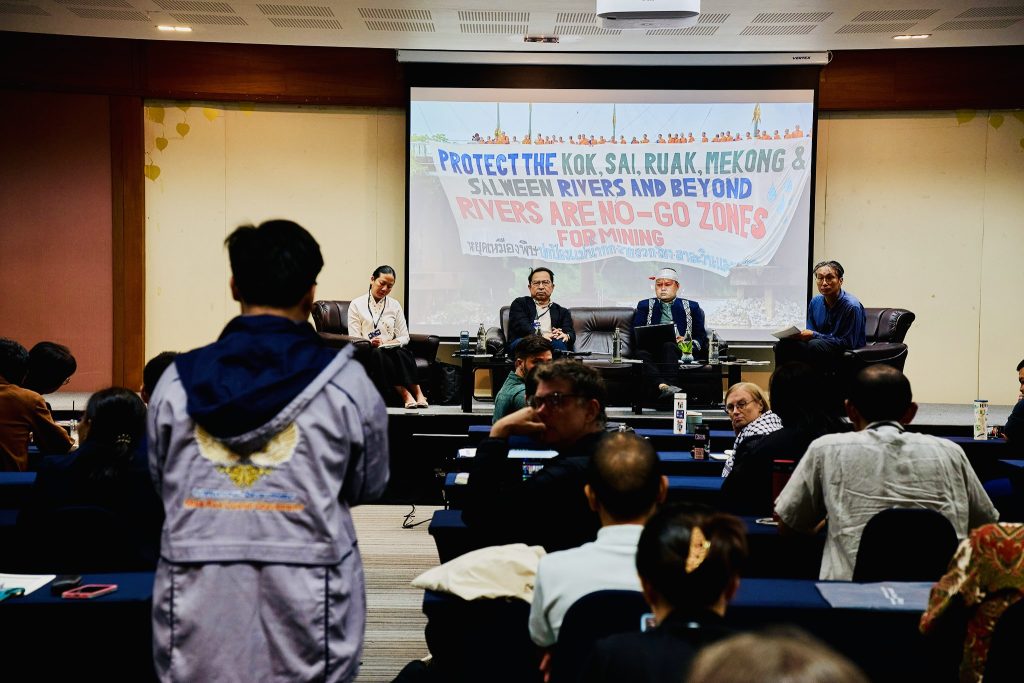
At the conference, rare earth mining in Myanmar, one of the most critical issues challenging Myanmar and its neighbours today, was extensively discussed and drew the attention of a large number of participants. Many packed the room and raised questions that they said required answers from the relevant authorities, including non-state actors.
Seng Li, a research fellow at the Regional Center for Social Science and Sustainable Development (RCSD) at Chiang Mai University, presented findings from his PhD research, The Governance of Rare Earths Mining in Kachin State, Myanmar, which identified both progress on the ground and continuing shortcomings.
According to Mr. Seng Li, the Kachin Independence Organisation and its armed wing, the Kachin Independence Army (KIO/KIA), first controlled early mining sites in Mai Ja Yang near the border with China in 2010. In late 2024, they then took control of the most densely concentrated rare earth mining sites in Pangwa and Chipwe, which were under the control of another armed organisation, the New Democratic Army–Kachin and its army-turned Border Guard Force of the junta government (NDA-K/BGF).
Aside from security considerations, financial incentives to support its fighting cause and increase its leverage also drove the KIO to take control of the two areas.
As reported by Myanmar Witness, at least 400 rare earth mining sites in Kachin State had been identified since 2021, while another 45 sites had emerged in adjacent areas of Shan State. Although some local residents have viewed rare earth mining as a new economic opportunity after the hardships caused by prolonged fighting and COVID-19, many others have experienced its social and environmental impacts and begun complaining to KIO leaders.
According to Mr. Seng Li, KIO leaders initially introduced taxation for Chinese mining investors in late 2024 following a brief scuffle. Since 2025, there have been changes in rare earth mining governance in Kachin, with the sector becoming more institutionalised and regulated.
The KIO Central Department of Commerce eventually introduced mining regulations in late 2025 to regulate rare earth mining in the area. The regulations consist of eight chapters covering matters ranging from permit application requirements to enforcement and penalties, under three separate committees responsible for different matters. Labour provisions and environmental protection are also addressed.
However, as noted by Mr. Seng Li, three major challenges remain: labour protection, gender-based protection, and environmental protection.
“Looking at the overall situation after the KIO institutionalised and regulated this mining sector, we can see some improvements in terms of taxation, logistics and trade, foreign personnel control, and public security. However, issues concerning environmental protection, labour protection, and gender-based protection still remain at the mining sites,” said Mr. Seng Li.

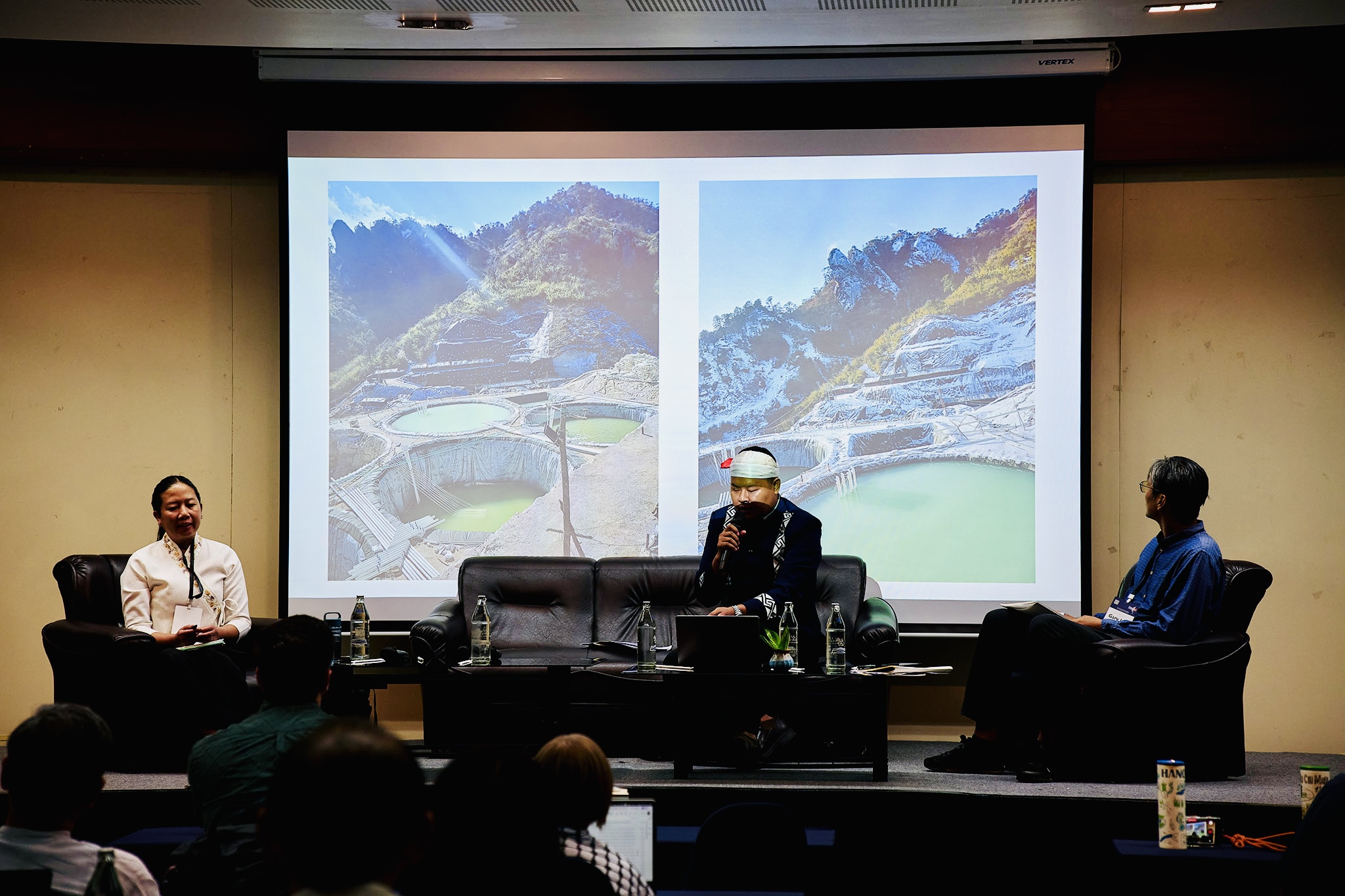
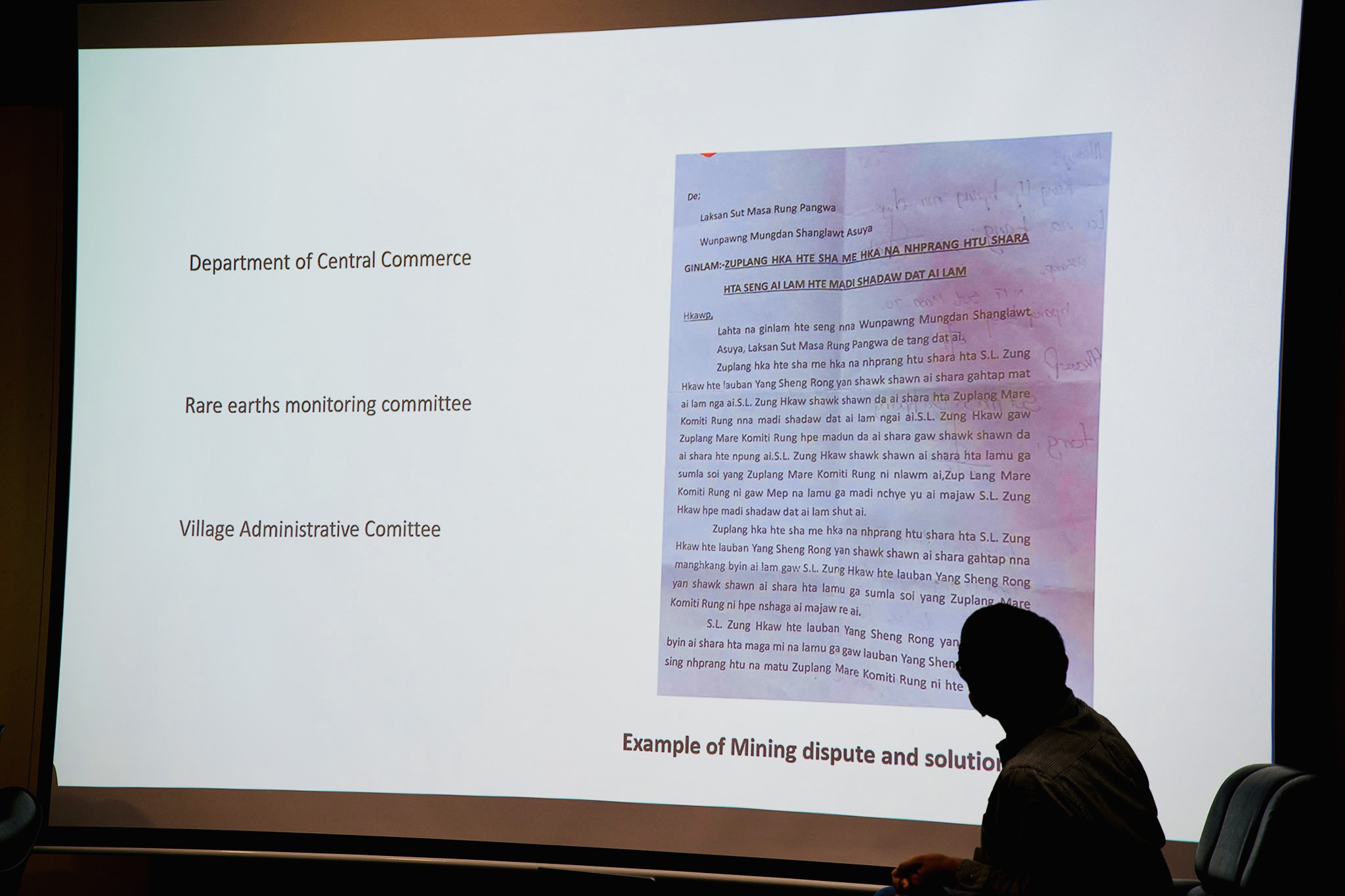
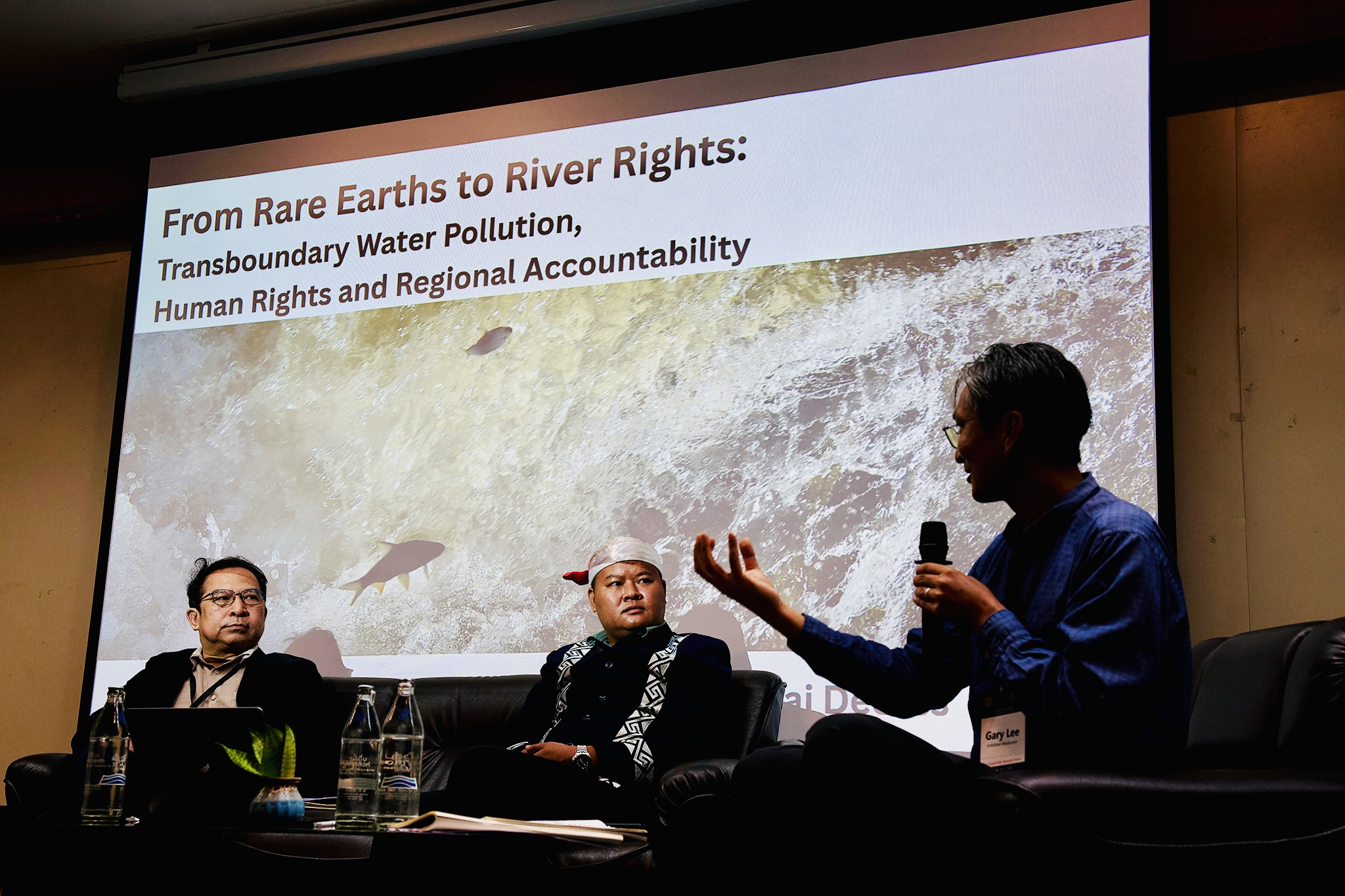
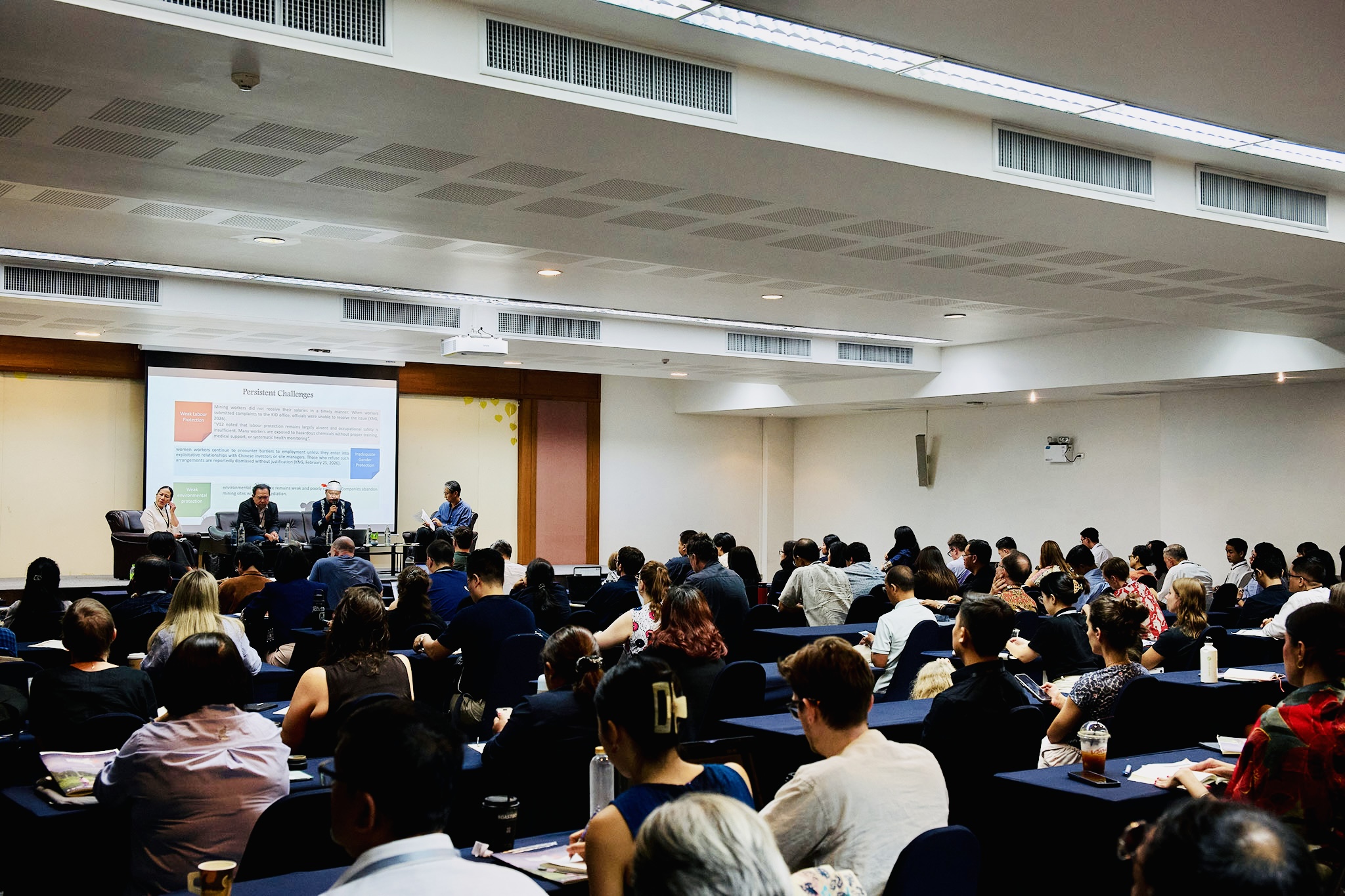
I Plenary Session 3, “Rare Earth: Extractive Industry, Global Supply Chain and Transboundary Water Pollution by Rivers and Rights”. Photos: Sayan Chuenudomsavad
Based on interviews conducted for his research, Mr. Seng Li found that mining workers were not always paid their salaries on time. When workers submitted complaints, their concerns were often not addressed effectively.
In one interview, a worker told him that labour protection remained largely absent and occupational safety was insufficient. Many workers were exposed to hazardous chemicals without proper training, medical support, or systematic health monitoring, Mr. Seng Li noted in his findings.
In addition, there are problems between investors and workers at the mining sites, particularly conflicts between local workers and Chinese employers. The problems often arose because Chinese employers believed that, after paying workers, they had the authority to assign them tasks as they wished. When conflicts occurred, Chinese employers sometimes contacted the KIA, while workers reported the incidents to the KIO.
In some cases, police came to the mining sites to investigate and report on the problems. However, their decisions often appeared to favour Chinese operators. As a result, Chinese operators often showed little respect for local people, Mr. Seng Li noted.
“So this is the ground situation: although we have the mechanisms, they are more favourable to Chinese operators,” remarked Mr. Seng Li.
Furthermore, Mr. Seng Li said female workers continue to encounter barriers to employment unless they engage in what he described as “exploitative relationships” with Chinese operators or managers. Those who refuse such arrangements are dismissed without justification, he said.
“These are the serious challenges that female workers are facing until now. Additionally, environmental governance remains weak and poorly enforced. Companies abandon mining sites without remediation,” said Mr. Seng Li.
Mr. Seng Li’s findings are supported by his fellow researcher at the same centre, Cindy Aung, who conducted qualitative research in Pangwa. Her research, “Entangled Frontiers: Women’s Lived Experiences at the Nexus of Conflict and Rare Earth Extraction in Kachin State, Myanmar,” focused on 12 key informant interviews with women who are local residents, community members, and representatives of civil society organisations in the area, alongside a review of literature and secondary data.
Although women’s experiences in the study area are shaped by other factors, including conflict and militarisation, rare earth extraction and weak governance were also highlighted as key factors behind these experiences, according to Ms. Cindy.
While ongoing conflict and militarisation create insecurity and limit mobility and access to resources, rare earth extraction intensifies these challenges by affecting land, water, and livelihoods. Meanwhile, weak governance provides little protection, accountability, or support for affected communities and women, who are largely silenced due to social norms and male domination in decision-making, Ms. Cindy noted.
“These combined factors are not abstract, so they directly shape daily life,” said Ms. Cindy.
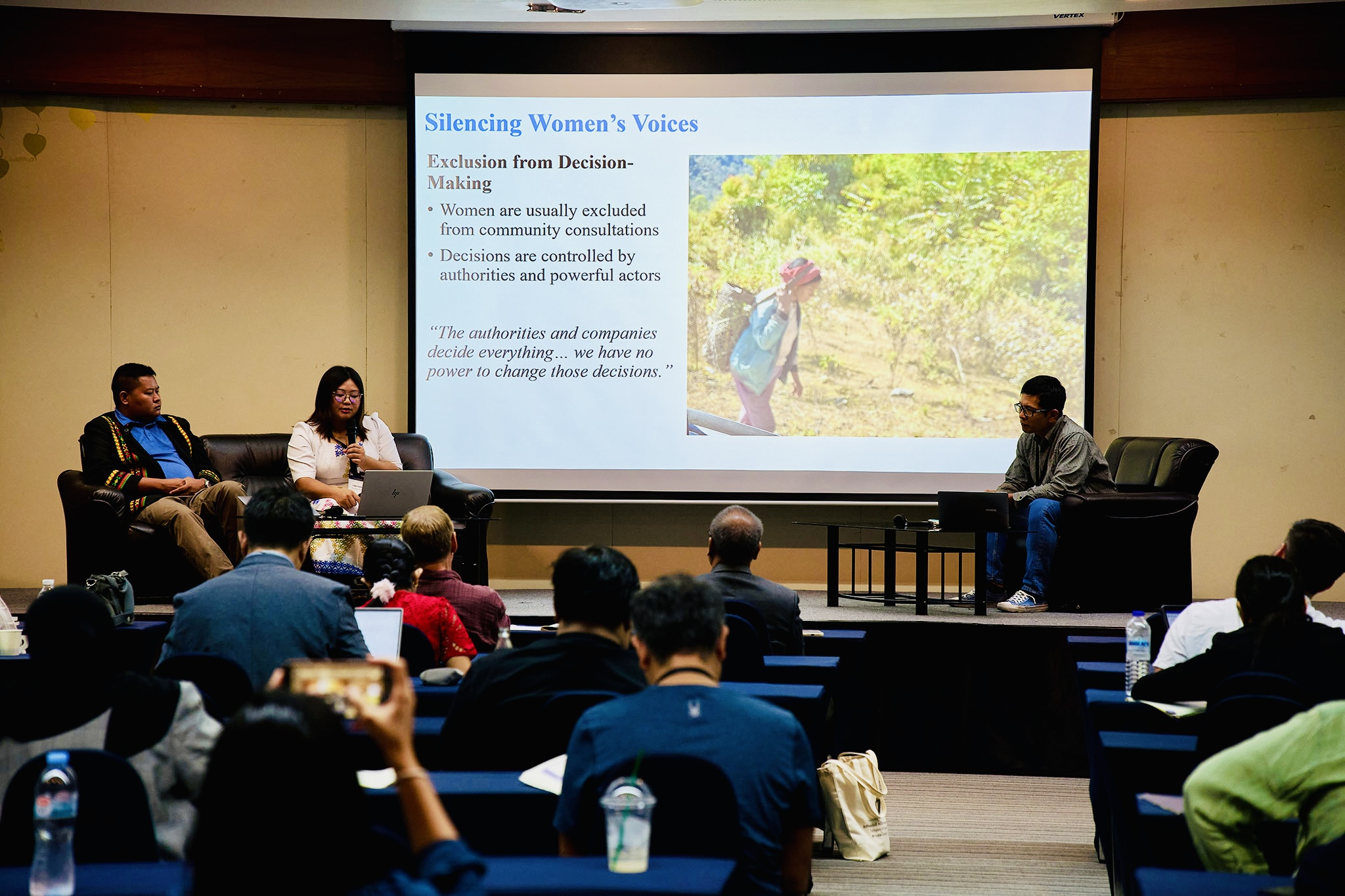
A more challenging form of exploitation of women has also emerged, according to Ms. Cindy. Based on her research, female workers at mining sites, most of whom have migrated from elsewhere, are offered so-called A-yaw positions, meaning “mixed” positions.
Ms. Cindy explained that A-yaw positions are offered to women, who want to find jobs in mining areas but have no clearly defined job descriptions. Instead, they are required to perform a mixture of tasks, according to Ms. Cindy.
“If you want to get a clear job like a cook or cleaner, you have to sleep with the company men, the workers, or managers. So, that is the point I want to highlight, which is happening right now. No one is protecting them, and the women workers are suffering sexual exploitation by the company workers and Chinese workers. That is very strange because in Kachin, we have not only a rare earth mining area, we have lots of mining areas—gold, jade, amber—and lots of logging areas. But that kind of A-yaw positions, mixed positions, are not happening there.
“Rare earth mining areas are very remote. Women have not many CSOs, and they do not have strong enough community voices. The Kachin society is very patriarchal, men-dominated, and very religious. It’s also the same in rare earth mining areas. As they face forms of sexual exploitation, they have no protection,” said Ms. Cindy.
Ms. Cindy also raised related concerns about miscarriage, abortion, and bleeding amid poor local health services and limited access to medicines for women in the mining sites and communities in the area.
Ms. Cindy concluded that conflict and resource extraction are deeply interconnected. Women, meanwhile, face layered gender-related impacts, while governance failures further intensify inequality in the area.
She proposed strengthening the safeguarding of land rights and the environment, as well as responsibility and accountability in the mining industry. Engagement with civil society organisations should be promoted, alongside the protection of women’s rights and the strengthening of protection mechanisms.
Last but not least, she said, inclusive governance should be strengthened.
Mr. Seng Li, meanwhile, also recommended strengthening regulatory enforcement, noting that a substantial gap remains between regulatory provisions and their implementation in practice on the ground, despite the KIO having introduced mining regulations. He further noted the limitations of KIO enforcement in areas controlled by other EAOs.
So, he proposed greater engagement from the international community. The researcher from Kachin State noted that it is also important to acknowledge and recognise the significance of ethnic armed organisations (EAOs) in natural resource governance within the Myanmar context.
International governments and organisations should recognise and constructively engage with EAOs, including the KIO/KIA, and provide appropriate technical and institutional support to strengthen transparent, accountable, and sustainable resource governance in Kachin State and Myanmar, he said.
The big picture
An independent researcher and activist from Kachin State, Zung Ting, who has been actively monitoring rare earth extraction and its impacts in Kachin State through his environmental advocacy networks, shared his insights with the participants.
Mr. Zung Ting said that despite Kachin State’s abundance of natural resources, including jade, gold, ruby, and rare earths, its people remain among the poorest in Myanmar because of the decade-long armed conflict in the region.
Mr. Zung Ting cited the International Energy Agency (IEA), which projects that demand for rare earths will grow significantly through 2040 due to their use in green energy technologies. The green energy transition has been driving structural demand for these minerals. Recent major global military conflicts, trade wars, and geopolitical events are also driving these rare earth trends and making the minerals crucial to national defence capabilities, he noted.
China, he added, dominates the global rare earth supply chain, particularly processing and production. That is why the US, EU, Japan, and other major powers have recognised rare earths as a critical national security resource. They are therefore actively building strategic rare earth stockpiles and developing strategies to diversify the rare earth supply chain so as not to rely solely on China.
The US even joined the ASEAN Summit last year and signed MOUs with Thailand, Malaysia, and also Japan, and others. All these activities demonstrate the increasing demand for rare earths, he further noted.
From 2012 to 2015, Mr. Zung Ting said, the Chinese government changed its strategy from rare earth mining and extraction to processing. It also significantly tightened controls on illegal domestic rare earth mining in China. That was why, during this period, rare earth mining increased in Kachin State, he added.
After the 2021 military coup, rare earth mining began booming in the region because there was no proper regulation following the coup. Many Chinese rare earth mining companies began working with the military junta, and rare earth mining expanded rapidly in the region, Mr. Zung Ting told the participants.
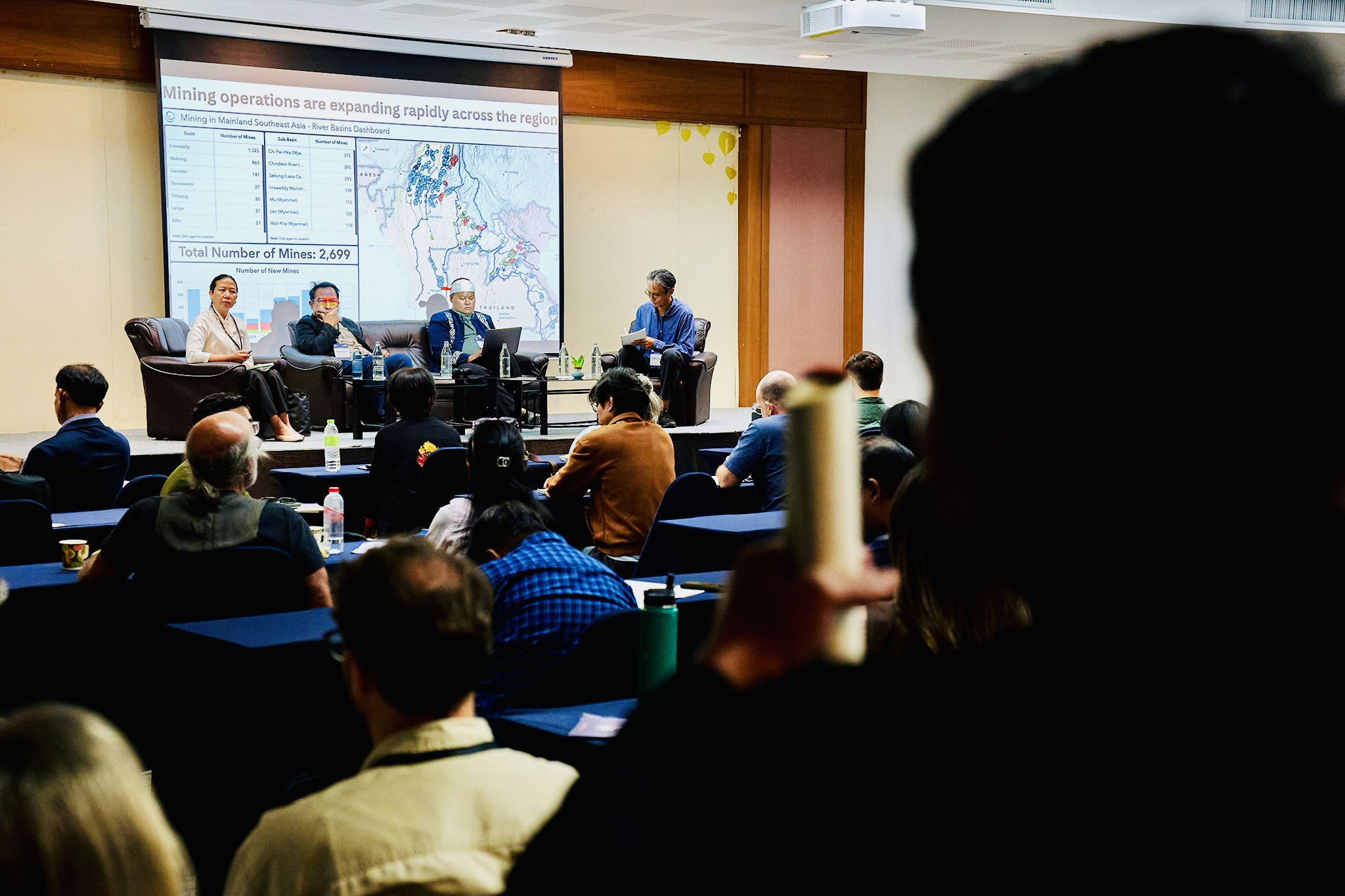
According to the Stimson Center dashboard, there are more than 1,000 rare earth and gold mining sites in Kachin State, with rare earth mining alone accounting for more than 500 sites as of 2026, Mr. Zung Ting pointed out.
Since 2024, the KIA has occupied and controlled the main rare earth mining regions in Chipwi and Pangwa. After that, China pressured the KIO/KIA, closed its border crossings, and did not allow materials to be transported from China.
All the necessary inputs, including chemicals, heavy machinery such as bulldozers and backhoes, and other equipment that the KIA needed to purchase from China, were affected when China closed the border crossings. The two sides then negotiated and eventually reached an agreement, after which rare earth mining operations resumed in 2025 and have since increased significantly, Mr. Zung Ting said.
“After the KIO controlled that region, China then expanded their mining to Shan State, where the Wa (UWSA) and MNDAA control areas. Because the UWSA, MNDAA, and other armed groups have had very good relationships — I would say China has control over these armed groups and they are allied with China — they easily operate rare earth mining in those regions. Since 2024, mining has been increasing in the UWSA and MNDAA regions in Shan State,” said Mr. Zung Ting.
“Therefore, all these mining-discharged toxics are flowing downstream to Thai rivers like the Kok River and Sai River, creating transboundary pollution issues that are gradually becoming bigger in the region, even reaching the greater Mekong River system. This toxic water flows to communities in Northern Thailand that heavily rely on those rivers for farming, fishing, and even tourism. That is why it is becoming not only a Kachin State or Myanmar issue, but a regional and global issue.”
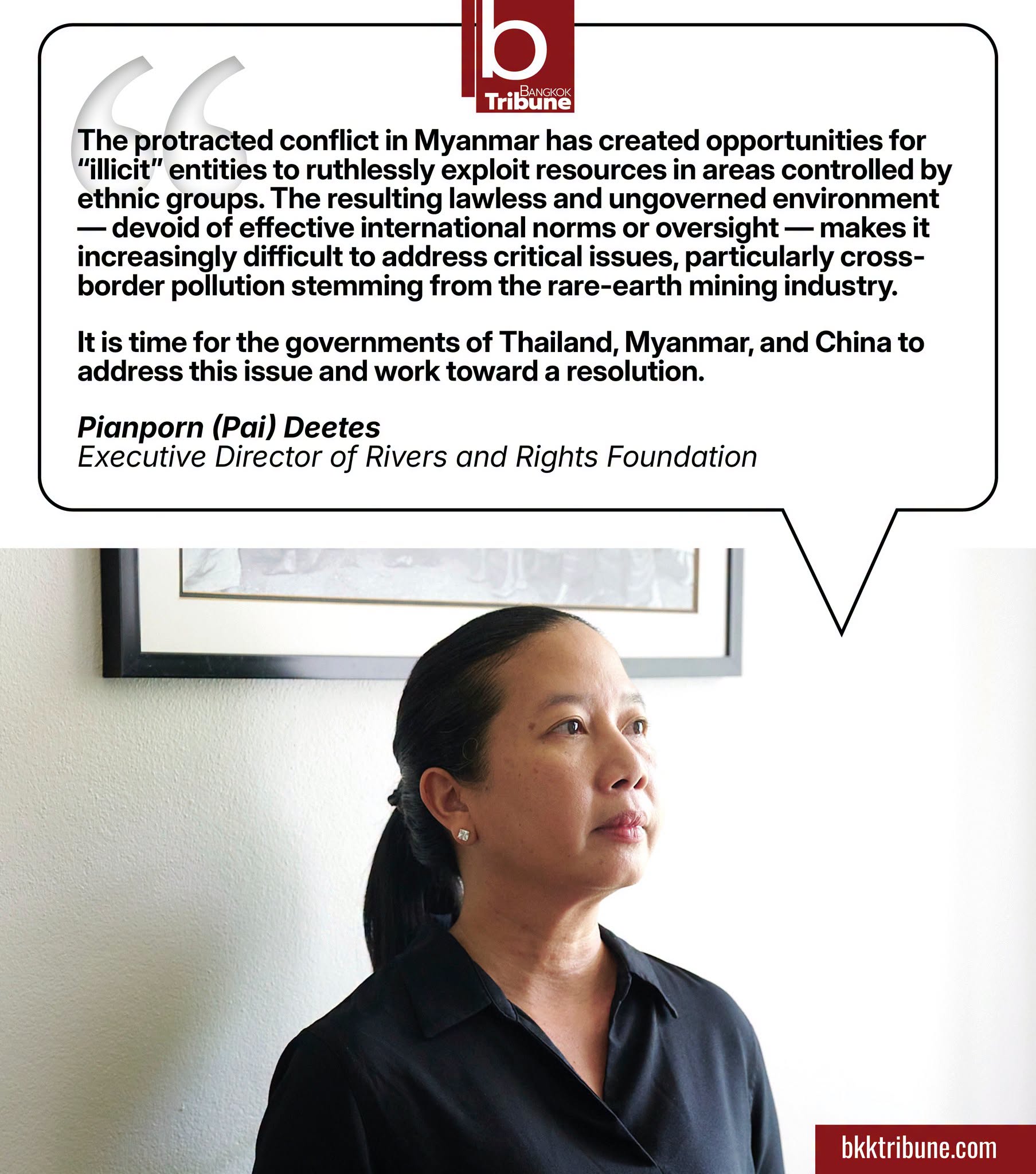
Pianporn Deetes, Executive Director of the Rivers and Rights Foundation, shared similar insights, saying that mining operations are expanding very rapidly in the region, particularly in areas where there is no rule of law, standards, or law enforcement. The expansion started in Kachin State and later moved down to Shan State and even further south to Tanintharyi and other river basins, as well as to Laos and some parts of the river systems flowing into Vietnam.
Ms. Pianporn said this transboundary pollution has already become a major environmental crisis, but people have yet to see any concrete action or acknowledgement from the governments involved.
Citing statistics and data collected through periodic testing by the Pollution Control Department’s Regional Office 1 in Chiang Mai Province, Ms. Pianporn said contamination in rivers in Northern Thailand, especially the Sai River, has exceeded suggested levels. This has also affected the sediments, which provide nutrients to the soil, she added.
Moreover, diseased fish and other distorted aquatic life are being reported here and there, and it’s not just happening in the Mekong basin. It’s also happening in the Salween, where she and her networks have been working for 25 years to keep the river free-flowing and protect it from obstructions, including mega-dam projects.
“But when the mine happens, the river is no longer safe. There is contamination from arsenic, mercury, and other heavy metals.
“I received some calls from colleagues from downstream in Mon State calling me, asking whether this is still safe to use water for irrigation down in Mon State, in Mawlamyine and other parts, when they use irrigated water from the Salween Delta. I don’t have the answer,” said Ms. Pianporn, referring to the ongoing impacts downstream.
Ms. Pianporn showed satellite images she had received from security units, saying that the Thai government is well aware of the issue because its security agencies have information on every mine site. She further added that, based on the satellite images she received, authorities know even the sizes of the mines and when they started operating. However, no one had acted against those mines or defended the rivers and the people, she pointed out.
Ms. Pianporn said Prime Minister Anutin Charnvirakul recently visited China and met with Chinese President Xi Jinping, but was told that the matter was not China’s responsibility but rather an issue between Myanmar and Thailand. The two countries needed to talk to each other, while China would help.
Later, Myanmar’s President Senior General Min Aung Hlaing visited Thailand, and the Thai government agreed to sign the Terms of Reference (TOR) to work on the issue with Myanmar. Civil society organisations, including hers, however, viewed the TOR as insufficient to solve the problem because it did not even mention mining but only referred to water pollution, Ms. Pianporn pointed out.
“I couldn’t help myself, so I went to the UN and held a protest against his visit. I just wanted the world to see that not a single time should people accept this. We feel so shameful, and we’d like this to be fixed. This is just the starting point of the crisis,” said Ms. Pianporn.
Aside from toxic river pollution, Laos and Myanmar are also working on a new mega-dam with a capacity of more than 2,790 MW further downstream from the Golden Triangle, Ms. Pianporn told the participants. They have already signed an MOU with each other, raising concerns about the complexity and potential impacts of the dam, as it could turn the river into a reservoir that traps toxic substances.
“Dam, reservoir, toxic reservoir — when they flush, release the water, I cannot imagine how dreadful it would be,” said Ms. Pianporn.
Ms. Pianporn said the only recommendation for addressing this issue is to establish “No-Go Zones” for mining.
“Even though world technology is moving forward and people need more just transition minerals, but how about the future of our next generation? The safety of our drinking water, our land, and our food? Nothing is more important than clean rivers and land.
“In June, we had a Peace Walk along the Kok River. And the artwork that was created by our artist friends said clearly that we need to protect the Kok, Sai, Ruak, Mekong, Salween, Irrawaddy, and beyond. Every single river needs to be protected because our lives depend on them, and rivers must be no-go zones for mining. I just wonder who decides where to be a sacrifice zone, and how my hometown became one,” said Ms. Pianporn, who is also a resident of Chiang Rai and has been affected by this transboundary toxic river pollution.
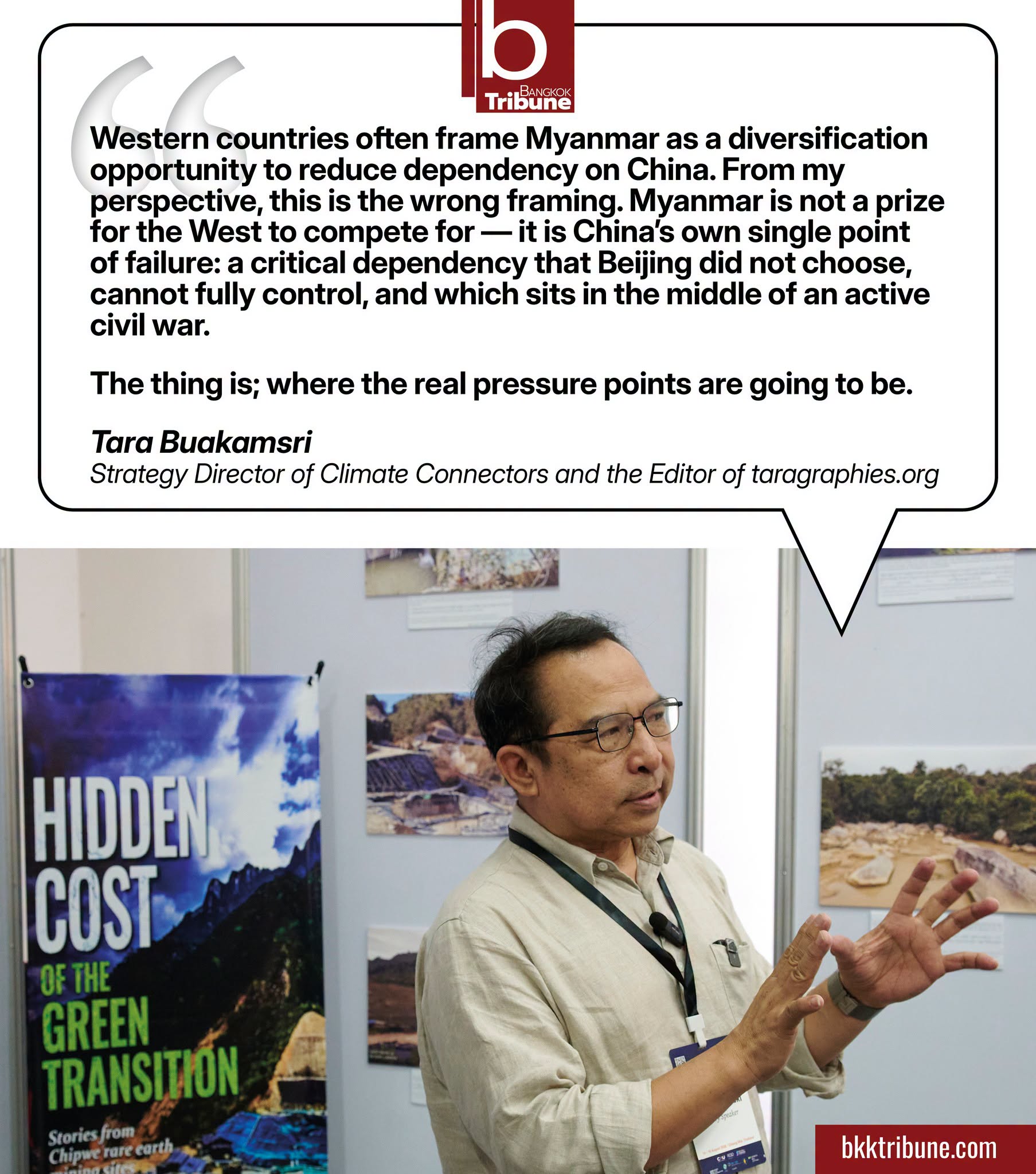
Tara Buakamsri, Director of Climate Connectors, shared his views, saying Myanmar’s rare earth mines in Kachin and Shan are not just a side story of one country’s weak regulation, but “the soft underbelly” of China’s rare earth dominance and a hidden pressure point for the global green energy transition.
Mr. Tara explained that among the heavy rare earth elements found in Myanmar, two key elements are dysprosium and terbium. They are used in magnets for heat resistance, and without heat resistance, there would be no compact, high-power EVs and no offshore wind generators capable of running continuously for years. There is no substitute at scale — at least not in this decade or the next.
China, he further said, controls 99% of the world’s separation capacity for heavy rare earths. Demand is expected to grow sevenfold to about US $70 billion by 2040, driven by EVs, aerospace, defence, renewables, and robotics. Its dominance is not entirely self-sufficient; it relies on highly unstable territories in Kachin and Shan, and that is what makes it a soft underbelly, Mr. Tara pointed out.
Based on Chinese customs data analysed by Global Witness, which Mr. Tara cited, Myanmar supplied 41,700 tonnes of terbium and dysprosium oxide to China in 2023 — more than double China’s own domestic quota that year. This accounted for 98% of China’s heavy rare earth imports.
This, Mr. Tara noted, represents almost the entire external supply of dysprosium and terbium, sourced from a single country and extracted outside any meaningful regulatory system.
Since the military coup, the military junta’s power has eroded in both Kachin and Shan. Chinese extractors have made direct arrangements with local ethnic armed groups. The newest entrant is the Ta’ang National Liberation Army (TNLA) in northern Shan, where new mining activity has appeared on satellite imagery since late last year.
The TNLA initially banned rare earth mining, citing conservation concerns. However, after the China-brokered ceasefire caused it to lose control of Mogok — a ruby hub worth hundreds of millions of dollars a year — the TNLA was left financially exposed. Soon after, a dozen new rare earth mines appeared in Mogok Township under its control. The ban was never formally lifted.
This, Mr. Tara pointed out, illustrates how quickly conservation commitments can evaporate once revenue is threatened — a real-time example of “the resource curse”.
Satellite mapping by the Stimson Center has geolocated more than 600 rare earth mining sites across Kachin and Shan, with toxic effluents being released into the Irrawaddy, Salween, and Mekong river systems. The mines also face severe landslide risks and poor labour conditions.
The clearest evidence of the system’s vulnerability occurred in 2024, when the Kachin Independence Army (KIA) seized key mining areas. Chinese imports from Myanmar collapsed by nearly 90% within a month. This knocked out about half of China’s heavy rare earth import supply almost overnight.
This disruption was not caused by policy decisions or trade negotiations; it resulted from a shift in battlefield control within a conflict zone, Mr. Tara pointed out.
“Absent structural reform, Myanmar’s rare earth sector risks becoming an entrenched resource curse. Western countries often frame Myanmar as a diversification opportunity to reduce dependency on China. In my perspective, this is the wrong framing. Myanmar is not a prize for the West to compete for — it is China’s own single point of failure: a critical dependency that Beijing did not choose, cannot fully control, and which sits in the middle of an active civil war.
“The thing that [interests me is] where the real pressure points are going to be — at least from my perspective,” said Mr. Tara.
According to Mr. Tara’s analysis, the KIO (Kachin Independence Organisation) has real, and perhaps uneven, engagement with civil society — reflecting a tension between accountability and dependency on mining revenue. As such, there were protests, the organisation cancelled the mines, and mining later resumed. This, Mr. Tara noted, is not a clean victory, but it proved that the rare earth supply chain is not a black box.
“So, if rare earth mines are unreachable in Kachin and Shan for some reason, if some of the mines in Myanmar are unreachable, where is the leverage?” Mr. Tara questioned.
Mr. Tara further analysed the roles of Chinese business entities, saying that two Chinese conglomerates, China Northern Rare Earth and China Rare Earth Group, hold 90% of China’s mining quota for heavy rare earths. But these two entities present a complication because they are wholly state-owned rather than conventional corporate entities.
Around 75% of them are owned by the State-owned Assets Supervision and Administration Commission (SASAC) of the State Council — the Chinese government. As a result, they answer to the Chinese government rather than shareholders and are not driven by reputational risk.
“This is the real choke point: the geopolitical side of it, not the corporate one. As the director of Earth Rights International put it, they are “consistently using Myanmar as a sacrifice zone”. The complexity here may not be the same as corporate responsibilities,” Mr. Tara remarked.
When considering downstream brands and market leverage, Mr. Tara highlighted well-known brands in various sectors, from Tesla and Hyundai in EV production to the defence and aerospace sectors, which include Boeing, GE Aerospace, Rolls-Royce, and others as key players. In the wind industry, Siemens, Mitsubishi, and Goldwind also play a role.
None of them, however, mine in Kachin or Shan, Mr. Tara pointed out. Almost none of them can say with certainty whether their magnets contain materials originating from Myanmar. However, they have brand exposure and procurement leverage that rare earth mines in Kachin and Shan do not have, he added.
Some of them are also making progress, Mr. Tara noted. For example, Apple has committed to using recycled rare earths without depending on the Chinese supply chain. While this is currently very small in scale, downstream buyers are actually a traceable pressure point, more so than the mines themselves. This, he pointed out, is not just a corporate issue; it is a geopolitical one.
Another point that Mr. Tara raised for discussion was traceability. He said China has Rare Earth Management Regulations requiring monthly reporting on production and sales to a state platform. However, the system is designed not to tell foreign buyers where the materials come from. In other words, it does not track Myanmar-sourced rare earth elements.
“There are other regulations in consuming countries that we can use as leverage, including guidelines from the IEA, the OECD, the US, and others.
“But one thing stood out when I did some research: the USGS (United States Geological Survey) assessment lists Myanmar’s rare earth reserves as ‘Not Available’ (N/A) — literally. Despite Myanmar ranking among the world’s largest producers, it does not officially exist in terms of proven reserve data. This is the missing link: Once rare earth elements cross into China, they become virtually untraceable.
“Some analysts say the Chinese processing industry functions essentially as a “coffee grinder” — meaning they blend everything into one grinder. No company can identify its specific share in any single magnet. There is a portion that certainly comes from Myanmar, but in every case, it is untraceable yet definitely present,” said Mr. Tara.
While China’s output keeps climbing, Myanmar’s output has stayed pretty much the same since the military coup. Meanwhile, Lao PDR is ramping up, potentially tripling its output by the end of 2030. It uses the same playbook: unregulated in-situ leaching models, weaker land-tenure protection, and less scrutiny. The “coffee grinder” is simply getting more crowded, Mr. Tara pointed out.
Last but not least, he further noted that none of this actually reaches the UN climate processes in any binding way. At COP30 in Belém, he gave the example of the UK, EU, and African groups trying to negotiate, while China drew the red line.
COP31, which will be co-hosted by Türkiye and Australia, will likely be much the same, with no substantive difference in outcome, said Mr. Tara. Even when the Conference of the Parties discusses Just Transition mechanisms regarding Indigenous peoples’ rights, the outcome on critical mineral and rare earth governance remains vague, Mr. Tara pointed out.
“There are no official reserve figures, no regulation of the chain of custody, and no seat at the negotiation table at the climate summits,” remarked Mr. Tara.

Indie • in-depth online news agency
to “bridge the gap” and “connect the dots” with critical and constructive minds on development and environmental policies in Thailand and the Mekong region; to deliver meaningful messages and create the big picture critical to public understanding and decision-making, thus truly being the public’s critical voice