
The Chinese government has issued a statement in response to the group’s activities concerning transboundary toxic river pollution caused by unregulated upstream mining. The group, however, said that no concrete steps have been taken, aside from similar statements previously issued by China
The Chinese Embassy in Thailand yesterday posted on its official Facebook page, in response to ongoing and planned activities organised by anti-toxic pollution and river-protection networks in the North, clarifying its stance on behalf of the Chinese government.
The Embassy said China attaches great importance to heavy metal pollution in Mekong River tributaries within Thai territory and has received the recent assessment reports issued by the Thai government and relevant agencies. These reports indicate that the water quality in those waterways is “generally within safety standards.” (Read: SPECIAL REPORT SERIES: The Poisoned Rivers: From gold to rare earth, unregulated mining in Myanmar poisons the Mekong and its tributaries in Northern Thailand)
The Embassy further emphasised that China has consistently supported Thailand and Myanmar in strengthening communication and coordination, conducting impartial and scientifically sound investigations, and resolving issues through friendly consultations.
“China is willing to strengthen cooperation with other Mekong countries on water resources, ecosystem conservation, and environmental protection through the Lancang-Mekong Cooperation mechanism to jointly safeguard the ecosystem, environment, and water quality in the Mekong River basin,” said the Embassy in the post.
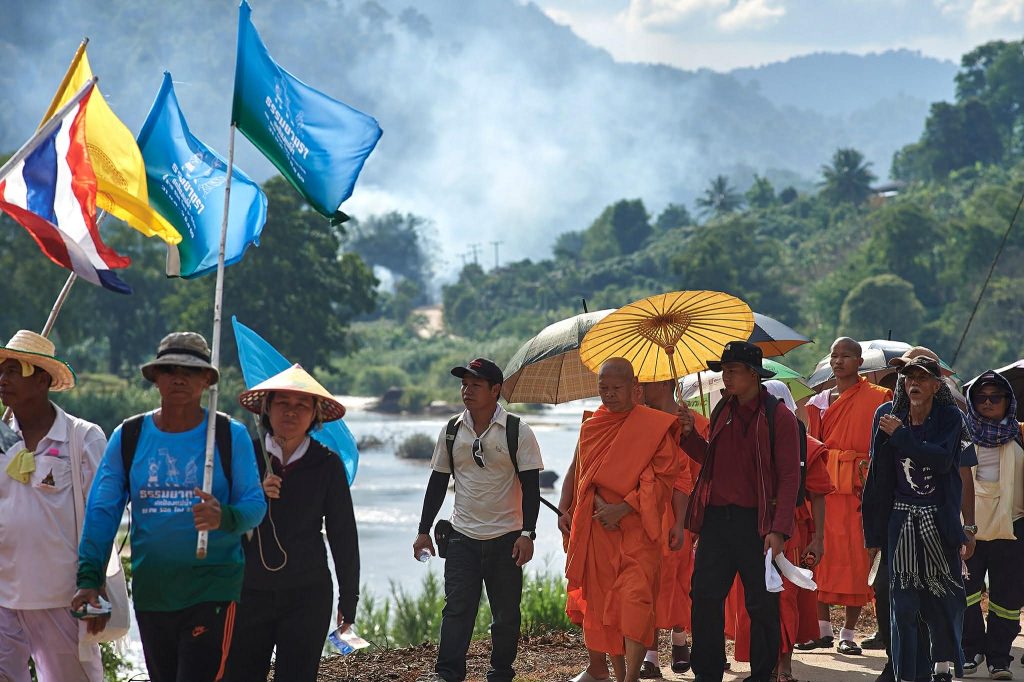
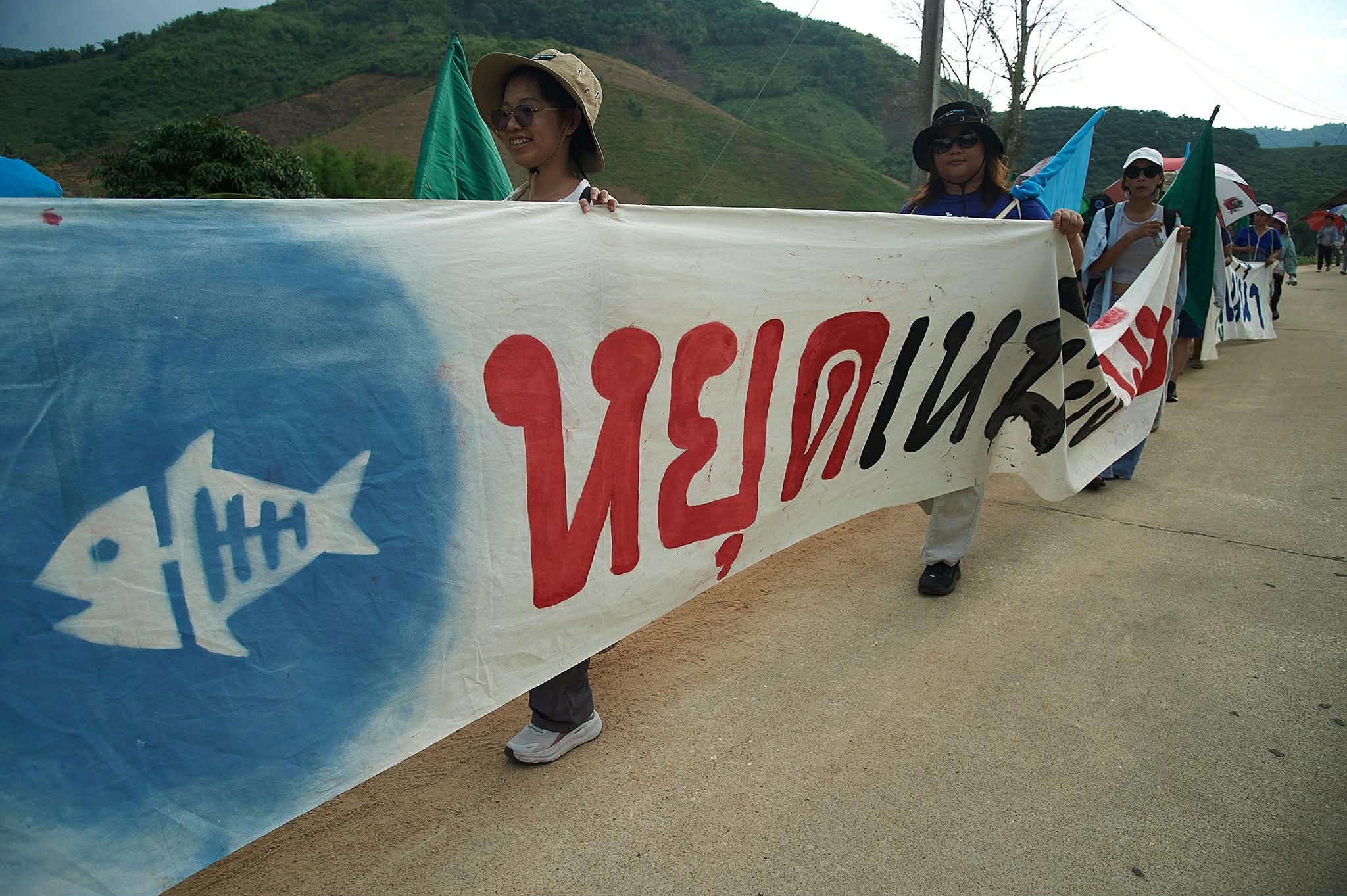
The networks, led by the People’s Network for the Protection of the Kok, Sai, Ruak, and Mekong Rivers and its allies, are organising a series of activities, including the Dhamma Yatra, or Peace Walk for Rivers, from Visakha Bucha Day to World Environment Day (June 5) to raise public awareness of the plight of the Kok, Sai-Ruak, Mekong, Salween, and other rivers contaminated by toxic heavy metals caused by unregulated mining in Myanmar and Lao PDR.
Rather than staging protest marches and campaigns, they have adopted a religious-based approach through the main activity of Dhamma Yatra, literally meaning “a walk with Dhamma” — a form of Dhamma practice and Dhamma Puja that embodies the Buddhist principles of patience, diligence, unity, and gratitude.
This form of religious walking is meant to pay homage not only to the Lord Buddha and his teachings on the occasion of Visakha Bucha Day but also to honour nature and the environment, which, in Buddhist philosophy, are regarded as one and the same truth. (See photos: In Pictures: Dhamma Yatra: Peace Walk for Rivers)
Amid its peaceful calls for unity and cooperation from the governments concerned, the Chinese Embassy responded to the group’s activities with this latest public post.

The People’s Network for the Protection of the Kok, Sai, Ruak, and Mekong Rivers subsequently issued a statement in response to the Embassy’s post, saying it appeared to be intended to persuade Thai people that the Chinese government is “deeply concerned” about transboundary contamination in the affected rivers.
The group said the message was largely similar to the Embassy’s previous post. One year has passed, yet the Chinese government has not taken any concrete steps to address the problem or demonstrate its intention to resolve the issue of this transboundary contamination.
The group said the Chinese government should be aware that China is a major beneficiary of the supply chain for critical minerals and rare earth elements, with mining taking place in Myanmar and the minerals being transported through Thailand before reaching their final destination in China.
The Chinese government, they added, is well aware that mining operations in Myanmar and the cross-border trade in minerals through Thailand as a major transit route are creating increasingly severe problems of toxic heavy metal contamination in transboundary rivers.
Furthermore, the group expressed concern that the Chinese government may be receiving one-sided information from the Thai government, leading it to believe that water quality in the rivers meets safety standards when, in reality, local communities continue to face the risk of heavy metal contamination.
“We would like to inform you that the tap water supplied to communities is sourced from rivers contaminated with heavy metals released from rare earth and other mineral mines in the headwaters of the Kok, Ruak, and Mekong rivers, where Chinese business interests are involved, directly and indirectly, in Shan State and the Wa-controlled territory,” the group said.
“If the Embassy is truly sincere in its concern for the people of the Mekong River basin, we respectfully invite you to meet with local communities, together with the Prime Minister of Thailand, on World Environment Day, June 5, at Chiang Rai Provincial Hall, to hear their concerns firsthand and work together to find solutions.”
The group noted that they had invited the Embassy to meet with local communities last year, but the invitation was declined. The group also expressed hope that the Embassy would honour this year’s invitation by meeting people whom it says are suffering from the impacts of mining operations linked to China.
“Please do not let us drink poisoned water any longer,” the group said in its statement.
Phattarapong Leelaphat, a People’s Party MP from Chiang Mai who has been closely following the issue, also posted a response on his Facebook page following the embassy’s statement.
He remarked that if China genuinely wishes to strengthen environmental rights in Mekong countries and help solve the problem for affected communities, one of the first steps it could take would be to disclose information on imports of rare earth elements from mines in each country into China, as required under China’s Rare Earth Management Regulations, which came into force on June 22, 2024.
He said China should reveal information on the number and locations of mines operating in the Mekong, Salween, and Kra Buri River basins that supply rare earth elements to China.
It should also disclose information related to inspections required under Article 12 of the regulations, which stipulates that operators must not engage in activities that damage the environment or cause pollution and must implement pollution-control measures throughout every stage of rare earth production.
In addition, it should disclose information relating to inspections under Article 13, which prohibits the purchase, processing, sale, or export of minerals originating from illegal mining operations. Although Article 2 of the regulations states that the law is enforced within China, it does not exempt imported minerals from inspection, Mr. Phattarapong said.
Finally, China should disclose supply chain information through the Rare Earth Product Traceability Information System, as required under Article 14.
“These four points aim to provide greater transparency to member countries of the Mekong River basin in identifying the sources of pollution. This would allow countries to adapt their national laws to cover all major minerals, not only rare earth elements, and help ensure that the concept of a green supply chain becomes a reality rather than merely a slogan that cannot be verified,” said Mr. Phattarapong.
The Chiang Mai MP said he would closely study and monitor the enforcement of the Rare Earth Management Regulations, while also urging the Thai government to accelerate negotiations and make full use of multilateral mechanisms to address the root causes of the problem.

Indie • in-depth online news agency
to “bridge the gap” and “connect the dots” with critical and constructive minds on development and environmental policies in Thailand and the Mekong region; to deliver meaningful messages and create the big picture critical to public understanding and decision-making, thus truly being the public’s critical voice