
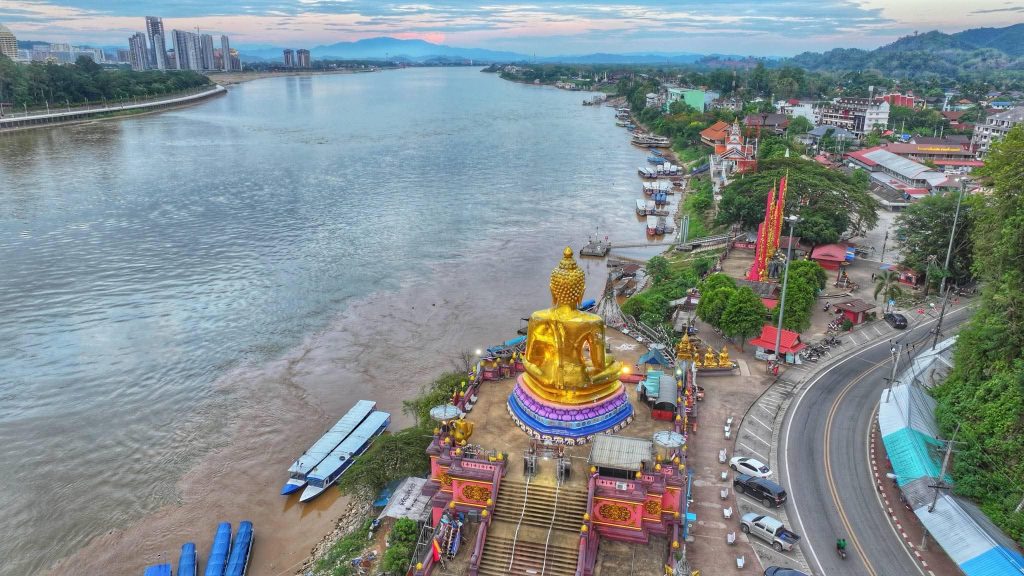
As Chinese Premier Li Qiang is scheduled to pay an official visit to Thailand from November 13–15, and Deputy Prime Minister and Minister of Foreign Affairs H.E. Sihasak Phuangketkeow paid an official visit to the Republic of the Union of Myanmar yesterday, former senator and founder of the Hill Area and Community Development Foundation (HADF), Tuenjai Deetes, reflects on the metaphor of shared interdependence between China and the Mekong countries: “We drink from the same river.” But is it still safe for the people? asks the ex-senator
“We drink from the same river.”
These words express a simple truth about China and its neighbours: our lives are connected by water. For those of us who live along these rivers, they also carry a hope — that we can depend on the water to sustain us, and trust one another to keep it safe.
As Chinese Premier Li Qiang visits Thailand on Nov 13–15, I hope the rivers we share will have a place at the table alongside trade, investment and technology.
I respectfully urge Prime Minister Anutin Charnvirakul to raise the urgent problem of toxic pollution linked to poorly regulated mining in Myanmar. Cooperation between Thailand and China could help address the damage at its source and protect communities downstream.
I write as a resident of Chiang Rai, adding my voice to those of people working to protect the Kok, Sai, Ruak, Mekong, Salween and Kraburi rivers. These waterways sustain communities whose food, livelihoods and cultures are inseparable from the water.
Along the Kok River, residents began reporting unusual changes in the water in 2024. Evidence of contamination and the expansion of mining upstream has deepened their concern. Families face questions that no one should have to carry for so long: Is the water safe to use? Can we eat the fish? What might this mean for our children’s health?
Uncertainty itself takes a toll. Farmers worry about their crops. Fishers worry about their catch and whether anyone will buy it. Parents must make everyday decisions without clear answers. A river that has sustained a community for generations becomes a source of fear.
The sources and extent of pollution need to be established carefully in each river basin. Different minerals, mining methods and local conditions require different responses. We should be precise about what the evidence shows, while acting promptly to protect people from further harm.


l Former Senator Tuenjai recently joined senior community leaders at the launch of the latest publication, Dhamma Yatra for the Five Rivers, which highlights their tireless efforts and advocacy, including the Dhamma Yatra held in June, to raise public awareness of the issue. Credit: The Mekong Butterfly
China has an important role to play. As a major buyer and processor of rare earths and other critical minerals, it has considerable influence over the conditions under which they are produced. These materials supply industries ranging from electric vehicles and wind turbines to electronics and defence.
I hope the Chinese government will use that influence to strengthen oversight of mineral supply chains originating in Myanmar. Companies should know where their minerals come from, how they are extracted and what harm their production may cause. When suppliers pollute rivers, buyers must require corrective action and suspend purchases where necessary.
Demand for these minerals will continue. But the cost of meeting it should not be left with people who have no say in the mining, receive little benefit from it and lack the means to protect themselves. The promise of cleaner energy becomes harder to believe when its supply chains leave communities afraid of their own water.
Any lasting solution must begin at the source. Mining operations found to be releasing toxic substances should be required to stop those activities until effective safeguards are in place. Environmental standards must be enforced, damage repaired, and affected people heard.
Water testing downstream is essential. So are health monitoring, safe water supplies, and help for those whose livelihoods have suffered. But these measures cannot resolve the crisis if pollution continues to enter the rivers upstream.
The Mekong and Salween basins sustain extraordinary biodiversity, productive fisheries and farming communities across the region. Their value is measured in meals, incomes and ways of life passed from one generation to the next. Damage to these systems can travel far beyond a mine and remain long after its minerals have been sold.
The people living along these rivers did not create this problem. Their homes must not become “sacrifice zones” for the world’s appetite for minerals.
Thailand must also do its part. Our government should examine the role of Thai businesses and mineral trading routes, publish clear and timely information, and ensure that affected communities receive practical assistance.
Asking China to act carries an obligation to put our own house in order.
This visit offers an opportunity to agree on concrete steps: tracing mineral supplies, investigating sources of contamination, preventing further discharges and supporting the restoration of damaged rivers. Cooperation must involve the relevant authorities and parties in Myanmar, as well as the communities who live with the consequences.
People should be able to see what has been agreed, who is responsible and when action will begin. They should also have a meaningful role in monitoring progress. Their knowledge of the rivers is essential to understanding what has changed and whether conditions are improving.
I believe China can make a substantial contribution. Its commitment to an “ecological civilisation” provides a basis for extending environmental responsibility throughout the supply chains that serve its industries.
Thailand and China have a long friendship. I hope that friendship gives us the confidence to speak frankly about the suffering of people downstream and the patience to work together on a solution.
Our request is modest: Water we can use safely, food we can trust, and the chance for our children to grow up beside rivers that sustain them.
I believe Thailand and China can help make that possible. If “we drink from the same river”, surely we can take responsibility for its water together.
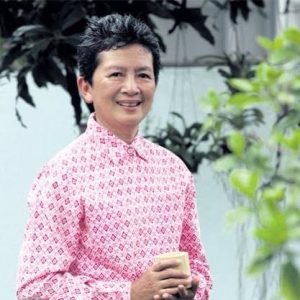
Ex-Senator Tuenjai is a founder of Hill Area and Community Development Foundation (HADF), based in Chiang Rai. She is 1989 Ashoka Fellow, and 1994 Goldman Prize recipient.