
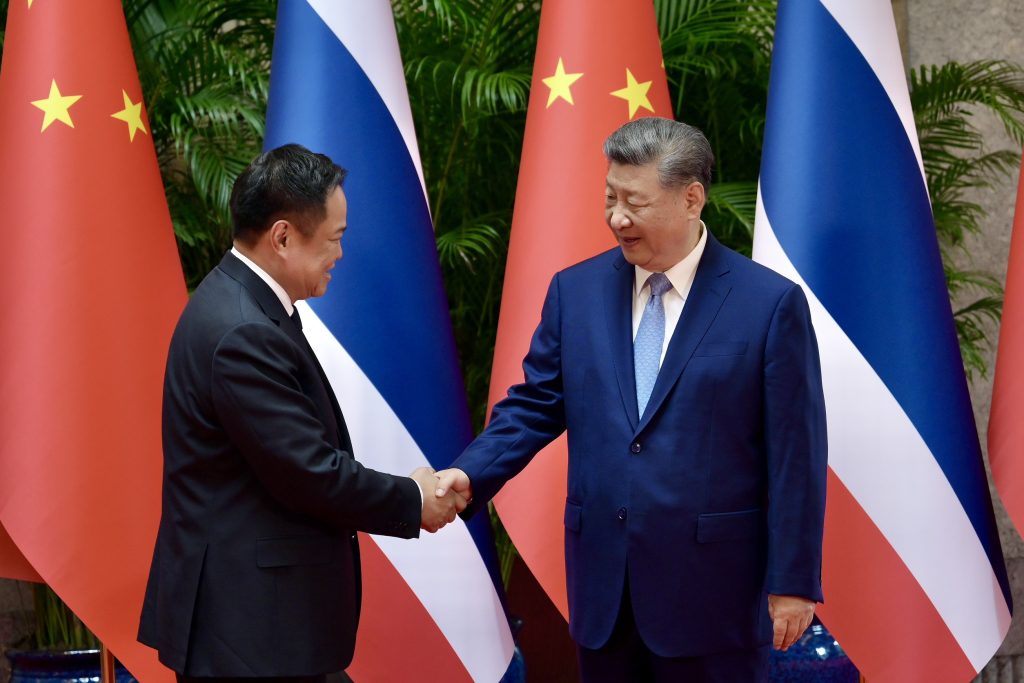
Thailand’s official visit to China has generated plenty of positive headlines. Major Chinese companies have announced new investments. Artificial intelligence and electric vehicles featured prominently in discussions. Government leaders and business executives praised one another, and we were assured that Thailand remains an attractive destination for investment.
But as I followed the coverage of the visit, I kept waiting for another headline: Was there any discussion about the unregulated mining upstream that continues to contaminate six transboundary rivers flowing into Thailand?
For nearly two years, communities along the Kok, Sai, Ruak, Mekong, Salween and Kraburi rivers have lived with an environmental crisis. Repeated monitoring by Thailand’s Pollution Control Department has found arsenic and other toxic heavy metals contaminating rivers and sediments in northern and northeastern Thailand. These rivers supply drinking water, irrigation, fisheries and livelihoods for countless families.
Yet the issue appeared to be absent from one of most important diplomatic visits of the year.
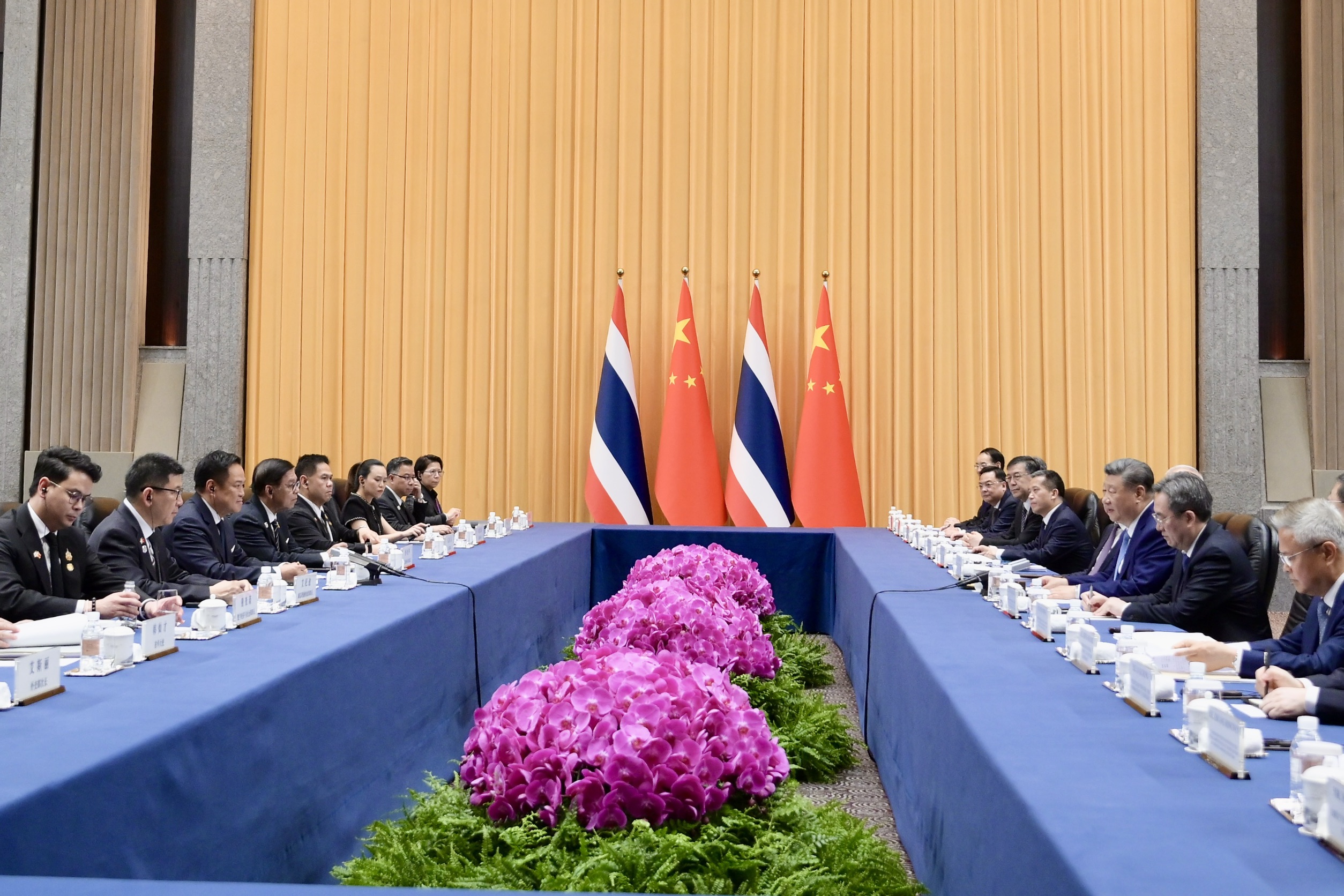
Credit: ThaiGov
The source of the contamination is no secret. Satellite images that anyone can view on a mobile phone show mining sites spreading rapidly upstream across the border in Myanmar. Gold, rare earth elements, antimony, tungsten and other critical minerals are extracted in areas where environmental oversight is weak or non-existent. These minerals eventually enter global supply chains that support industries ranging from artificial intelligence and electric vehicles to advanced defence technologies.
China is the world’s dominant processor of rare earth elements and a central player in global critical mineral supply chains. With that position comes an opportunity — and a responsibility — to help ensure that the minerals powering tomorrow’s technologies are produced through supply chains that respect people, rivers and the environment, not only profits.
This should not be an uncomfortable conversation between neighbours. After all, China has repeatedly described Thailand as a friend with whom it shares a relationship spanning more than a thousand years.
On the ground, a few days ago, media reports said that the United Wa State Army had instructed mining operators under its control to keep chemical use within “acceptable standards”. One asks the obvious question: Acceptable to whom?
The people living downstream only know that they are drawing water from rivers that continue to show contamination. Farmers continue irrigating their crops. Water utilities continue treating river water. Parents continue wondering whether the tap water is still safe for their children.
As one ordinary citizen, I had hoped the Prime Minister would use this visit to explain to the Chinese government what is actually happening along Thailand’s rivers — not to assign blame, but to present the facts. To explain how poorly (or zero) regulated mining upstream is affecting the health, livelihoods, and food security of millions of people downstream. To discuss how responsible supply chains can become a shared objective rather than an afterthought.
China has repeatedly spoken about building an “ecological civilisation” and promoting high-quality development. Those principles should travel with its investment to any country where Chinese investment extends.

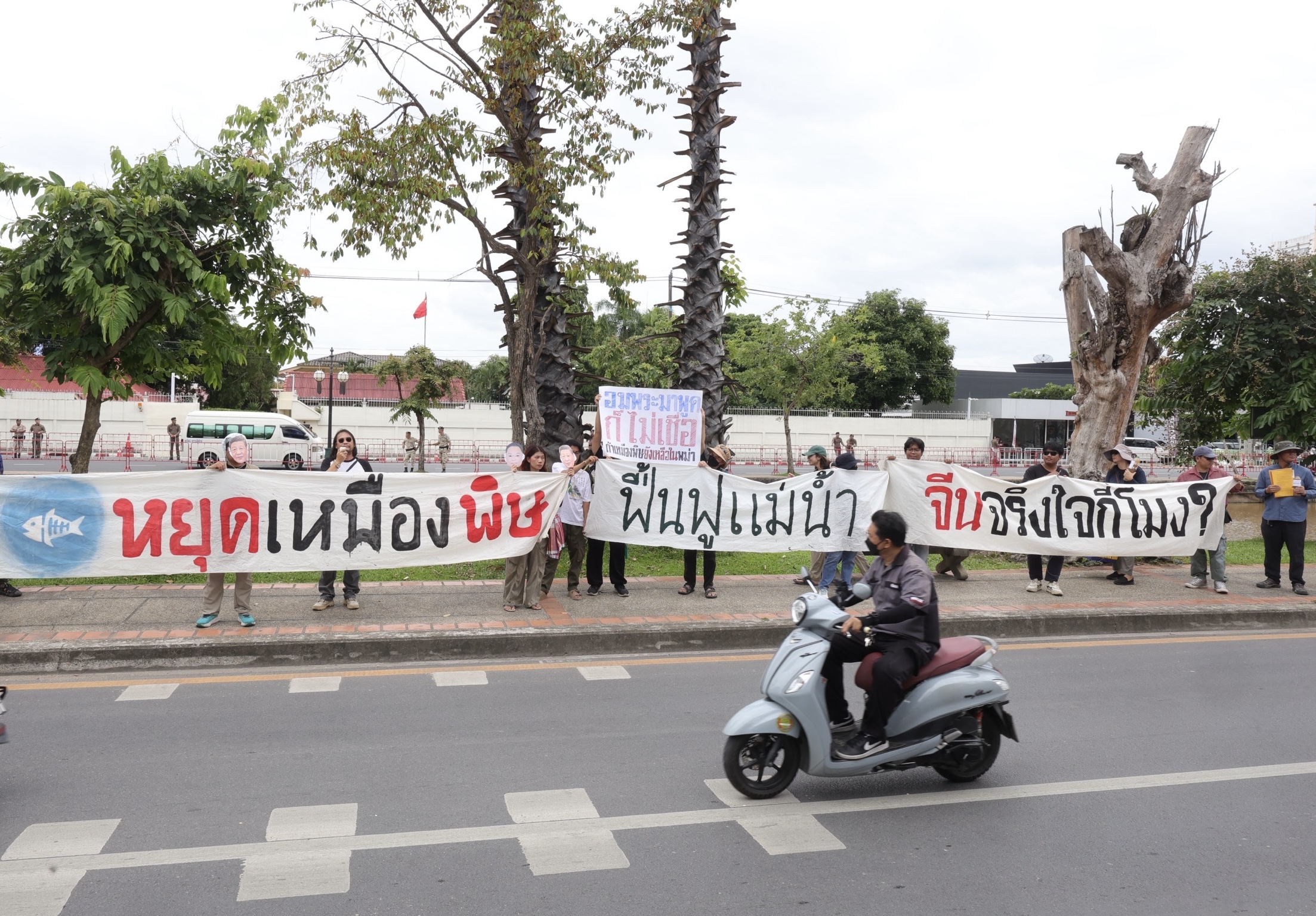

l Local residents and civil society networks recently staged protests in front of China’s Consular Office in Chiang Mai and the Chinese Embassy in Bangkok, calling on China to address the issue. Photos: Bangkok Tribune
On World Environment Day this year in Chiang Rai, the People’s Network for the Kok, Sai, Ruak and Mekong Rivers called on China to “strengthen oversight and monitoring of Chinese investors, companies and supply chains operating abroad, particularly mining operations in environmentally and socially sensitive areas. (Read: Anti-toxic river pollution networks extend invitation to Chinese government to jointly observe peace walk on coming World Environment Day)
This should include requiring comprehensive human rights and environmental due diligence and taking appropriate measures against business actors responsible for transboundary impacts, in order to ensure accountability and effective remedy, consistent with the United Nations Guiding Principles on Business and Human Rights (UNGPs).
Because this is not only an environmental issue. It is about water justice, food sovereignty, public health, intergenerational well-being and ultimately, public trust in governments. Trust in the power of governments to implement regulations in the public interest.
There is still time for both governments to show leadership. Investment agreements and environmental responsibility should reinforce one another. The technologies of the future should not come at the expense of the rivers that have sustained people for generations.
As the Prime Minister concludes his visit, one question remains: If protecting the health and water security of the Thai people was not important enough to be on the agenda, when will it be?
No investment is more valuable than the water people drink every day.
The views expressed in this article are those of the author and do not necessarily reflect the official position of Bangkok Tribune.
Pianporn is a co-founder and executive director of Rivers and Rights